Trigger-point massage for tension headaches and tight traps, what it feels like, how sore you’ll be, and when to skip it

STILL Massage + Skin • February 11, 2026

Share this article

If your shoulders live up by your ears and your head feels like it’s wearing a too-tight hat, you’re not alone. Tight upper traps and small “knotty” spots near the base of the skull can help drive the classic tension headache pattern, the dull ache, the pressure, the cranky neck.

Trigger point massage can feel like the fastest way to “turn down the volume” on that tension, but it’s also the kind of work that can surprise you. It can be intense, it can leave you tender, and in some cases it’s not the right move at all. Here’s what to expect, how to try it safely at home, and when to hit pause and get checked out.

Why tight traps and trigger points can show up as head pain

Trigger points are irritable, overworked spots in muscle that can feel like a pea-sized nodule or a thick cord. When pressed, they can be sore locally and also “refer” sensation elsewhere. That referral is the sneaky part, a shoulder spot that lights up the side of your head, or a tiny area under the skull that sends pressure behind your eyes.

The upper trapezius often gets blamed because it’s a stress sponge. Long drives, laptops, carrying bags, jaw clenching, and even shallow breathing can keep it on. Suboccipitals (the small muscles under the base of your skull) also tend to tighten when your head drifts forward, like a bowling ball held slightly in front of your spine.

It helps to know what type of headache you’re dealing with:

  • Tension-type headaches often feel like a band of pressure, mild to moderate, on both sides, and they may come with neck and shoulder tightness.
  • Migraines are more likely to be throbbing, one-sided, and paired with nausea or sensitivity to light and sound. Massage may feel good for some people, but strong pressure can also feel awful during an active migraine.
  • Cervicogenic headaches (neck-driven) can start at the base of the skull and wrap to the front, often worse with certain neck positions or limited neck range of motion.

A skilled therapist can tailor pressure and technique based on your pattern and your nervous system that day. If you’re considering professional work, a session focused on customized trapezius tension massage can be part of a broader plan that includes jaw, chest, and scalp work too.

What trigger point massage feels like (and what’s normal)

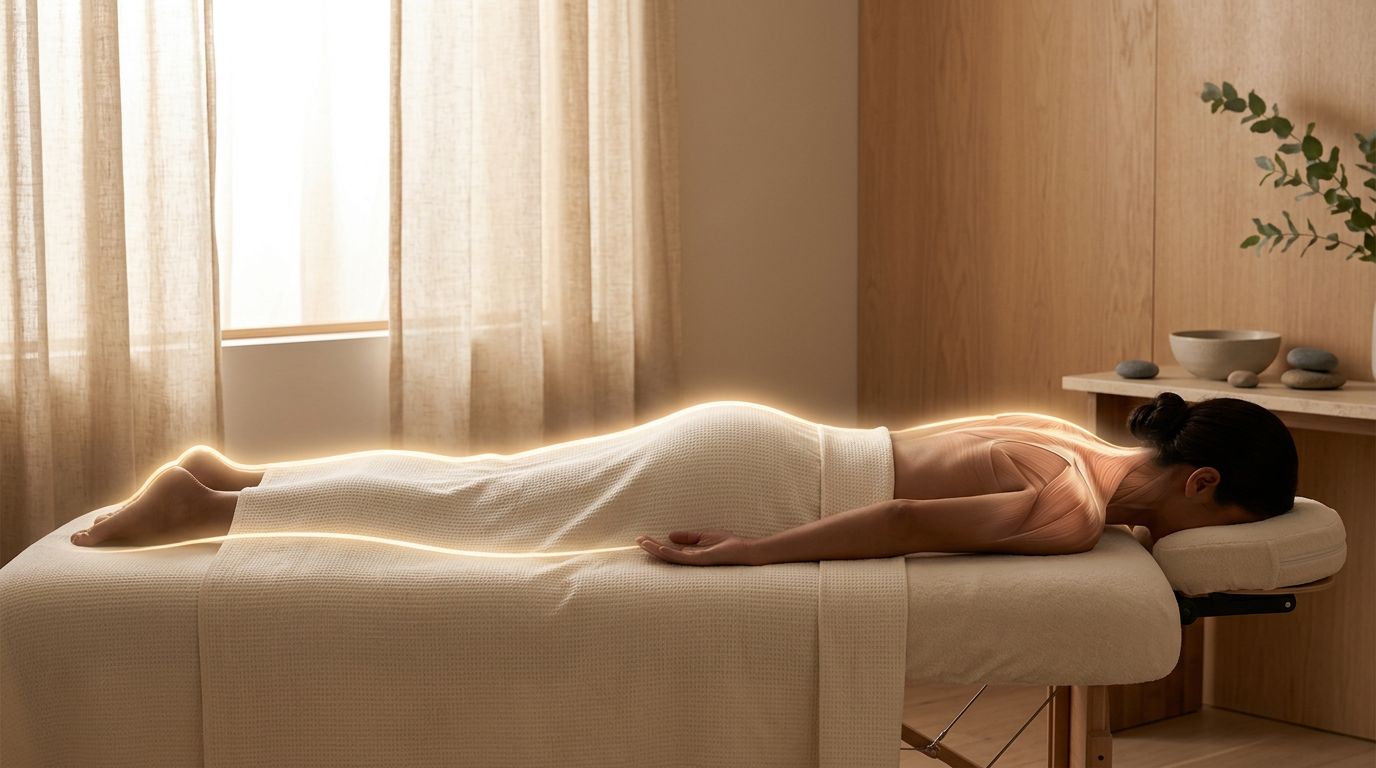
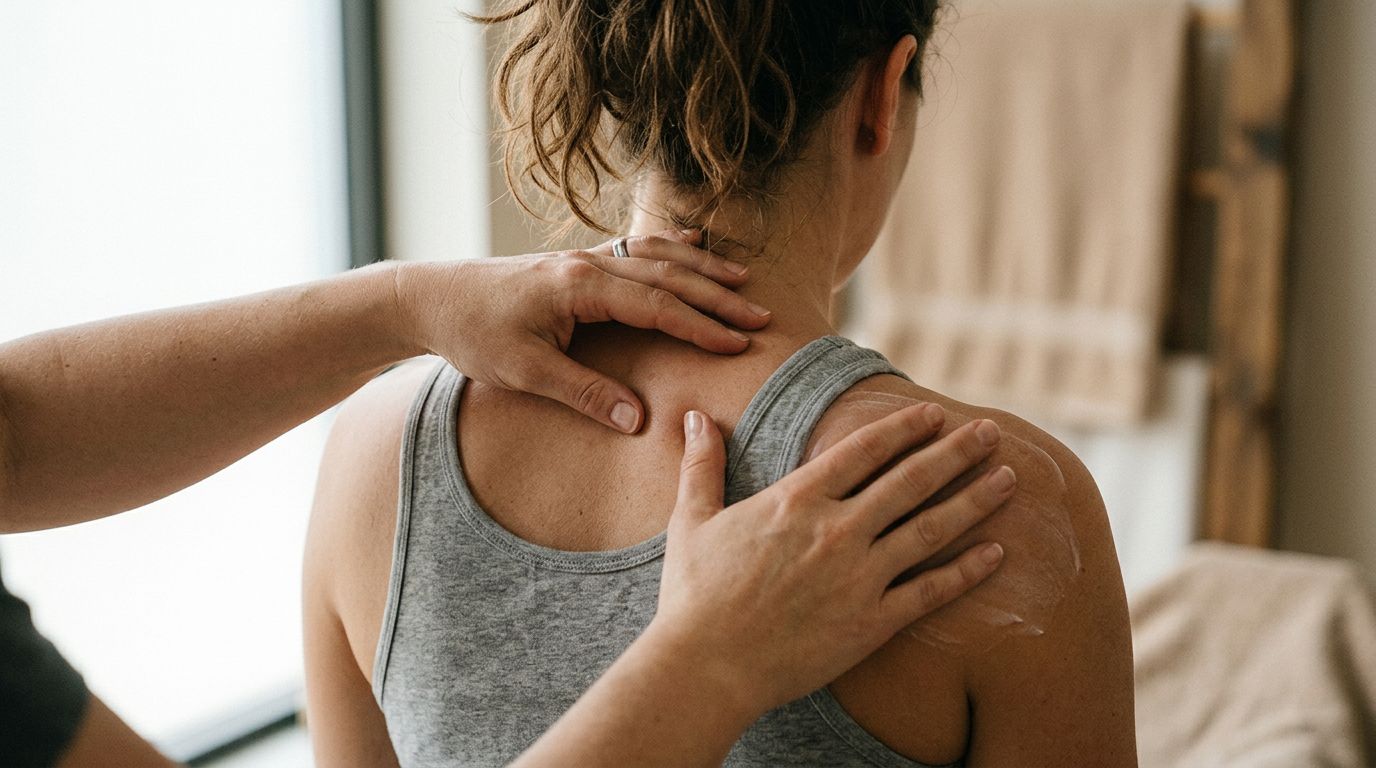
Therapeutic shoulder massage in a calm spa setting
Photo by Jonathan Borba
Good trigger point work often feels like “hurt so good,” but it should still feel controlled . Think of it like slowly turning a dial, not flipping a switch.

Common sensations people report:

A deep, steady ache under the thumb, elbow, or tool, followed by a softening or warmth. Sometimes you’ll notice referral, like a zingy pressure up the side of the head, into the temple, or behind the eye. That referral can feel odd, but it shouldn’t feel sharp, electric, or scary.

What’s not a goal is forcing the knot to “release” through brute pressure. Trigger points are tied to the nervous system and local sensitivity. If you go too hard, your body guards, your breathing gets shallow, and the area tightens more.

A helpful pressure target for self-work is about 5 to 7 out of 10 , where you can still breathe slowly and your face stays relaxed. If you’re holding your breath or tensing your jaw, back off.

How sore you’ll be after, and how to plan for it

Soreness after trigger point massage is common, especially if the area has been tight for weeks or months. Most people describe it like post-workout tenderness, not injury pain.

Typical timeline:

  • First few hours : you may feel looser, a little floaty, or slightly tired.
  • Next day : tenderness often peaks, especially with deep work on traps and suboccipitals.
  • 24 to 72 hours : most soreness settles. If you’re still getting worse after day three, that’s a signal to pause and reassess.

What makes soreness more likely: high pressure, long holds, aggressive tools, and stacking a tough workout on top of intense bodywork the same day.

If you want hands-on help without guessing at pressure, booking a therapist who can adjust in real time matters. You can explore massage therapy services that include focused neck, shoulder, and upper-back work, then keep your home routine gentle between sessions.

Step-by-step: self trigger point work for upper traps and suboccipitals

Self-work should feel steady and calm, like persuading tension to let go, not fighting it. Use a lacrosse ball, tennis ball, massage cane, or your fingertips. A folded towel and your breath are “tools” too.

Before you start, use these ground rules:

  • Keep pressure 5 to 7 out of 10
  • Hold 30 to 90 seconds
  • Do 2 to 4 holds per spot
  • Repeat 3 to 5 days per week , or every other day if you get sore easily
  • Inhale through your nose, exhale longer than you inhale (try a 4-second inhale, 6-second exhale)

Upper trap trigger points (top of shoulder)

  1. Sit tall and let your shoulders drop. Place your opposite hand on top of the tight shoulder.
  2. Pinch and “pick up” the muscle gently, then sink into a tender spot with your thumb or fingers.
  3. Hold steady pressure for 30 to 60 seconds , then slowly ease off. Repeat up to 4 times .
  4. Add a tiny movement: while holding pressure, slowly turn your head a few degrees left and right, like saying “maybe,” not a full neck stretch.
  5. Finish with 3 slow breaths and a shoulder roll backward.

A useful cue: if the discomfort spreads into the head, lower the pressure and keep breathing. Referral can be normal, panic is not helpful.

Suboccipital trigger points (base of skull)

  1. Lie on your back with knees bent. Place two tennis balls in a sock, tied off, so they sit side by side.
  2. Position the balls under the base of your skull (not on your neck). Nod “yes” slightly until you find a tender, dense spot.
  3. Relax your jaw and tongue. Hold for 45 to 90 seconds while you breathe slowly.
  4. For a second set, keep the balls in place and make a tiny “yes” nod, 5 reps total, staying gentle.
  5. Slide the balls down a half-inch if needed, but avoid direct pressure on the throat side of the neck.

Stop immediately if you notice any of these

  • Sharp, stabbing, or tearing pain
  • Numbness, tingling, or radiating pain down the arm
  • Dizziness, faintness, or nausea
  • Visual changes , ringing that spikes, or new imbalance

If any of those happen, stop the technique and consider medical guidance.

Aftercare that helps (without overthinking it)

You don’t need a perfect routine, you need a simple one your body likes.

Gentle options for the first day:

  • Light movement : an easy walk, shoulder circles, or slow neck range of motion can reduce stiffness.
  • Heat vs ice : use heat for that stiff, clenched feeling, and ice if the area feels hot, puffy, or sharply irritated. Ten minutes is plenty.
  • Light stretching : think “lengthen and breathe,” not yanking your neck. If stretching increases headache pressure, skip it.
  • Sleep posture : keep your neck neutral. A pillow that fills the space between your neck and mattress helps more than a big stack of pillows.
  • Ergonomic reset : every 30 to 60 minutes, drop your shoulders, soften your ribs, and bring your screen up closer to eye level.

Hydration is fine, but it’s not a magic fix. The bigger win is avoiding a day of frozen posture after you’ve already asked your tissues to change.

If you like a little extra support during a professional session, calming upgrades like a neck and shoulder hot towel wrap can make it easier to let go, especially when you’re prone to guarding.

When to skip trigger point massage (or get evaluated first)

Trigger point work is not a substitute for diagnosis. Don’t use self-treatment to push through symptoms that need attention.

Skip strong trigger point massage and get medical help if you have:

  • A sudden, worst-ever headache
  • Headache with fever, stiff neck, confusion , or fainting
  • New headache after a fall, accident, or head hit
  • Headache with weakness, facial droop, trouble speaking , or new numbness
  • New or rapidly changing headaches if you’re pregnant, postpartum , or have a major health condition
  • Headache with vision loss or severe eye pain

Also pause if you suspect a migraine day. Gentle scalp, neck warmth, and quiet may feel better than deep pressure.

This article is for general education, not medical advice. If you’re unsure what type of headache you have, or symptoms are worsening, consult a qualified healthcare professional.

Conclusion

Trigger point work for tight traps and tension headaches can feel intense, but it should still feel safe, steady, and breathable. Expect possible soreness for 24 to 72 hours , then use simple aftercare like gentle movement, heat or ice, and better sleep and desk support. When symptoms don’t match a tension pattern, or red flags show up, skip the pressure and get checked. The best results usually come from consistent, calm input, not force.

Recent Posts

By STILL Massage + Skin April 18, 2026
You sit at your desk all day. Then your buttocks ache by evening. That tightness builds up fast from hours in one spot. The gluteus maximus takes the hit. It shortens and stiffens. A targeted glute max massage loosens it up. You'll move better and hurt less. This guide shows w...
By STILL Massage + Skin April 17, 2026
You've just finished a brisk walk, but that nagging tightness hits the back of your knee. It pulls with each step and lingers for hours. Popliteus massage targets the hidden culprit: a small muscle called the popliteus. This muscle sits deep behind your knee. It stabilizes the...
By STILL Massage + Skin April 16, 2026
You lift a grocery bag and wince. That deep ache in the front of your upper arm flares up again. You've blamed your biceps, but the pain sits lower, right above your elbow. Brachialis massage targets this hidden culprit. The brachialis muscle powers elbow bending, yet it often...
By STILL Massage + Skin April 15, 2026
Tight shoulders pull you down after a long day. You roll them back, but that nagging ache lingers in the outer back and shoulder area. Teres minor massage targets this spot directly. This small muscle in your rotator cuff often hides the real cause of your discomfort. Many fol...
By STILL Massage + Skin April 14, 2026
You've just finished a long bike ride. Your front thighs feel tight and sore. That nagging ache makes every step hurt. Cyclists often face this after pushing hard on the pedals. The rectus femoris massage targets the key muscle causing this discomfort. It sits in the front of...
By STILL Massage + Skin April 13, 2026
Your hands throb after a long day at the keyboard. Fingers feel stiff, and that dull ache spreads up your forearms. Typing strains those hidden muscles, but forearm flexor massage offers quick relief. Many office workers and gamers face this issue daily. Repetitive motions tig...
By STILL Massage + Skin April 12, 2026
Feel that nagging ache at the back of your arm after a workout or long day? You're not alone. Many people deal with triceps massage needs because this muscle group works hard pushing, lifting, and extending your elbow. Soreness there often comes from overuse, poor posture, or...
By STILL Massage + Skin April 11, 2026
You grip your phone and feel a sharp twinge on the thumb side of your wrist. That nagging pain makes simple tasks like lifting a coffee mug tough. Many people deal with this issue from repetitive motions, like texting or parenting. De Quervain's massage targets this exact prob...
By STILL Massage + Skin April 10, 2026
Tight knots in your neck and shoulders make every day harder. You feel them building from hours at a desk or carrying stress. Upper trapezius massage targets that exact spot to bring fast relief. These muscles run from your neck to your shoulders. They help you shrug and turn...
By STILL Massage + Skin April 9, 2026
You've just crushed a heavy overhead press session. Now your outer shoulder throbs with that familiar ache. Deltoid massage offers quick relief from this common lifting fallout. Many lifters push through sets of shoulder presses, lateral raises, or bench variations. These move...
Show More