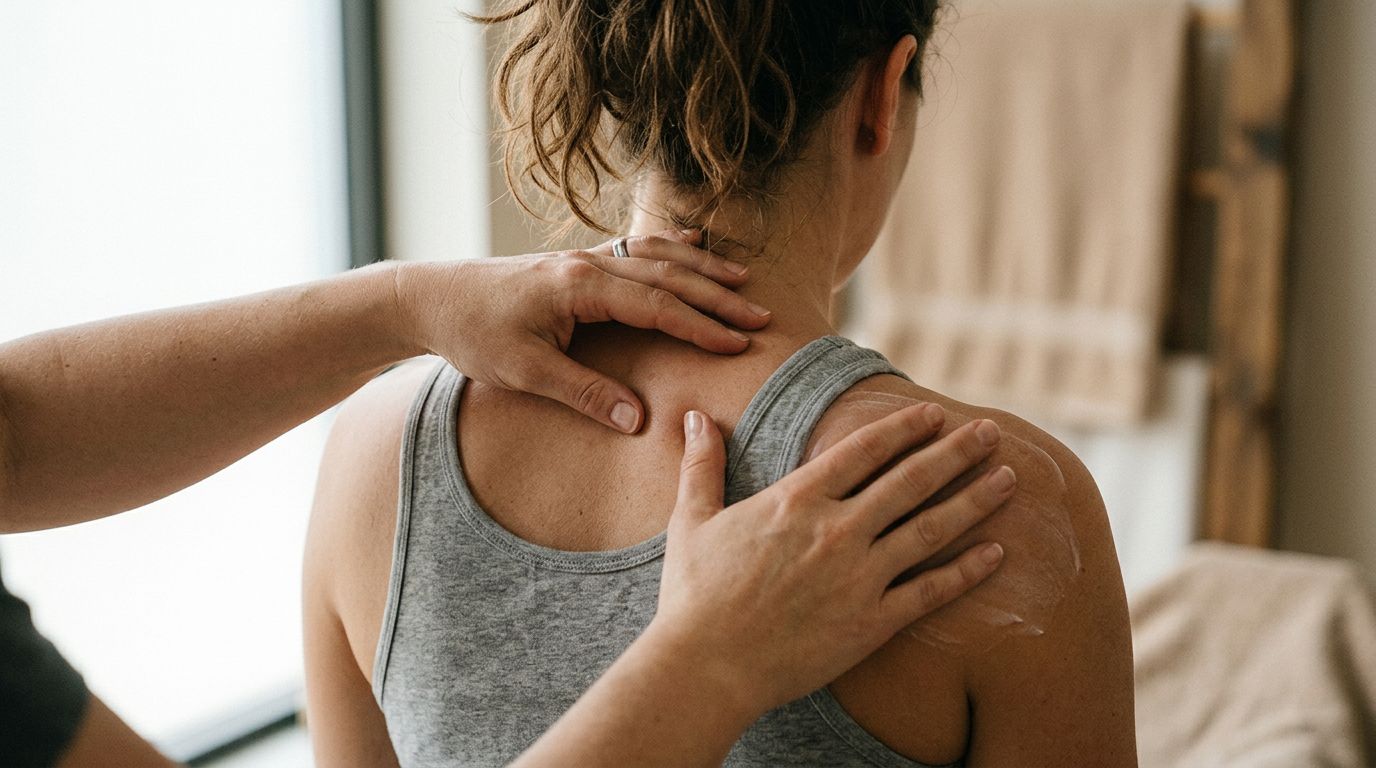
Iliacus Massage for Deep Front Hip Tightness After Sitting
Hours in a chair can leave your hips feeling like they forgot how to open. When the discomfort sits deep in the front of the hip, stretching harder usually makes it worse, not better.
That tight, stuck feeling often points to the iliacus, a deep hip flexor that works every time you sit, stand, or take a step. A focused iliacus massage can help calm that guarded tissue and make movement feel easier again.
Why sitting leaves the front of your hip so tight
Long periods of sitting keep your hips bent for far too long. The iliacus stays in a shortened position, and the muscles around it start to adapt to that shape.
Over time, the front of the hip can feel compressed. Standing up after a long workday may feel stiff. Walking up stairs may pull at the groin or lower belly. Even a simple stretch can create a sharp pinch instead of relief.
That is one reason "tight hips" can be misleading. The problem is not always a lack of flexibility. Sometimes the body is protecting a tired area that has been held in one position for hours.
The pelvis also plays a part. When you sit slouched, the front of the pelvis tips down and the hip flexors work with less freedom. If you drive a lot, work at a desk, or spend time on a couch in the evening, the same pattern repeats.
The good news is that this kind of tightness often responds well to hands-on work, movement breaks, and better position changes during the day. The key is to address the tissue without forcing it.
What the iliacus does in daily movement
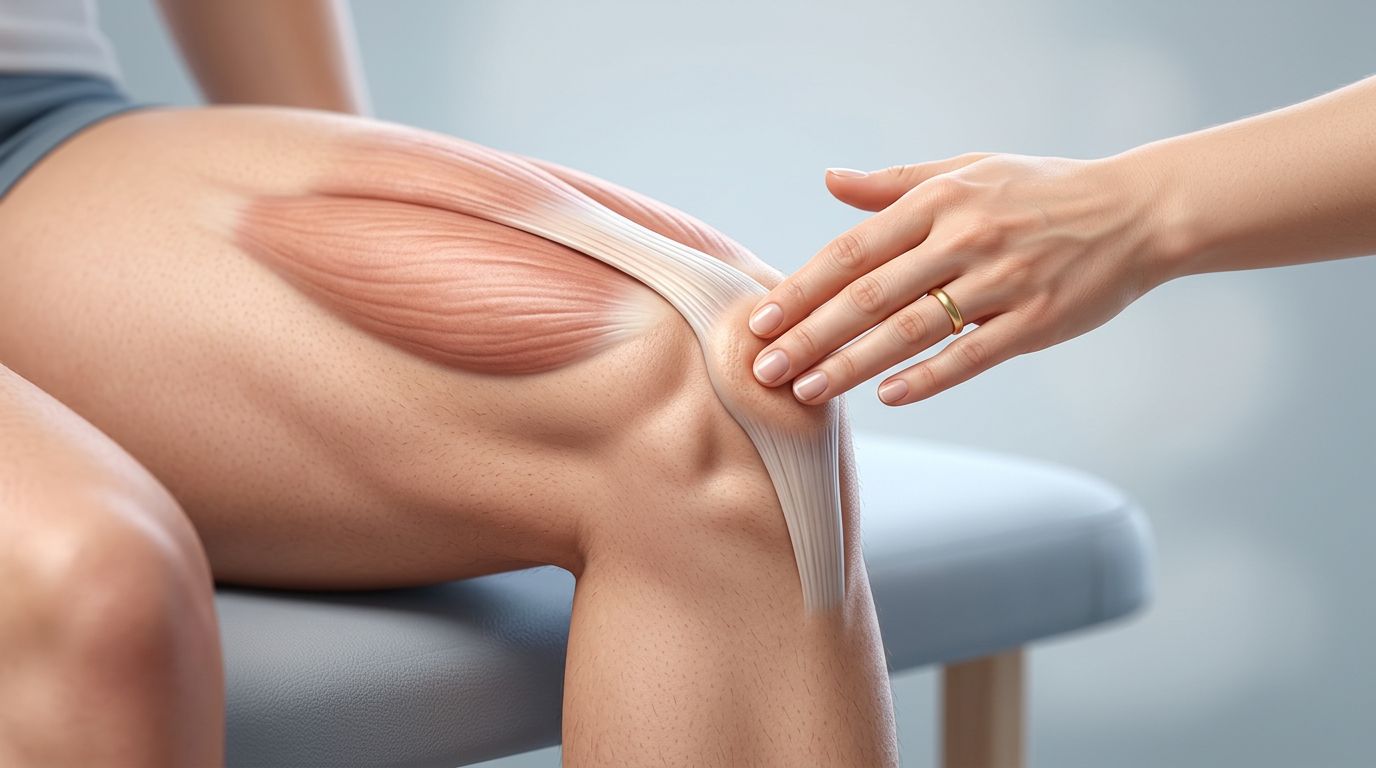
The iliacus sits deep inside the pelvis, lining the inside of the hip bone. It joins the psoas muscle to form the iliopsoas, which helps lift the leg and stabilize the pelvis.
That sounds simple, but the muscle does a lot of quiet work. It helps you walk, climb stairs, get in and out of cars, and keep your trunk steady when you move. Because it sits so deep, irritation there often feels vague and hard to point to.
People often describe the sensation as:
- A deep ache at the front of the hip
- Stiffness when rising from a chair
- A pulling feeling when bringing the knee up
- Tightness that shows up after sitting, then eases a little once they move
Sometimes the pain spreads into the lower abdomen, groin, or upper thigh. That can make it easy to blame the wrong area. The outer hip may feel tight, yet the deeper issue lives inside the pelvis.
Deep hip tightness often improves when you stop chasing the symptom and start working on the tissue that keeps bracing.
Because the iliacus helps hold the pelvis steady, it can also get involved when other muscles are overworking. The glutes may be sleepy, the core may be doing too much, and the front of the hip can stay on guard. A good session looks at the whole pattern, not one sore spot.
How iliacus massage helps tight hips
A focused iliacus massage aims to reduce tension in the deep hip flexor and the muscles around it. The work should be slow, careful, and specific. This is not about pushing hard into the abdomen or forcing release.
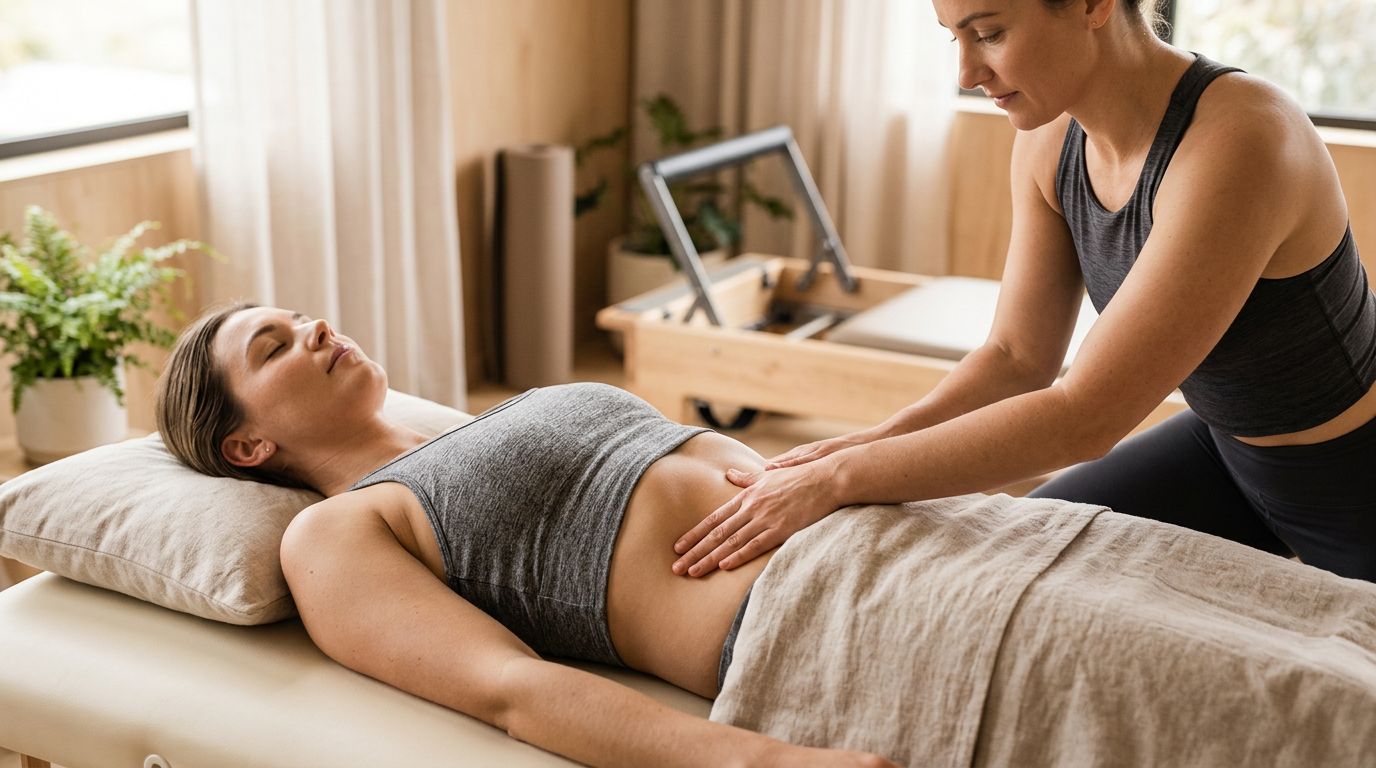
Instead, a skilled therapist uses touch, positioning, and pressure that match your body. That might include work around the front of the hip, lower abdomen, thigh, and nearby structures that keep the area braced.
When done well, the session may help with:
- Less gripping in the front of the hip
- Easier standing after long periods of sitting
- Better hip extension when you walk or lunge
- Less compensation in the low back and upper thigh
The work often feels subtle at first. That is normal. Deep muscles usually respond better to steady pressure than to aggressive force.
If you want help from a therapist who can adapt the session to your needs, professional massage therapy in Englewood can be a good place to start. The best results come from a session that respects your comfort level and your history.
Communication matters too. If a spot feels sharp, too sensitive, or too close to pain, speak up right away. The goal is to soften the area, not to create a new problem.
A good therapist may also work the surrounding muscles. The quads, hip rotators, lower back, and glutes can all influence how the iliacus behaves. Treating the full chain often gives the deepest relief.
What a focused session usually feels like
An iliacus-focused session often begins with a short conversation. The therapist may ask when the tightness started, what sitting does to it, and whether movement helps or hurts.
From there, the work may start with the low back, hips, or thighs before moving toward the front of the pelvis. Many people feel more at ease when the body settles first. Once the nervous system calms down, the deeper work usually feels better.
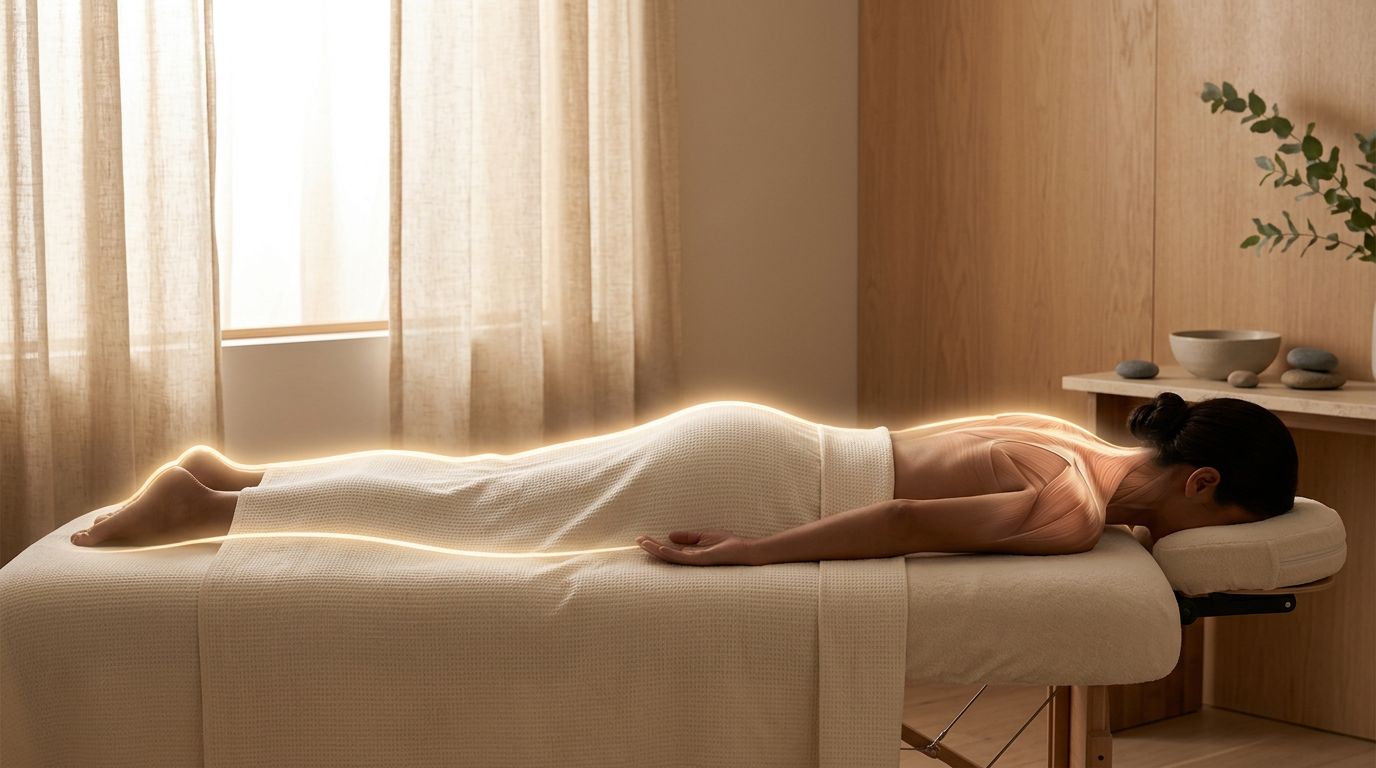
You may lie on your back with your knees supported, or you may stay on your side for part of the session. Good positioning matters because it reduces strain and gives the therapist better access without forcing the hip.
Pressure should feel clear, but not alarming. A mild ache can be normal. Sharp pain is not. The best sessions stay within a range that lets you breathe and relax.
If the pressure feels like a wince instead of relief, say so right away.
After the work, you might notice the hip feels warmer, lighter, or easier to open. Some people stand up and realize they can take a fuller step. Others feel the change later that day, after the tissue has had time to settle.
Mild soreness can happen, especially if the muscle has been tight for a long time. That should fade within a day or two. If the area feels worse, more pinchy, or unstable, the session was probably too aggressive.
What helps between massage visits
Massage works better when you stop feeding the same tight pattern. Small changes through the day can make a real difference.
Try getting up from sitting every 30 to 60 minutes. A short walk, a few slow breaths, or a gentle hip stretch can remind the iliacus that it does not need to stay clenched all day.
A few habits help more than people expect:
- Stand tall when you rise from a chair, then take two slow steps before checking your phone.
- Walk after long drives or desk work, even for five minutes.
- Use gentle hip extension drills, such as a supported lunge stretch, if they feel comfortable.
- Strengthen the glutes with simple work like bridges or step-ups, because strong hips share the load.
Heat can also help the front of the hip relax before movement. A warm shower or heating pad for a short time may make stretching feel easier. Just keep the heat mild and avoid using it on irritated skin.
Breathing matters too. Many people hold their breath when the front of the hip feels tight. Slow exhalations can lower that bracing response. If your ribs and belly can move more freely, the pelvis often follows.
If the pain keeps coming back, or if it feels linked to an old injury, get it checked by a qualified provider. Persistent hip pain should not be guessed at forever.
Conclusion
Deep front hip tightness after sitting often has a simple pattern behind it, the iliacus stays braced for too long. A careful iliacus massage can ease that grip, especially when the work is precise and the pressure stays manageable.
The biggest gains usually come from combining hands-on care with better daily movement. Stand up, walk more often, and give the hip a chance to move through its full range again.
A stiff hip does not always need more force. Sometimes it just needs less holding.
Recent Posts