Sports massage for runners with tight calves and hamstrings, what it feels like, how sore you’ll be, and when to book it
If your calves feel like piano wires after a few miles, or your hamstrings tighten the second you pick up the pace, you’re not alone. For many recreational runners, “tight” becomes normal, until it starts changing stride, shortening steps, or turning every run into a negotiation.
A well-timed sports massage runners session can help you feel looser, move with less restriction, and recover with less perceived heaviness. It’s not magic and it won’t “fix” every ache, but it can be a practical tool when calves and hamstrings are always on edge.
Below is what to expect on the table, how sore you might be after, and how to time your appointments around long runs and races.
Why runners’ calves and hamstrings get tight (and why it keeps coming back)
Calves and hamstrings do a ton of quiet work. Calves manage each landing, control ankle motion, and help push you forward. Hamstrings act like strong brakes, especially on downhills, speed work, and late in long runs when form gets sloppy.
“Tight” doesn’t always mean “short.” Often it’s protective tone , your nervous system keeping a muscle guarded because it’s tired, irritated, or overloaded. It can also be your body compensating for something else, like limited ankle mobility, weak glutes, or a stride that overreaches.
In runners, common hot spots include:
- The medial gastrocnemius (inner calf), which can feel like a deep ropey band.
- The soleus (deeper calf), which often causes that stubborn tightness you feel when jogging easy.
- The hamstring tendons near the sit bone, plus the biceps femoris on the outer hamstring, which can light up after speed sessions.
- Thickened, tender areas that feel like grains of rice or peas under the skin (often called trigger points).
A good therapist usually won’t just mash the sore spot. They’ll work the surrounding tissue, follow the line of the muscle, and check what feels restricted. Massage research is mixed on performance gains, but many runners report better short-term range of motion and less perceived soreness. For a balanced look, see Runner’s World’s overview of sports massage.
What sports massage feels like on tight calves and hamstrings
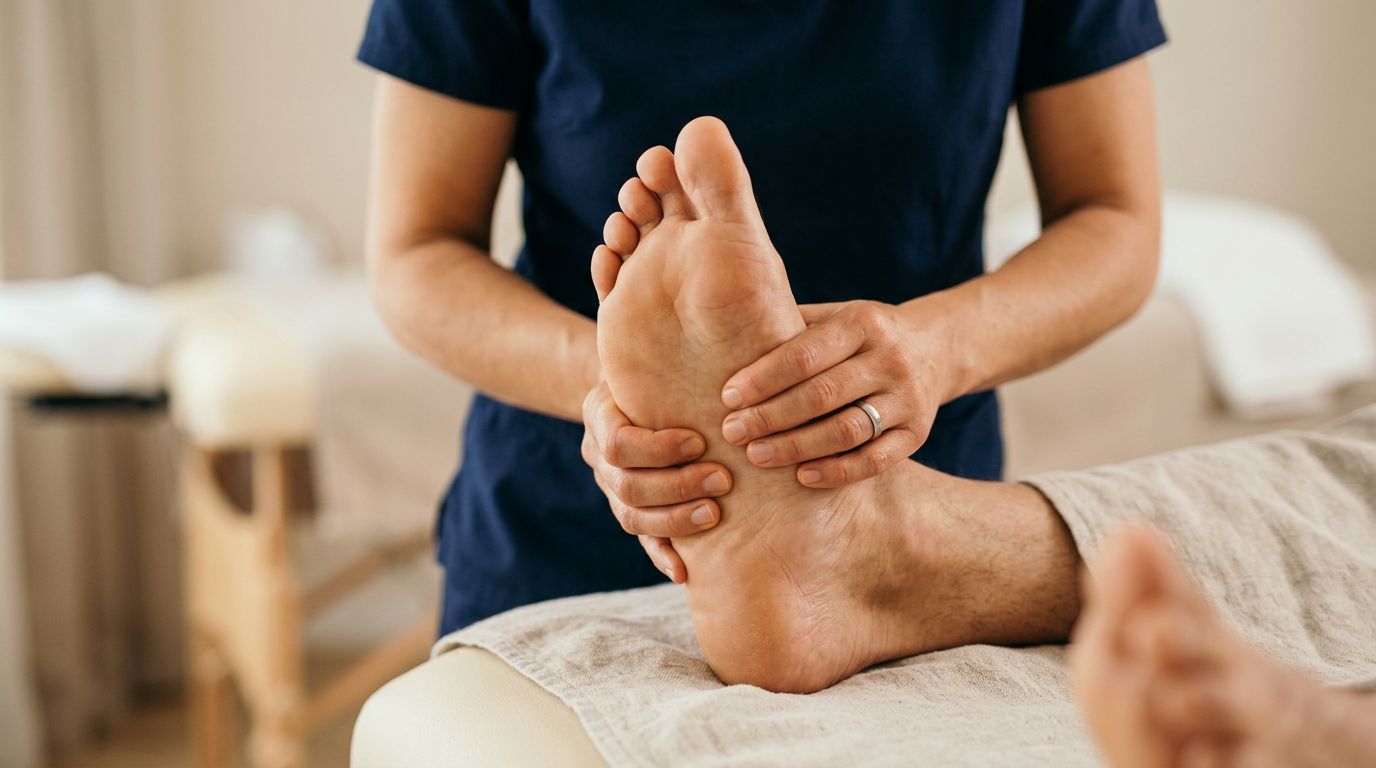
Sports massage is often more focused than a relaxation massage. Think of it like untangling a knot in a headphone cord: the therapist finds where the tissue is sticking, then slowly works it free.
Most sessions start with lighter, warming strokes to bring blood flow to the area. Then you may feel a mix of:
- Petrissage (kneading) : like working dough, it can feel “good sore” and helps soften dense tissue.
- Stripping : slow, firm glides along the calf or hamstring. This is the move that can make you exhale hard.
- Friction : smaller, targeted work across tight bands, often near the Achilles area or hamstring attachments.
- Myofascial techniques : slower pressure and stretch that can feel sticky at first, then suddenly easier.
- Assisted stretching : gentle positioning or contract-relax work to help your brain allow more length.
Tight calves often feel sharp and specific. Hamstrings tend to feel broader and deeper, sometimes with a “pulling” sensation down the back of the leg. Neither should feel like you’re being pinned.
A simple pressure scale you can actually use
| Scale | What it feels like | What to do |
|---|---|---|
| 1–3 | Light, relaxing pressure | Great for recovery, flush work, or pre-race |
| 4–6 | Strong but controlled, you can breathe and relax | Ideal zone for most runners most days |
| 7 | Intense, you’re right at your edge | Use briefly, only if it stays safe and steady |
| 8–10 | Sharp, breath-holding, guarding, or “get off me” pain | Too much, ask to back off |
A safe rule: you should be able to breathe normally and unclench . If you feel yourself bracing, the pressure is probably too high to help.
If you want a targeted session tailored to running legs, book a therapist who offers sports massage for runners and tell them exactly where you feel tight (inner calf, outer hamstring, behind the knee, near the sit bone).
How sore you’ll be after, and when to book sports massage around runs and races
Some post-massage tenderness is normal, especially after deep work on stubborn calves and hamstrings. Many runners describe it as the feeling after a hard gym day: tender to touch, a little heavy, sometimes a bit bruised. That doesn’t mean damage, it often means the tissue was sensitized and your system is processing the input.
Typical timelines:
- Same day : you may feel looser, warmer, and a bit “wobbly,” like the muscle is sleepy.
- Next day (24 hours) : mild soreness is common, especially if you went 6–7/10 pressure.
- 48 hours : most people feel better than baseline.
- Up to 72 hours : can happen after very deep work, or if you were already inflamed.
Plan your booking so soreness doesn’t collide with your key workout. Practical timing that works for many recreational runners:
- 5–10 days before a goal race : best window for deeper, problem-solving work on calves and hamstrings.
- 48–72 hours before a key race or long run : avoid very deep pressure. If you book, ask for lighter work (1–4/10), circulation, and gentle mobility.
- 24–48 hours after a race : choose a gentle recovery flush (1–3/10). Save heavy work until you can walk downstairs normally again.
- During heavy training blocks : a regular cadence (every 2–4 weeks) often beats random “emergency” sessions.
Runners also like pairing massage with smarter training choices. If you want a runner-focused take on timing and expectations, Runners Connect’s guide to massage for runners is a useful reference.
Quick ways to reduce post-massage soreness
A little soreness is fine, but you can keep it from snowballing:
- Take a 10–20 minute easy walk later that day.
- Hydrate normally and eat a real meal with protein and carbs.
- Skip hard speed work for 24 hours after deep calf or hamstring work.
- Use heat or a warm shower if you feel stiff (unless a clinician told you to ice).
Red flags: when you should pause and get medical input
Massage is for muscle tension and recovery support, not for urgent problems. Get medical evaluation if you have:
- Sharp, sudden pain , a pop, or rapid bruising (possible strain or tear)
- Swelling, heat, redness , or calf pain with shortness of breath (possible clot risk)
- Numbness, tingling, or shooting pain down the leg
- Severe one-sided swelling or pain that worsens quickly
- New symptoms after a recent surgery, long flight, or immobilization
For more clinical context on runner-focused sports massage approaches, MASSAGE Magazine’s sports massage for runners article offers helpful perspective.
Conclusion
Tight calves and hamstrings don’t always need more stretching. Sometimes they need targeted hands-on work, better timing, and the right pressure so your body stops guarding. When sports massage runners sessions are scheduled well, most runners walk out feeling lighter, then feel their best within a day or two.
Use the 1–10 scale, plan deeper work 5–10 days before key events, and keep pre-race and post-race sessions gentle. This article is for education only and isn’t medical advice. If something feels sharp, numb, swollen, or “not right,” get checked out first.
Recent Posts