Sciatica-friendly massage for deep glute pain (piriformis tightness), what it feels like, how sore you’ll be, and when to skip it
Deep glute pain has a sneaky way of stealing your comfort. It can feel like a bruise under the muscle, a knot you can’t reach, or a sharp ache that shows up after sitting. When that tightness is tied to the piriformis (a small muscle that sits deep in the buttock near the sciatic nerve), piriformis massage can sometimes help you move and sit with less irritation.
Still, this area deserves respect. Too much pressure in the wrong spot can light up symptoms fast.
Brief medical disclaimer: This article is for general education, not medical advice. Sciatica and sciatica-like pain can have many causes (including disc issues). If you have worsening numbness, weakness, or other neurologic symptoms, get clinical evaluation.
Why piriformis tightness can feel like sciatica (and why massage needs a “nerve-safe” approach)
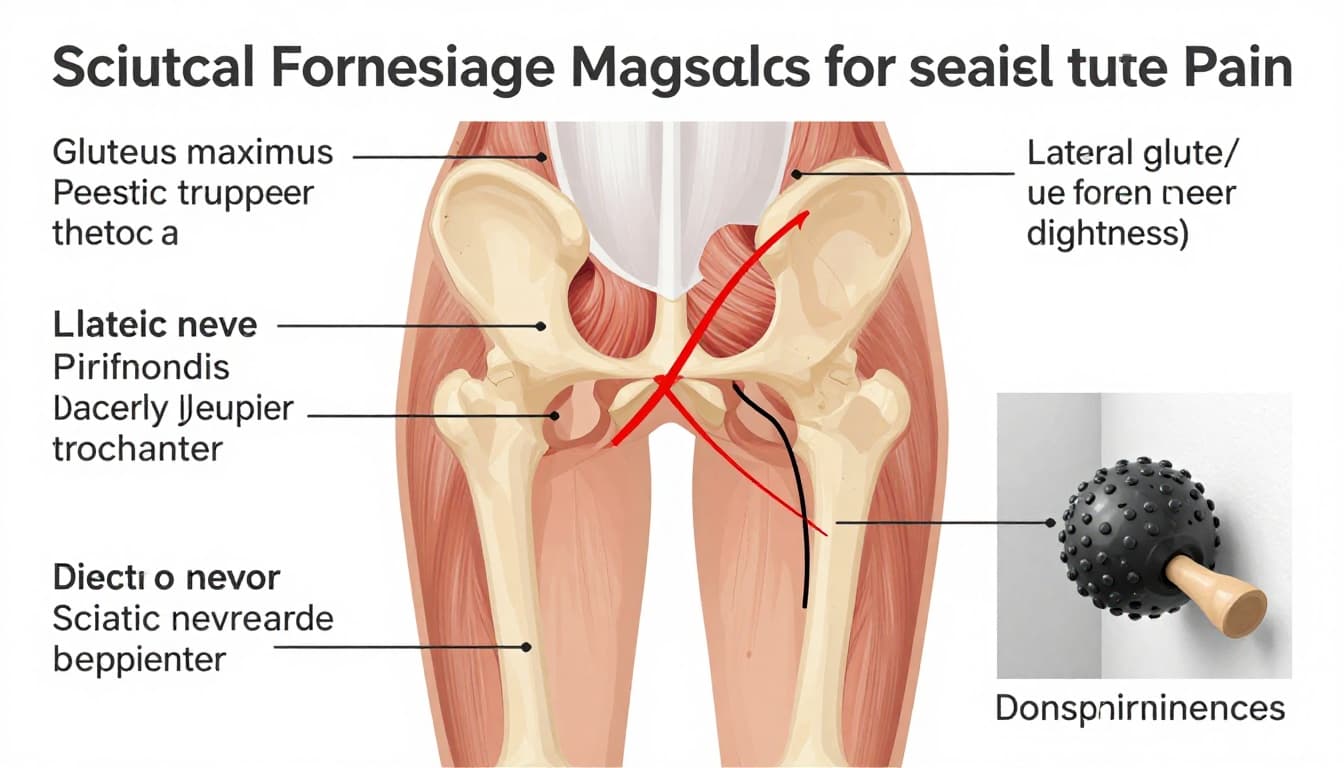
Anatomy map of safer pressure zones and areas to avoid, created with AI.

The piriformis runs from the sacrum to the outside of the hip. When it’s tight, cranky, or full of trigger points, it can refer pain into the buttock and sometimes down the back of the thigh. In some people, the sciatic nerve runs very close to the piriformis (and sometimes through it), so swelling or tension can irritate the nerve.
That’s why sciatica-friendly work is less about “digging in” and more about smart angles and safer zones . The sweet spot is often the upper outer buttock (lateral glute), not the center line where the nerve path is more likely to be irritated. Skilled therapists also work the muscles that influence piriformis tone, like the gluteus maximus, gluteus medius, hip rotators, and even the low back, so the piriformis doesn’t have to do all the stabilizing by itself.
If you want a plain-language overview of common self-massage options, see Healthline’s guide to piriformis self-massage ideas. For a therapist-focused explanation of buttock muscle pain patterns, Spine-health has a helpful article on massage for piriformis-related buttock pain.
What a sciatica-friendly piriformis massage feels like (good discomfort vs nerve pain)
A well-done piriformis massage usually feels like deep, steady pressure that spreads warmth through the buttock. The sensation can be intense, but it should feel “muscle-y,” like a tight spot slowly melting. Many people notice they can take a fuller breath as the area softens.
What it shouldn’t feel like is a lightning-bolt line shooting down the leg. Nerve pain tends to feel electric, burning, zinging, or like pins and needles. If the sensation jumps below the knee, that’s a big clue the nerve is irritated, not just the muscle.
Here’s a quick way to tell the difference during a session:
| Sensation | Usually OK to continue? |
|---|---|
| Deep ache that stays in the glute | Often yes, ease in slowly |
| “Hurts-good” pressure that fades as you breathe | Often yes, adjust pressure |
| Sharp, zinging, electric pain down the leg | No, change position or stop |
| Numbness, tingling, weakness, foot symptoms | No, stop and reassess |
Pressure scale (1 to 10): for sciatica-friendly work, aim for a 4 to 6 out of 10 . That’s enough to change tissue, not so much that you brace, hold your breath, or flare symptoms. If you’re getting deep tissue work, the therapist can still do effective work without pinning the nerve. The best sessions feel targeted and patient, not aggressive.
If you’re booking professional work, choose a session that can be customized for pain relief and pacing, like a therapeutic massage option on https://www.stillmassageskin.com/massage.
How sore you’ll be after piriformis massage, how often to do it, and when to skip it
Mild next-day soreness is common, especially if the glute has been guarding for weeks. Think of it like the tender feeling after a new workout, not like a flare that changes your gait. Most people feel one of these patterns:
- Later that day: looser hip, easier walking, “tired” glute.
- Next morning: mild tenderness when sitting or climbing stairs.
- 24 to 48 hours: soreness fades, movement feels freer.
If you feel worse for more than 48 hours, or the pain travels farther down the leg than before, the pressure was likely too deep, too direct, or too frequent.
Simple parameters that work for many people (self-massage or therapist-guided homework):
- Warm up first: 3 to 5 minutes of heat or a short walk.
- Short holds: 20 to 45 seconds on a tender spot, then ease off.
- Total time: 2 to 5 minutes per side, not 20 minutes of grinding.
- Frequency: every other day, or up to 3 to 5 days per week if it doesn’t flare.
- Aftercare: gentle walking, water, and light stretching only if it feels relieving.
A small upgrade that pairs well with glute and hip work is guided stretching. If you’re in session, options like active stretching can be added when appropriate (see https://www.stillmassageskin.com/add-ons ).
Stop immediately if…
Stop right away if you notice: sharp, shooting pain down the leg, numbness or tingling that starts or increases, a sudden loss of strength, cramping that won’t ease, or pain that forces you to hold your breath or clench.
See a clinician urgently if…
Get urgent evaluation for bowel or bladder changes , saddle anesthesia (numbness in the groin or inner thighs), progressive weakness , severe unrelenting pain, fever, unexplained weight loss, a history of cancer, or major trauma (like a fall or car accident).
Conclusion
Piriformis massage can be a helpful tool for deep glute pain that acts like sciatica, as long as the approach is nerve-safe, paced, and honest about limits. Aim for pressure you can breathe through, expect mild soreness (not a flare), and skip massage when red-flag symptoms show up. If you’re unsure, the safest next step is a clinician check and a plan that supports both the muscle and the nerve. Your goal isn’t to “win” against the knot, it’s to get back to steady, comfortable movement .
Recent Posts