
Rotator Cuff Tendonitis Massage: What It Feels Like And When To Skip
Shoulder pain has a way of sneaking into everything. Reaching into the back seat, putting on a bra, grabbing a towel off a hook, even sleeping can start to feel like a small battle.
If you're considering rotator cuff tendonitis massage , the big question is simple: will it feel like relief, or will it feel like you poked an already-angry injury?
This guide breaks down what rotator cuff tendonitis tends to feel like, what massage often feels like when it's helping, and the moments when skipping bodywork is the smarter choice.
What rotator cuff tendonitis pain usually feels like (before massage)
Rotator cuff tendonitis is irritation in one or more of the rotator cuff tendons, often from overuse, repetitive reaching, or a flare after lifting "one weird thing" the wrong way. It can also show up with desk posture, poor shoulder mechanics, or tight chest and neck muscles that pull the shoulder forward.
Most people don't describe it as one clean pain. It's more like a cluster of sensations that come and go.
Here's what's common:
- A dull ache on the outside of the shoulder or upper arm, sometimes spreading toward the elbow
- A sharp pinch when you reach overhead or behind your back
- Night pain, especially when you sleep on that side
- A "weak" feeling when lifting, pouring, or reaching
- A nagging soreness that builds after activity, not always during it
The pain can feel confusing because the tender spot isn't always where the tendon is irritated. Your brain reads shoulder signals like a faulty smoke alarm, it can blare even when the fire is small.
If you want a basic self-care overview that matches what many clinicians recommend, see the MedlinePlus rotator cuff self-care guide.
One more detail matters before you book massage: tendon pain often hates compression when it's flared. That means pressing directly on the "hot" spot can feel awful, even if nearby muscles need work.
Rotator cuff tendonitis massage: what it feels like when it's helping
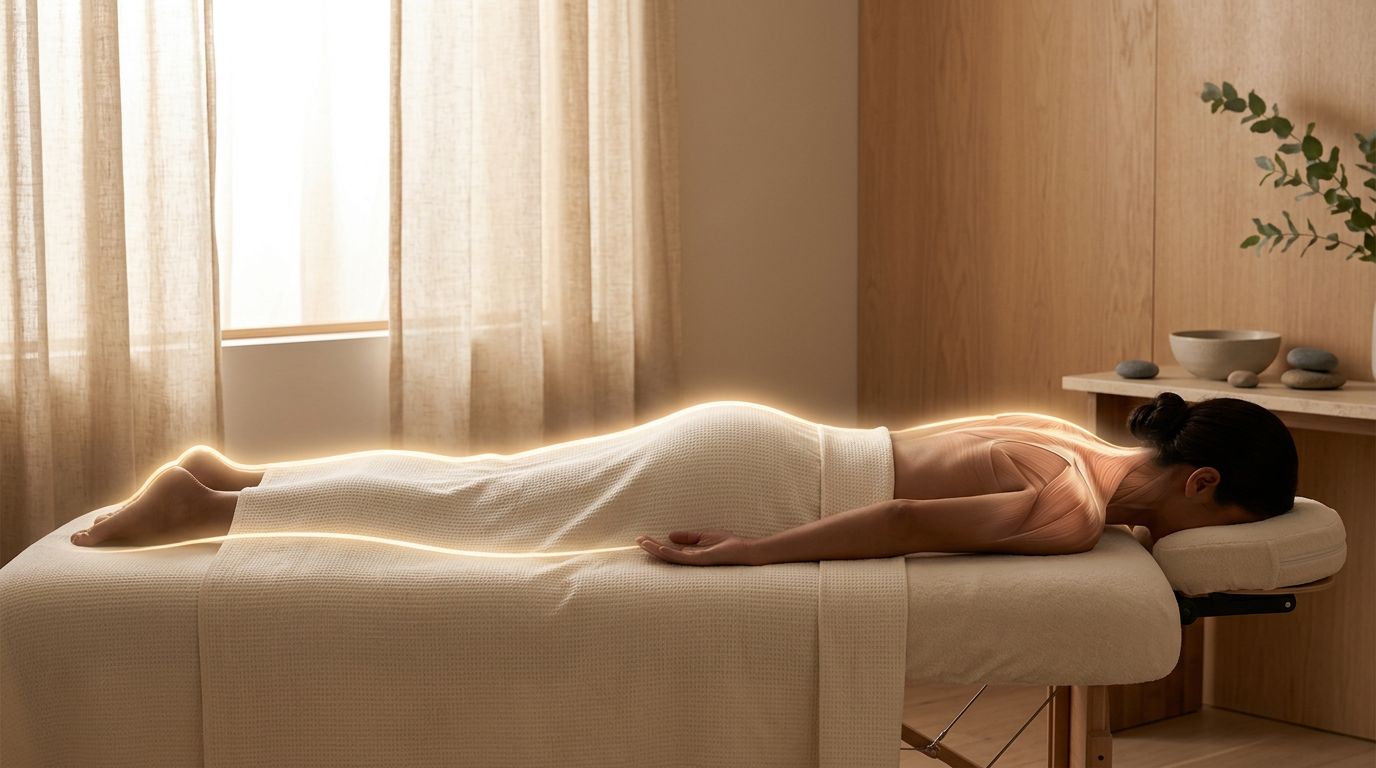
A good rotator cuff tendonitis massage usually doesn't feel like someone grinding on the front of your shoulder. More often, it feels like tension unwinding in the areas that steer the shoulder blade and upper arm.
Expect sensations like slow pressure, warmth, and a "this hurts good" feeling in muscles that have been overworking for weeks.
Common places that feel surprisingly relevant:
- Upper back and shoulder blade area (rhomboids, mid traps)
- The back of the shoulder (infraspinatus, teres muscles)
- The side of the ribcage (lat and serratus area)
- Chest and front shoulder (pecs), done gently because this area can be tender
- Neck and upper traps, when they're feeding shoulder tension
In a helpful session, discomfort stays in the "productive" zone. You can breathe, your body doesn't brace, and the soreness fades as the therapist eases off.
A quick way to judge it is the 24-hour rule.
If your shoulder feels looser right after, and only mildly sore later, that's a good sign. If pain spikes and lingers past 24 hours, the work was too much or too direct.
Here's a simple comparison to keep in mind:
| During or after massage | Usually OK to continue | Usually a sign to stop/adjust |
|---|---|---|
| Sensation | Dull ache, heat, "sweet spot" pressure | Sharp , stabbing, electric, burning |
| Your response | You can relax and breathe | You guard, hold your breath, or flinch |
| After-effects | Easier range of motion, mild soreness | Less motion, more pain, new weakness |
| Timing | Better same day, settles by next day | Worse that night or next day, keeps climbing |
If you're booking at a spa, look for a therapist who'll tailor pressure and focus on surrounding tissues, not just the sore point. That's the difference between "I finally slept" and "why does it hurt more now?" If you're exploring options, start with a therapeutic massage for shoulder pain and note your symptoms at intake.
When to skip rotator cuff massage (or get checked first)
Sometimes massage isn't the next step. It's not because massage is bad, it's because the shoulder is sending signals that need a different plan first.
Skip massage and consider medical evaluation if you have any of these:
- Sudden loss of strength, like you can't lift your arm the way you could yesterday
- Pain after a fall or hard impact (rule out fracture or major tear)
- Obvious deformity, major swelling, redness, or heat around the joint
- Numbness, tingling, or symptoms shooting down the arm into the hand
- Fever, chills, or feeling unwell along with shoulder pain
- Severe night pain that's escalating fast, even at rest
- Pain that's intense and constant, not just with movement
Massage is also a "not today" choice if your shoulder is in an angry flare. If even putting on a shirt makes you wince, deep work can backfire. In that moment, the tendon often needs calming, not chasing.
So what helps instead?
Start with gentler inputs: relative rest (not total immobilization), short bouts of ice or heat based on what feels best, and small pain-free movements that keep the joint from stiffening. Many people also do well with guided rehab from a physical therapist, because strength and control around the shoulder blade can reduce tendon load over time.
If you still want bodywork during a flare, ask for a calming session that avoids the tender front shoulder and focuses on relaxation, breathing, neck, and upper back. Think of it like turning down the volume before you try to fix the song.
Conclusion
Rotator cuff tendonitis massage should feel steady, warm, and targeted, not sharp or scary. The best sessions improve movement and reduce that "pinchy" feeling, even if you're a little sore afterward. On the other hand, intense, lingering pain, new weakness, or nerve symptoms are reasons to skip and get checked. When in doubt, choose gentle work first, then build pressure as your shoulder settles. Your body should feel safer after the session, not more on edge.
Recent Posts