Massage For Plantar Fasciitis Heel Pain And Stiff Feet
That sharp heel pain on your first steps can feel like you're walking on a tack. Then, after a few minutes, it eases up, only to creep back later. If that sounds familiar, you're not alone.
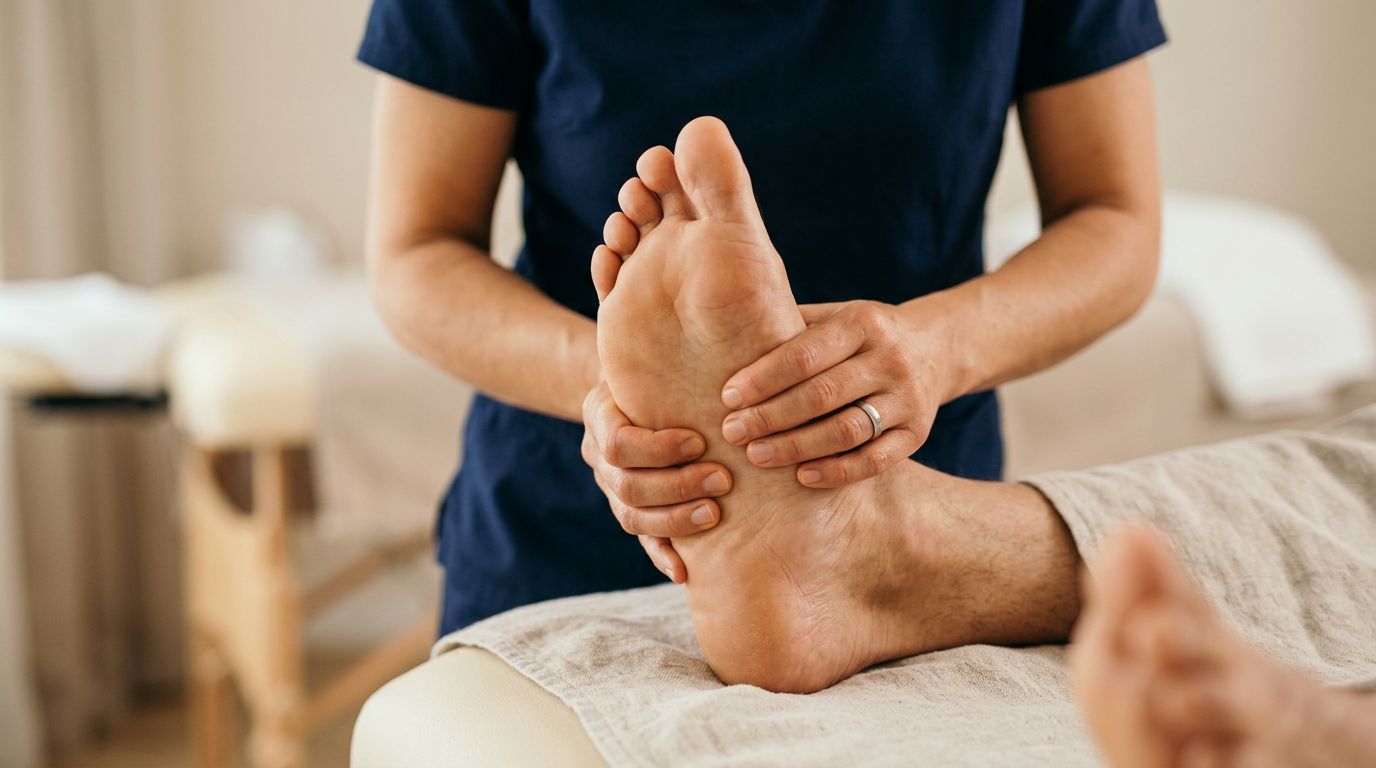
A well-done plantar fasciitis massage can reduce tension in the foot and calf, calm irritated tissue, and help stiff feet move more normally. It won't "fix it overnight," but it can make daily life a lot more comfortable when it's part of a smart plan.
Below is a clear guide to what massage can do, how to do it safely at home, and when it's time to book professional help.
Why plantar fasciitis makes mornings miserable
Plantar fasciitis involves irritation where the plantar fascia connects near the heel. The fascia is a tough band under your foot that helps support your arch. When it's cranky, it doesn't like sudden load, especially after rest.
That's why mornings are often the worst. Overnight, your foot stays pointed for hours, and the tissue cools down and tightens. The first steps "wake it up" fast. Think of it like a cold rubber band, it resists at first, then softens as it warms.
Stiff feet often tag along for a few reasons:
- The small muscles in the sole stop gliding well.
- Calf muscles tighten, which pulls on the heel through the Achilles area.
- Your toes may get less mobile, which changes how you push off.
Massage helps by improving circulation, reducing muscle guarding, and making the sole feel less "stuck." Just as important, it can turn down pain signals, so the foot doesn't stay in a constant alarm state.
Still, massage has a right way and a wrong way. Aggressive digging directly into the sore heel can make symptoms flare. A better approach is to work the surrounding tissue, especially the arch, the ball of the foot, and the calf, then gently address the tender band under the foot.
If your heel pain came from a fall, a sudden pop, major swelling, numbness, or a hot red area, skip self-treatment and get checked. Pain has clues, and those clues matter.
A practical plantar fasciitis massage routine at home
The goal is simple: warm the tissue, loosen the calf, then soften the sole. Keep the pressure at a "hurts good" level, not sharp pain. Start with 5 minutes and build up to 10.
If your heel feels worse for hours after massage, you used too much pressure or too long a session. Next time, go gentler and focus more on the calf.
Step-by-step routine (8 to 10 minutes)
- Warm-up your foot (1 minute)
Rub the whole foot with your hands. Sweep from toes to heel, then circle the ankle. Warm tissue responds better. - Calf squeeze and glide (2 minutes)
Sit with the leg supported. Use both hands to knead the calf, from mid-calf down toward the Achilles (not directly on the Achilles tendon). Tight calves often drive heel strain. - Arch rolling with a ball (2 minutes)
Use a tennis ball or massage ball. Roll from the ball of the foot to mid-arch. Move slow, and pause on tight spots. Avoid grinding on the sore heel point. - Thumb glides along the sole (2 minutes)
Use lotion if you like. With your thumbs, glide from the center of the arch toward the outer edge, then toward the inner edge. Keep your thumbs moving. Staying in one spot too long can irritate. - Toe and forefoot work (1 to 2 minutes)
Gently pull each toe, then massage the ball of the foot. Stiff toes can force the plantar fascia to take more load. - Finish with a gentle stretch (30 seconds)
With one hand, pull the toes back slightly until you feel a mild stretch in the arch. Hold, breathe, and stop short of pain.
A helpful trick for morning pain is "pre-loading" before you stand. Do 30 to 45 seconds of arch rubs and ankle circles in bed. It's like warming up your car before a drive, the first minute sets the tone.
One more note: icing can feel great after activity, but heat often feels better before massage. If you're unsure, try both on different days and notice what your foot prefers.
When to book a massage and what to ask for
Self-care works best for mild to moderate symptoms. However, stubborn heel pain usually needs more than quick rolling on a ball. A trained therapist can assess patterns you can't see, like a tight calf on one side, a locked ankle, or overworked muscles along the outer shin.
When you book, ask for a session that focuses on the whole chain, not just the bottom of the foot. Many people get the best relief when the calves, ankles, and small foot muscles all get attention. If deep pressure has flared you up before, say so up front. A steady, specific approach often beats "as deep as possible."
If you're looking for a clinic setting that customizes pressure and focus, explore therapeutic massage treatments and choose a session length that allows for calf, foot, and ankle work.
How often helps most?
Many people do well with one session per week for 2 to 4 weeks, then taper as symptoms calm. Pair that with short home massage most days. Small inputs add up.
When massage should pause (or you should get evaluated)
- Nerve symptoms like numbness, tingling, or burning that spreads
- Severe swelling or bruising
- Pain that's getting worse each week , even with rest
- Fever, redness, or warmth around the heel or ankle
Massage can be a strong support, but it shouldn't feel like a battle with your body. If something feels "off," trust that signal.
Conclusion
Heel pain and stiff feet can shrink your world fast, because every step reminds you. The good news is that plantar fasciitis massage can ease tension, improve comfort, and help you move with less fear, especially when you treat the calf and arch together.
Start gently, stay consistent, and pay attention to how your foot responds the next day. If progress stalls, a focused professional session can help you break the cycle and get back to walking like yourself again.
Recent Posts