Pec Minor Massage For Rounded Shoulders And Chest Tightness
Rounded shoulders don't just change how you look. They can make your chest feel tight, your neck tired, and your upper back overworked. Often, a small muscle under the chest is part of the problem. Pec minor massage helps loosen that hidden pull, so the shoulders can sit in a better place.
It isn't a magic fix. Still, it can make breathing, reaching, and standing tall feel easier. When you pair massage with stronger upper back muscles and better daily habits, the change usually lasts longer.
Why a Tight Pec Minor Pulls the Shoulders Forward
The pec minor sits under the larger chest muscle. It runs from the upper ribs to a small bony point at the front of the shoulder blade. When it shortens, it draws the shoulder blade forward and slightly down. That creates the slumped shape many people call rounded shoulders.
This matters because the shoulder blade is the base for healthy arm movement. If that base tips forward, the neck and upper traps often work overtime. As a result, you may feel tight through the chest, pinchy at the front of the shoulder, and worn out between the shoulder blades.
A tight pec minor often shows up after long hours at a desk, lots of driving, or frequent phone use. It can also happen after chest-heavy workouts, especially if pulling work lags behind pressing work. Stress adds to it too, because shallow breathing tends to lift the chest and tense the front of the body.
Think of the pec minor like a short strap on the front of the shoulder. If that strap keeps tugging all day, sitting tall can feel like holding a door open against the wind. You might correct your posture for a minute, then slide right back into the same position.
That said, rounded shoulders rarely come from one muscle alone. The pec major, front delts, neck muscles, and even breathing patterns can add to the problem. Still, the pec minor is a common piece of the puzzle, and it's often overlooked because it's small and tucked away.
What Pec Minor Massage Can Change, and What It Can't
When the pec minor feels ropey and tender, massage can help calm that tension. Gentle pressure often reduces soreness, softens the front of the chest, and makes shoulder movement feel smoother. Many people notice they can open the chest a little more after even a short session.
Massage can also help you sense where you're holding stress. That's useful, because posture isn't just about muscles. It's also about habits. Once you feel the front of the chest let go, it's easier to notice when you're hunching at the computer or clenching through the upper body.
Massage can ease the pull from the front of the chest, but it won't retrain posture by itself.
That's the part many people miss. If the upper back is weak, the desk setup is poor, or the ribs stay stiff from shallow breathing, the shoulders may round again by the next day. Lasting change usually comes from a mix of massage, mobility work, rowing or pulling exercises, and better work positions.
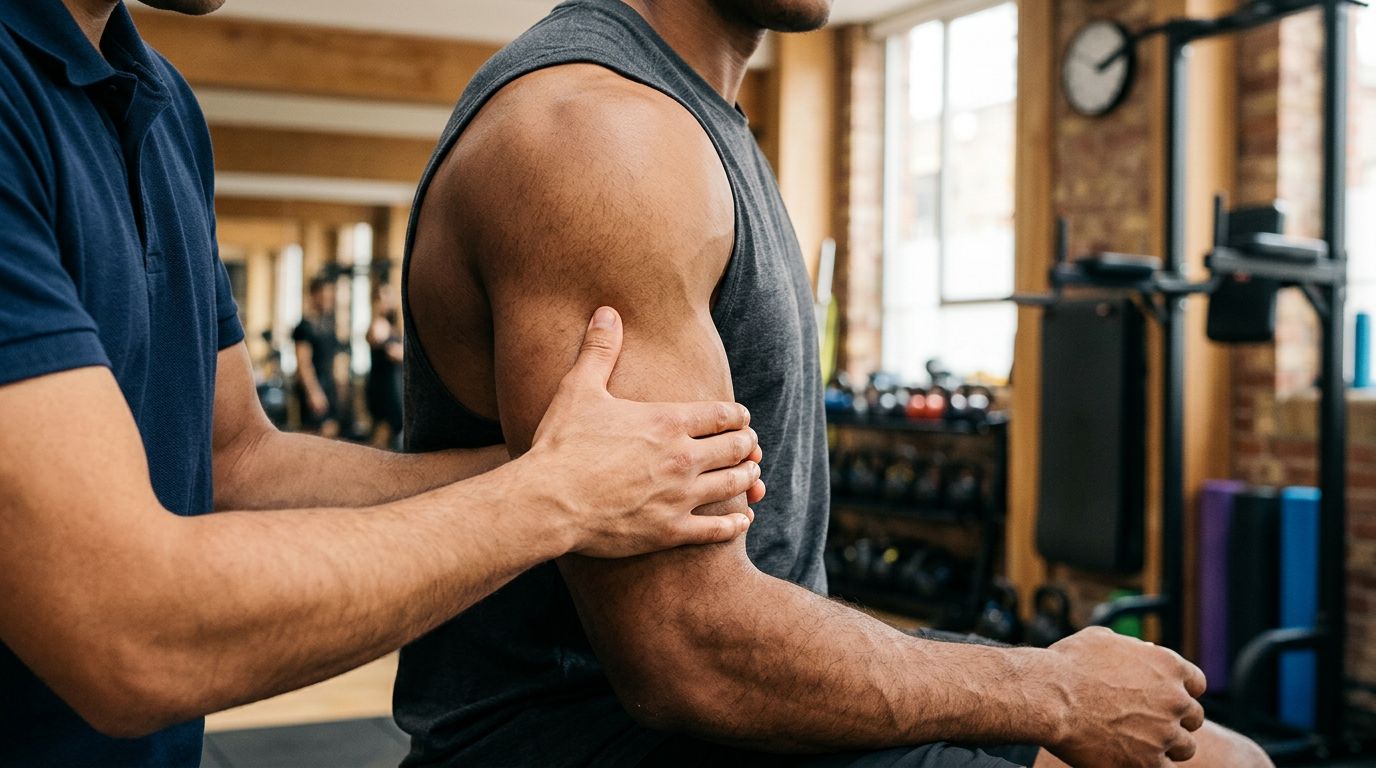
A skilled therapist also looks beyond one sore spot. For example, a session that includes the chest, neck, shoulder, and mid-back often works better than pressing the pec minor alone. If you want broader support, a therapeutic shoulder and back massage can address the tension patterns that feed rounded shoulders.
Pressure matters too. The pec minor sits near sensitive structures, so deeper isn't always better. The best sensation is good pressure , not sharp pain. If your arm tingles, your hand gets numb, or the pressure feels electric, the spot is too aggressive or off target.
How to Massage the Pec Minor Safely
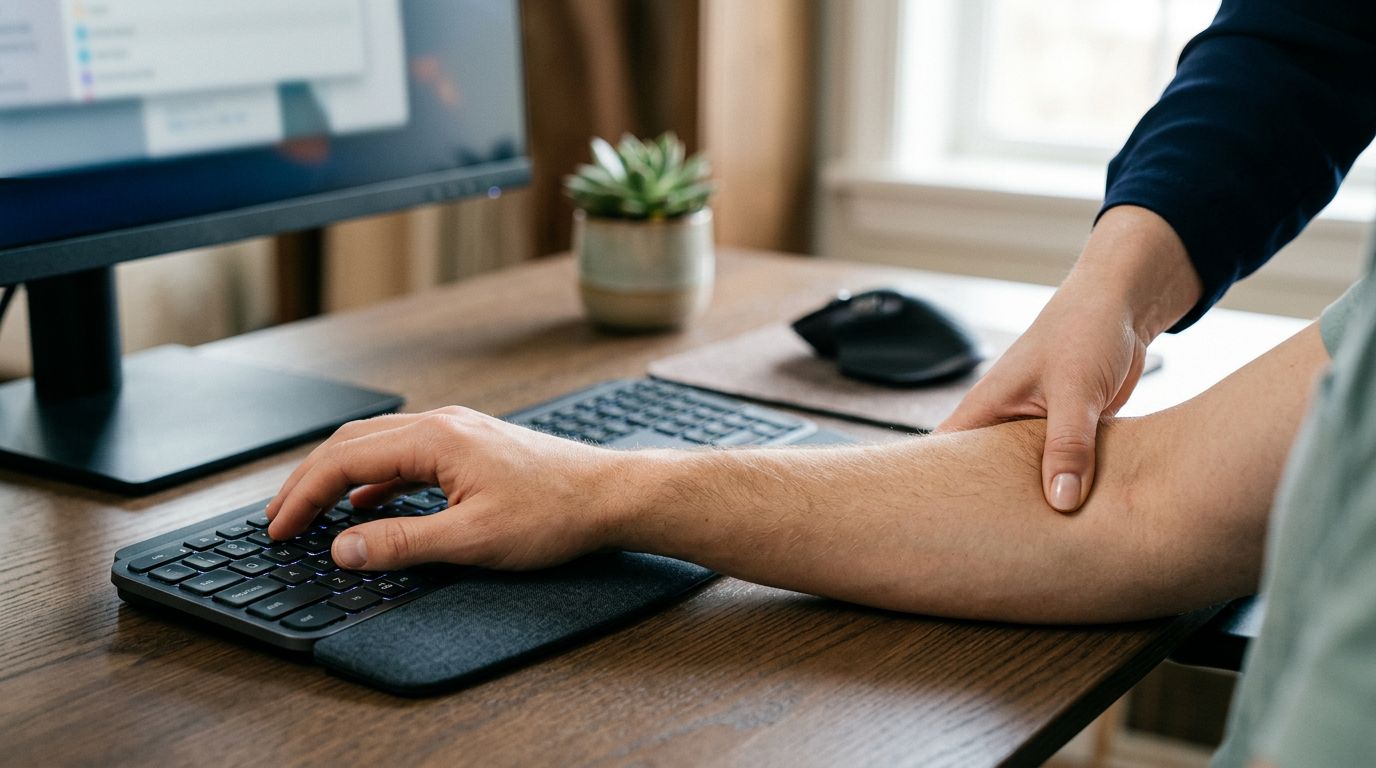
The pec minor sits near the front of the shoulder, just below the collarbone and toward the outer chest. It isn't in the armpit, and it shouldn't be attacked with a hard ball. Because nerves and blood vessels run nearby, gentle pressure works best.
A simple self-massage approach
- Sit or lie comfortably. Place two or three fingertips just below the collarbone, near the front of the shoulder.
- Press in slowly. Stay on muscle, and avoid breast tissue and the armpit.
- Hold a tender spot for 20 to 30 seconds, or make tiny circles while taking slow breaths.
- Ease off, then roll the shoulder or take a few full breaths into the ribs.
One minute per side is often enough. Afterward, the chest may feel looser and less guarded. If it feels bruised, burning, or zingy, use less pressure or stop.
Self-massage works better when you follow it with movement. Stand tall, let your ribs stack over your hips, and add a few band rows, wall slides, or an easy walk. That gives your body a chance to keep the new position.
When professional massage is a better fit
If the area is too tender, hard to reach, or linked with neck and upper back tension, hands-on work from a therapist can help. Chest work should always be discussed first. A broader session often feels better because the chest, shoulder, and mid-back all affect one another. Some people also like active stretching for shoulder relief , since lengthening work can pair well with massage.
If chest tightness comes with shortness of breath, dizziness, arm pain, jaw pain, or heavy pressure, get medical care instead of trying massage.
Massage is for muscular tightness. It doesn't replace medical evaluation for symptoms that suggest something more serious.
The Bottom Line on Pec Minor Massage
Pec minor massage can be a smart, simple tool for rounded shoulders and chest tightness. It helps most when the front of the chest feels short, tender, and stuck after sitting, training, or stress. Pair it with stronger upper back support, fuller breathing, and better daily posture habits, and the results usually last longer. If your shoulders keep drifting forward, this small muscle may be asking for attention, and a little focused work can bring real relief .
Recent Posts