Forearm Extensor Massage for Sore Wrists After Mouse Use

STILL Massage + Skin • May 4, 2026

Share this article

If your wrist aches after a long mouse session, the trouble may not start in the wrist at all. The small muscles on the back of your forearm work hard every time you click, drag, or hold tension in your hand.

A gentle forearm extensor massage can ease that load and make the wrist feel less stiff and sore. It works best when you pair it with a few simple desk habits, so the pain doesn't keep circling back. Start with the basics below.

Why mouse use strains the forearm extensors

Why does the wrist complain when the forearm has done the work? Because the muscles that lift your wrist and fingers sit higher up the arm, along the back of the forearm.

When you use a mouse for hours, you may keep a light grip without noticing it. Your wrist may stay slightly lifted or angled outward, and your fingers keep making small repeated moves. That steady effort adds up. Even if the motion feels tiny, the muscles still stay on duty.

The result is often a dull ache near the outer wrist, a tight line up the forearm, or a tired feeling in the hand. Sometimes the elbow gets involved too, because the same tendon line runs upward from the wrist.

Short breaks help. So does a neutral wrist and a lighter grip. Massage is the release valve, but better positioning keeps the strain from building right back up.

Signs the soreness is coming from the forearm

A wrist can hurt for many reasons, so the location of the pain matters. If the forearm is the real source, the discomfort often shows up in a few clear ways.

What you feel What it often points to
Ache after clicking or dragging Overworked extensor muscles
Tight spot on the top of the forearm Muscle tension in the extensor group
Wrist feels better after rubbing the forearm The forearm is part of the problem
Soreness that reaches toward the elbow Strain along the tendon line
Tingling, swelling, or sudden weakness Get checked by a professional

The pain pattern can overlap with tendon irritation, nerve irritation, or other hand problems. That is why a good read on the symptoms matters. If the pain is sharp, persistent, or feels different from normal muscle soreness, get it assessed.

Tenderness a few inches below the elbow often matters more than the wrist itself.

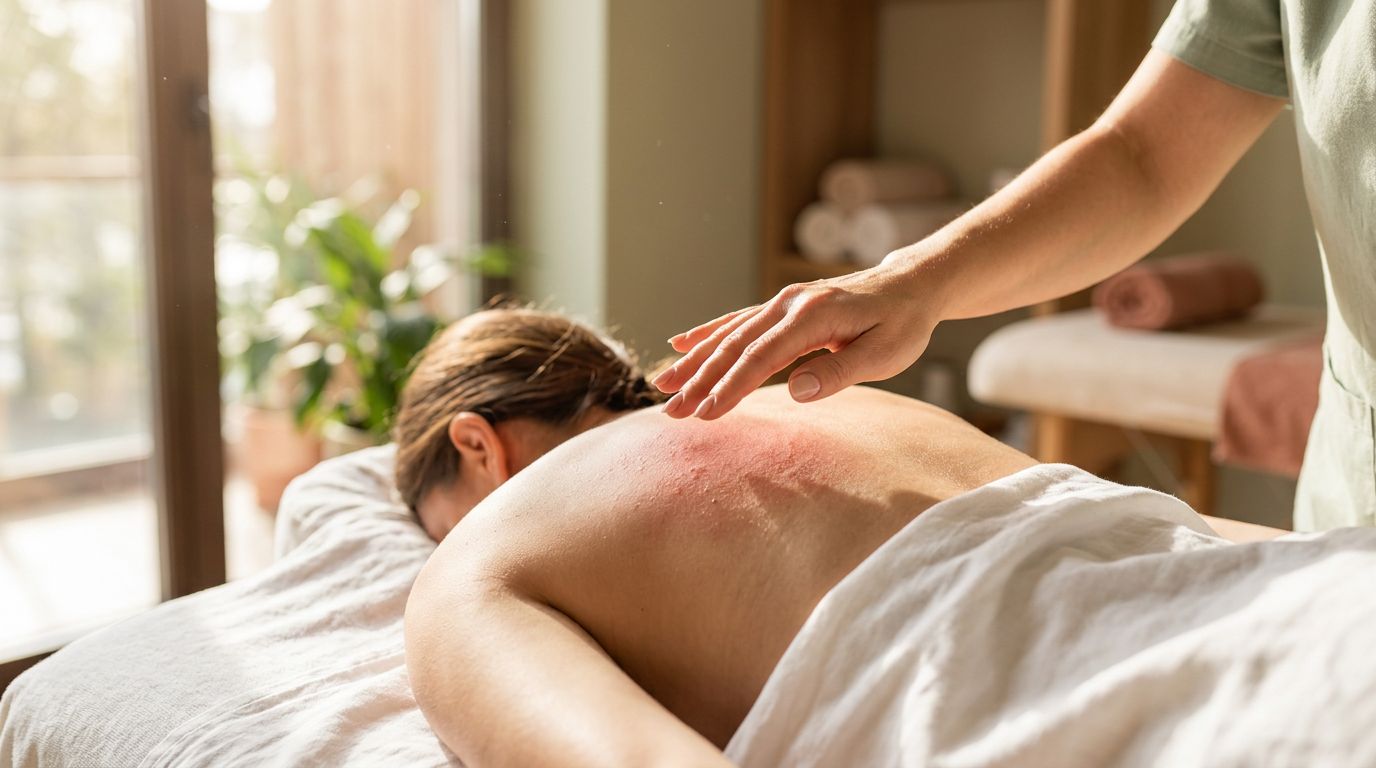
How to do forearm extensor massage at home

A good session should feel useful, not punishing. Start with light pressure and work up only if the tissue settles.

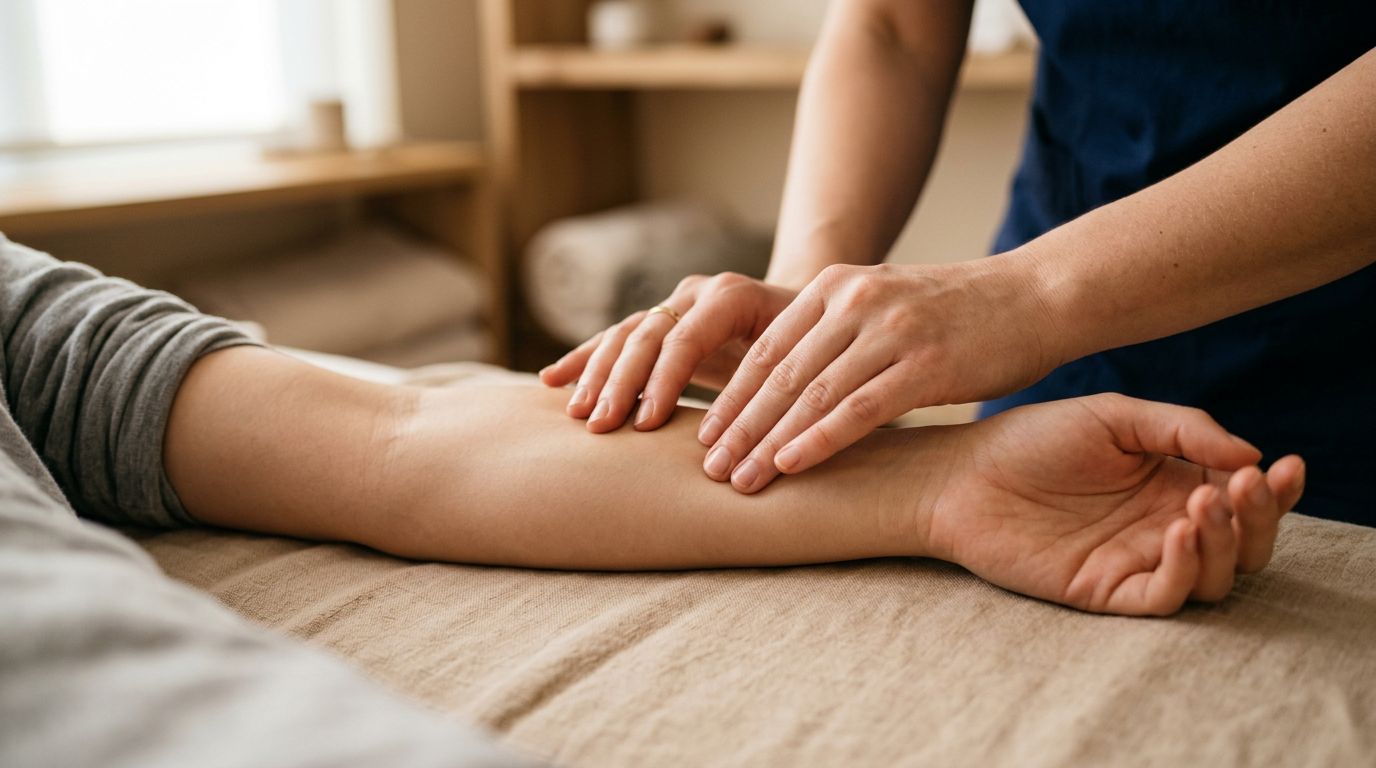
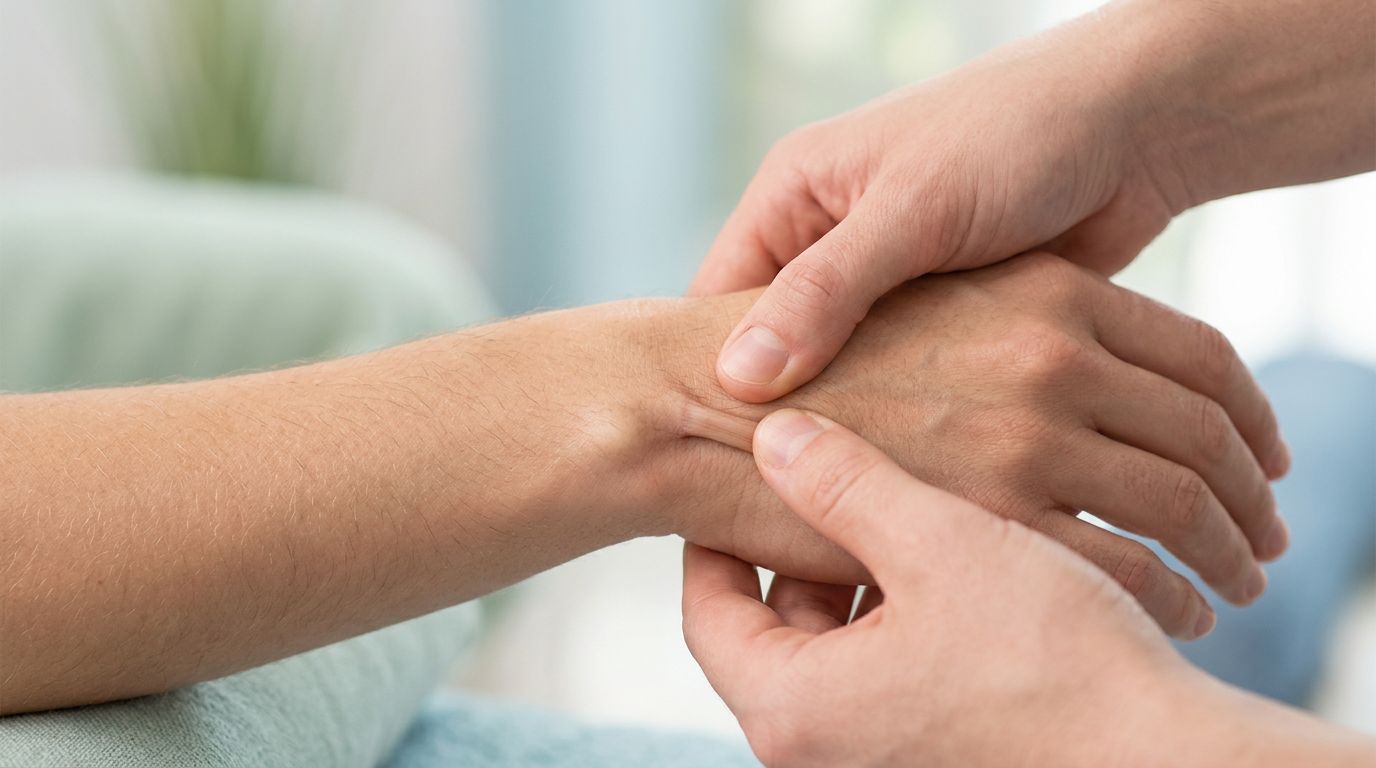
  1. Rest your forearm on a table with the palm facing down and the hand relaxed.
  2. Use the thumb pads of your other hand, or your knuckles, to press into the top of the forearm.
  3. Start near the outside of the elbow and glide slowly toward the wrist in short strokes.
  4. Pause on tender spots for 5 to 10 seconds, then ease off.
  5. Add small wrist movements while holding gentle pressure, such as flexing and releasing the hand.
  6. Finish by opening and closing your fingers a few times, then shake the hand loose.

Keep the pressure firm but not painful . If you hold your breath, brace your shoulders, or wince, the pressure is too strong. A light warm washcloth for a minute or two can make the tissue easier to work before you start.

A session usually takes 3 to 5 minutes per side. That is enough for most people. You do not need to chase every knot. Work the full length of the muscle, stay on the muscle belly rather than the bony wrist, and avoid deep pressure over swelling or a fresh injury.

After the massage, give your hand a short break from the mouse. Open and close the fingers, roll the shoulders once or twice, then return to work with a softer grip.

Desk habits that keep the relief longer

Massage helps most when the same strain does not pile back on ten minutes later. A few small changes at the desk can make a big difference.

  • Keep the mouse close enough that your elbow stays near your side.
  • Let the wrist stay neutral instead of bent up or curled outward.
  • Click with less force and loosen your grip between tasks.
  • Take short breaks every 30 minutes to open and close the hand, stretch the forearm, and reset your posture.
  • Raise or lower the chair and desk so the forearm does not hover in tension.

Mouse shape matters too. If your hand feels cramped on a standard mouse, a better fit may reduce the squeeze you put through the forearm. The goal is simple. Your hand should guide the mouse, not fight it.

You can also alternate tasks when possible. A few minutes of typing, a quick stand-up break, or a change in hand position can stop the extensor muscles from staying switched on for too long.

When to stop self-massage and get help

Self-massage is useful for ordinary overuse, but some symptoms need more than home care. Stop and get checked if you notice swelling, numbness, tingling, weakness, or pain that wakes you at night.

You should also get help if the pain started after a fall, a pop, or a direct hit. Those signs can point to something more than muscle tightness. If the soreness keeps returning after a week or two of rest and lighter mouse use, that is another reason to book an assessment.

A licensed massage therapist can work the forearm, shoulder, and neck together when the issue is muscle tension. That matters because mouse strain often travels through the whole arm. A focused session may ease the load faster than trying to rub the wrist alone.

If the pain feels nerve-like, spreads into the fingers, or turns into constant weakness, a medical evaluation is the safer next step. Massage can help in the right situation, but it should not mask a problem that needs treatment.

A better way to calm mouse-related wrist pain

Mouse use can make the wrist feel like the problem, while the forearm does most of the complaining. That is why forearm extensor massage is such a useful first step. It reaches the muscles that have been holding the strain for hours.

Pair the massage with a neutral wrist, a lighter grip, and short breaks through the day. That simple mix can calm the ache and keep it from building again. If the soreness keeps coming back, get it looked at and choose care that matches the cause, not just the symptom.

Recent Posts

By STILL Massage + Skin May 3, 2026
A hard coughing spell or a tough core session can leave your ribs feeling pinned in place. Even a deep breath can feel tight, and turning in bed may make you wince. Intercostal massage can help when the problem comes from irritated muscles between the ribs, not from a serious...
By STILL Massage + Skin May 2, 2026
A sore tailbone can turn a normal chair into a problem. One long meeting, a car ride, or a hard bench can make every shift feel sharp and annoying. Tailbone pain massage can help when the pain comes from tight muscles, protective tension, or strain around the lower back and hi...
By STILL Massage + Skin May 1, 2026
A golf round can leave your side waist feeling pulled tight, even when your back feels fine. That stretch across the ribs and waist often comes from the obliques working hard through every swing. When those muscles stay braced after the round, twisting, bending, and even getti...
By STILL Massage + Skin April 30, 2026
Tightness at the base of your skull can feel like a band pulling backward. It can show up as neck pain, a dull headache, or a stiff turn when you check your blind spot. The splenius capitis is one of the muscles that often sits behind that pattern. When it gets overworked, a f...
By STILL Massage + Skin April 29, 2026
Front hip pain that seems to slide toward the inner knee can be maddening. You may feel it during stairs, long walks, squats, or after sitting too long. That pattern often points to the sartorius, a long muscle that crosses both the hip and knee. A careful sartorius massage ca...
By STILL Massage + Skin April 28, 2026
If your breath feels stuck high in your chest, your body is probably working harder than it should. Tightness around the upper belly and lower ribs can make every inhale feel small and shallow. That pattern often shows up with stress, long hours at a desk, or a body that has b...
By STILL Massage + Skin April 27, 2026
Your feet ache after a long day. Stress knots up your shoulders, and you just want relief. Reflexology offers a targeted way to ease tired feet and melt away tension. This foot therapy presses specific points to boost relaxation. It helps with common issues like sore soles and...
By STILL Massage + Skin April 26, 2026
You've just crushed a heavy lifting session. Your outer forearm throbs with that familiar ache. It's the brachioradialis muscle crying out for relief. Lifters often ignore this spot until soreness hits hard. Curls, rows, and pulls strain it fast. Brachioradialis massage target...
By STILL Massage + Skin April 25, 2026
Ever feel a sharp tug in your front shoulder when you reach for something overhead? That ache often comes from a small but mighty muscle called the coracobrachialis. It sits deep in your upper arm and helps flex your shoulder, but tightness builds up fast from daily habits lik...
By STILL Massage + Skin April 24, 2026
You've just finished a long ride. Your outer thigh feels tight and sore. That nagging pull makes every step hurt. Cyclists often face this after pushing hard on the bike. The culprit is usually the vastus lateralis muscle. It's part of your quads and takes a beating during rid...
Show More