
Pectoralis Major Massage for Chest Tightness After Bench Press
A heavy bench session can leave your chest feeling locked up by the next day. Sometimes the soreness is normal. Other times, the front of the shoulder and upper chest feel so stiff that even reaching for a door handle gets annoying.
That is where pectoralis major massage can help. Done well, it can ease guard, improve movement, and make your upper body feel less boxed in after lifting. The goal is simple, reduce tightness without beating up tissue that already worked hard.
The key is knowing what kind of tightness you have, how to work on it safely, and when massage is the wrong next step.
Why the chest feels tight after bench press
The pectoralis major does a lot during a bench press. It helps bring the arm across the body and drives the pressing phase. When you train hard, that muscle takes load through a full range of motion, then often tightens up after the set is over.
That tight feeling can come from a few places. Sometimes it's plain delayed soreness. Sometimes the muscle fibers feel protective because the set was heavy, your form changed late in the workout, or your shoulders took over more than usual. The front of the chest can also feel stiff when the upper back is tired, because your body starts to hold tension in the front.
A tight pec major often shows up as:
- A pulling feeling near the front of the shoulder
- A sense that the chest is shorter on one side
- Less comfort when you open the arm wide
- A pinched or guarded feeling during overhead motion
- Soreness when you bring the arm across the body
This is where people sometimes try to stretch hard and make it worse. Gentle release often works better than forcing range. The pec major usually wants calm pressure, not a battle.
How pectoralis major massage helps recovery
A focused pectoralis major massage can reduce the sense of grip in the chest after bench press. It works by helping the tissue relax, improving blood flow, and giving the nervous system a reason to stop bracing. That matters, because a lot of post-workout tightness is partly a protection response.
Massage can also help the surrounding muscles. The front shoulder, upper arm, and upper ribs all play into how the chest feels. When those areas soften, the chest often stops feeling like it's stuck in a shortened position.
A good session can help you:
- Move your arm with less pulling in the chest
- Breathe a little easier through the upper ribs
- Notice side-to-side differences
- Recover without adding more strain
- Prep for your next workout with less stiffness
If pressure makes pain spike, back off. The goal is release, not a deeper ache.
The best part is that massage can fit into recovery without taking over your whole routine. A short session after heavy pressing may be enough to change how your chest feels for the rest of the day.
Safe ways to release a tight chest
The chest is sensitive, so technique matters. You want steady pressure, slow breathing, and enough patience for the tissue to respond. You do not need to dig hard. In fact, too much force can make the area clamp down more.
Self-massage that stays gentle
If you're working on your chest at home, start with light pressure. Use one or two fingertips, the heel of your hand, or a small massage ball against a wall. Stay on the fleshy part of the chest and near the outer pec, not on the breastbone.
A simple sequence works well:
- Stand tall and relax your shoulders.
- Place a ball between the wall and the upper chest, near the front of the shoulder.
- Sink in slowly until you feel moderate pressure.
- Hold still and breathe for 20 to 30 seconds.
- Move the arm a little, then check the spot again.
Small movements often help more than big ones. Raise the arm, lower it, or bring it across the body while keeping pressure steady. That gives the tissue a chance to let go without forcing it.
If the area feels bruised, swollen, or sharp, stop. Self-massage should feel like a release, not a test of tolerance.
What a therapist may do
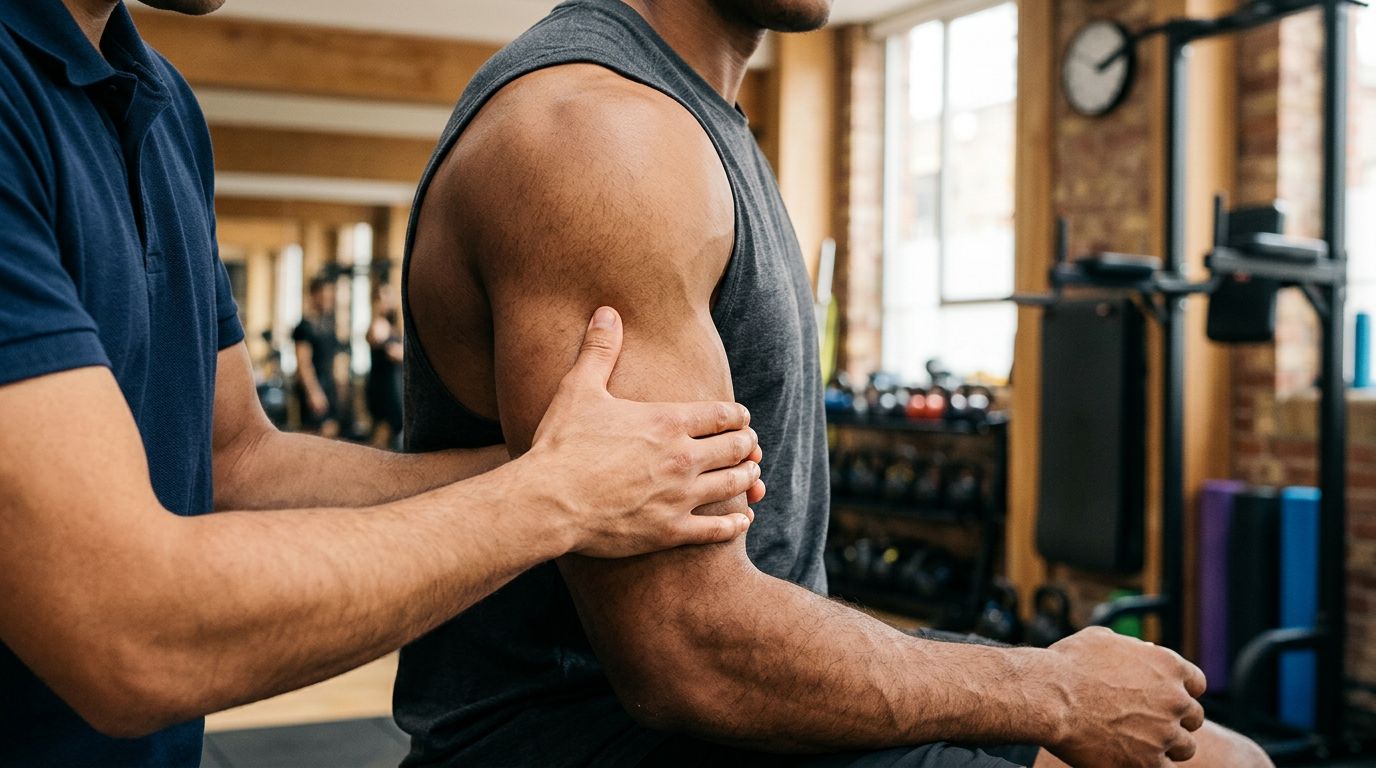
A trained massage therapist can work the pec major with more control. They may combine slow compression, broad pressure, and gentle stripping along the muscle fibers. They can also work the shoulder and upper back so the front of the body is not doing all the work.
That matters because chest tightness after bench press rarely lives in one spot alone. The body adapts as a unit. If the upper back is stiff, the chest often overworks. If the shoulders ride forward, the pec major may hold more tension than it should.
In a session, the therapist may ask you to breathe into the pressure. That helps the chest wall soften. It also keeps you from holding your breath, which makes the area tighter.
A solid recovery visit may include work on the lats, front deltoids, and upper ribs too. Those areas affect how the chest moves, especially after pressing volume has been high.
If you want help from a pro, tailored massage therapy sessions can focus on the chest, shoulders, and upper back in a way that fits your training load.
When chest tightness needs more than massage
Massage is useful for normal post-lift tightness, but it is not the answer for every kind of chest pain. Some symptoms need medical care, not bodywork.
Get checked if you have chest pain that:
- Feels heavy, crushing, or pressure-like
- Spreads into the arm, jaw, neck, or back
- Comes with shortness of breath, dizziness, or nausea
- Starts suddenly during the lift
- Leaves swelling, bruising, or a pop in the chest or shoulder
- Gets worse instead of better over a few days
A muscle that is simply tight usually feels local and changes with movement or touch. Pain that feels deep, strange, or out of proportion should be taken seriously.
Bench press can also expose form problems. If your shoulders roll forward, your grip is too wide, or you bounce the bar off the chest, the pec major may take more stress than it should. Massage can help with recovery, but it should sit beside better training habits, not replace them.
What to expect from a recovery-focused massage session
A good recovery session starts with a quick conversation. The therapist should ask where you feel tight, how your chest reacted after bench press, and whether the discomfort is mild soreness or something sharper. That helps shape the pressure and the areas they choose.
Expect the therapist to work around the front of the shoulder and upper chest carefully. The pressure may feel slow and deliberate. It should not feel rushed. Breathing usually plays a big part, because the chest responds well when you can relax your rib cage.
Some people feel looser right away. Others notice the change later that day or after a night of rest. Both are normal. The point is to leave with less restriction and a better sense of how your body is holding tension.
After the session, drink water, move the shoulders gently, and avoid another hard chest workout right away if the area still feels tender. A little walking, arm circles, and easy range of motion are usually enough. You want the tissue to settle, not get shocked by another max effort set.
If you train often, massage works best as part of a simple rhythm. Heavy pressing, recovery work, better mobility, and smart load management all support one another. Leave one piece out, and the same tightness tends to return.
Conclusion
Chest tightness after bench press can feel stubborn, but it usually responds well to the right kind of care. A careful pectoralis major massage can ease guard, improve movement, and help the front of the body stop doing all the work.
Keep the pressure gentle, stay away from sharp pain, and pay attention to how your chest feels during movement. When the tightness is normal soreness, massage can help a lot. When the pain feels off, get it checked instead of pushing through it.
The chest should feel worked, not trapped.
Recent Posts