
Flexor Hallucis Longus Massage for Big Toe Stiffness
A stiff big toe can throw off your whole stride. It can make push-off feel clunky, stairs feel harder, and barefoot walking feel awkward.
One small muscle often plays a bigger role than people expect: the flexor hallucis longus , or FHL. When it gets tight or irritated, the big toe may feel like it needs a long warm-up before it moves well. The next step is knowing what that muscle does and when massage makes sense.
Why the flexor hallucis longus affects big toe movement
The flexor hallucis longus runs deep through the lower leg, behind the inner ankle, under the foot, and into the big toe. Its job is simple, but important. It helps bend the big toe downward and supports push-off as you walk, climb, run, or rise onto your toes.
That means stiffness in this muscle can show up in more than one place. You might feel it in the arch, the ankle, or the toe itself. Sometimes the toe is the part that complains, even when the tension starts higher up.
This muscle also works hard during daily life. Long walks, standing shifts, hill climbing, lunges, running, and even toe gripping can load it again and again. If the tissue gets overworked, it can feel dense, guarded, or slow to move.
Big toe stiffness does not always come from the FHL, though. Joint wear, bunions, turf toe, gout, and other foot issues can create similar symptoms. That is why it helps to look at the full pattern, not just the toe.
Signs the FHL may be part of the problem
FHL-related stiffness often follows a pattern. The toe may feel limited during push-off, especially after sitting for a while. The arch may feel tight too. Sometimes the inner ankle feels sore when you press along the tendon path.
You may also notice that the toe moves better after a warm shower or a short walk. That kind of "gets better once it loosens up" feeling often points toward soft-tissue tightness. Still, the pattern matters more than one single sign.
Common clues include:
- A stiff big toe during walking or lunges
- Tightness under the arch
- Ache behind the inner ankle
- Cramping in the foot or calf after activity
- A sense that the toe won't bend smoothly
Sharp pain, swelling, redness, or sudden heat calls for medical attention, not self-massage.
If the toe feels blocked, catches, or hurts deeply in the joint, the problem may be bigger than muscle tension. In that case, massage alone is not the right tool. A proper assessment helps rule out joint or tendon injury.
What flexor hallucis longus massage can change
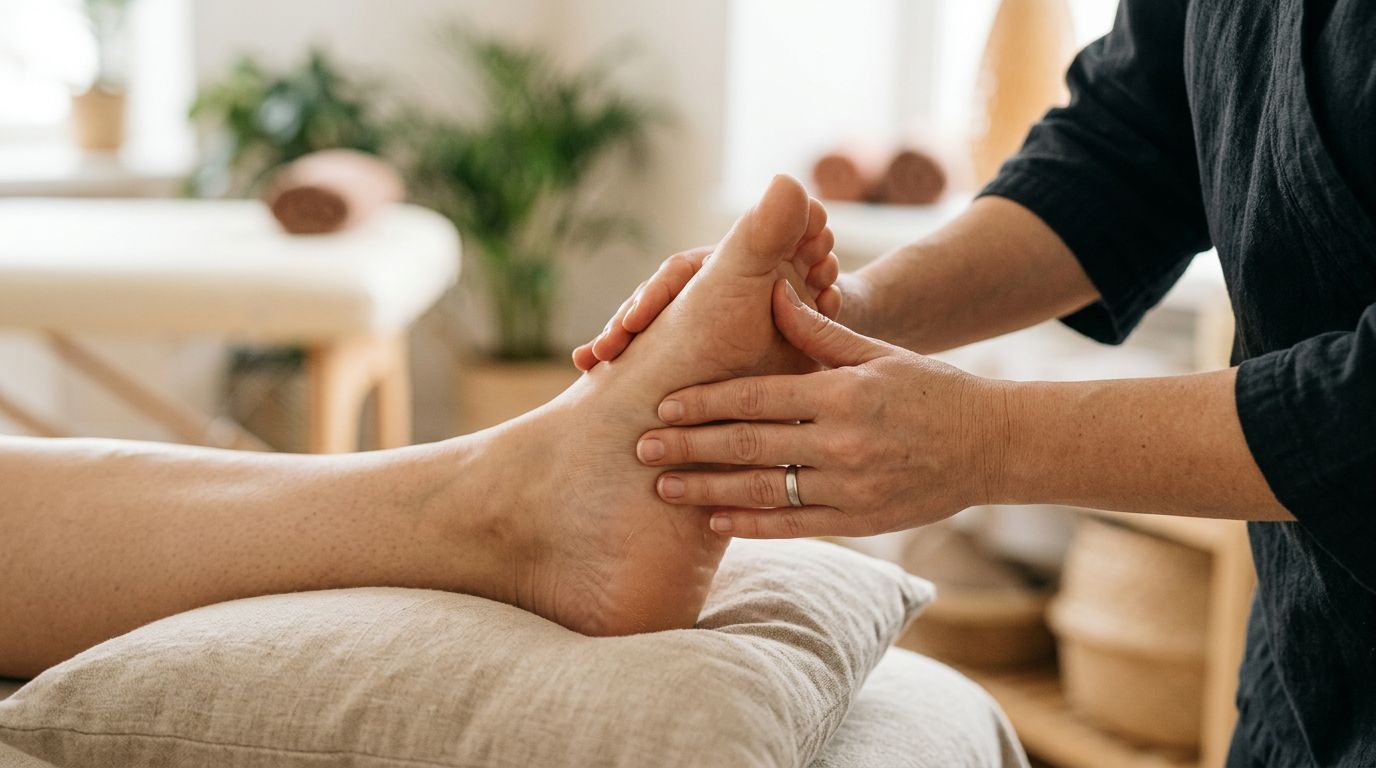
A careful flexor hallucis longus massage can help the surrounding tissue relax. That can make the toe feel less guarded and more willing to move. It can also reduce the feeling that the foot is "stuck" during push-off.
Massage works best when the issue is related to tension, overuse, or poor soft-tissue glide. It may calm the calf, ease the inner ankle, and soften the arch at the same time. Since the FHL runs through all those areas, treating only the toe usually misses part of the story.
The goal is not to force the toe open. The goal is to lower irritation and let motion return with less effort. Think of it as helping a tight cable slide more freely, not yanking it into place.
Massage may help when:
- You feel stiff after exercise or long periods on your feet
- The toe loosens with heat or gentle movement
- The arch feels tight along with the toe
- You want to support recovery between active days
For people who already get massage for pain or stress, this kind of focused work can fit into a broader session. If you want a customized appointment, professional massage therapy can address the lower leg, foot, and the tissues that affect toe motion together.
A safe self-massage routine for home
Home work should stay gentle. The foot has small structures, and too much pressure can make irritation worse. Start light, move slowly, and stop if the pain sharpens.
A simple routine can help when stiffness feels like tension rather than injury:
- Warm the area first.
Use a warm towel, a short walk, or a shower before you start. Warm tissue usually responds better than cold tissue. - Work the calf and inner lower leg.
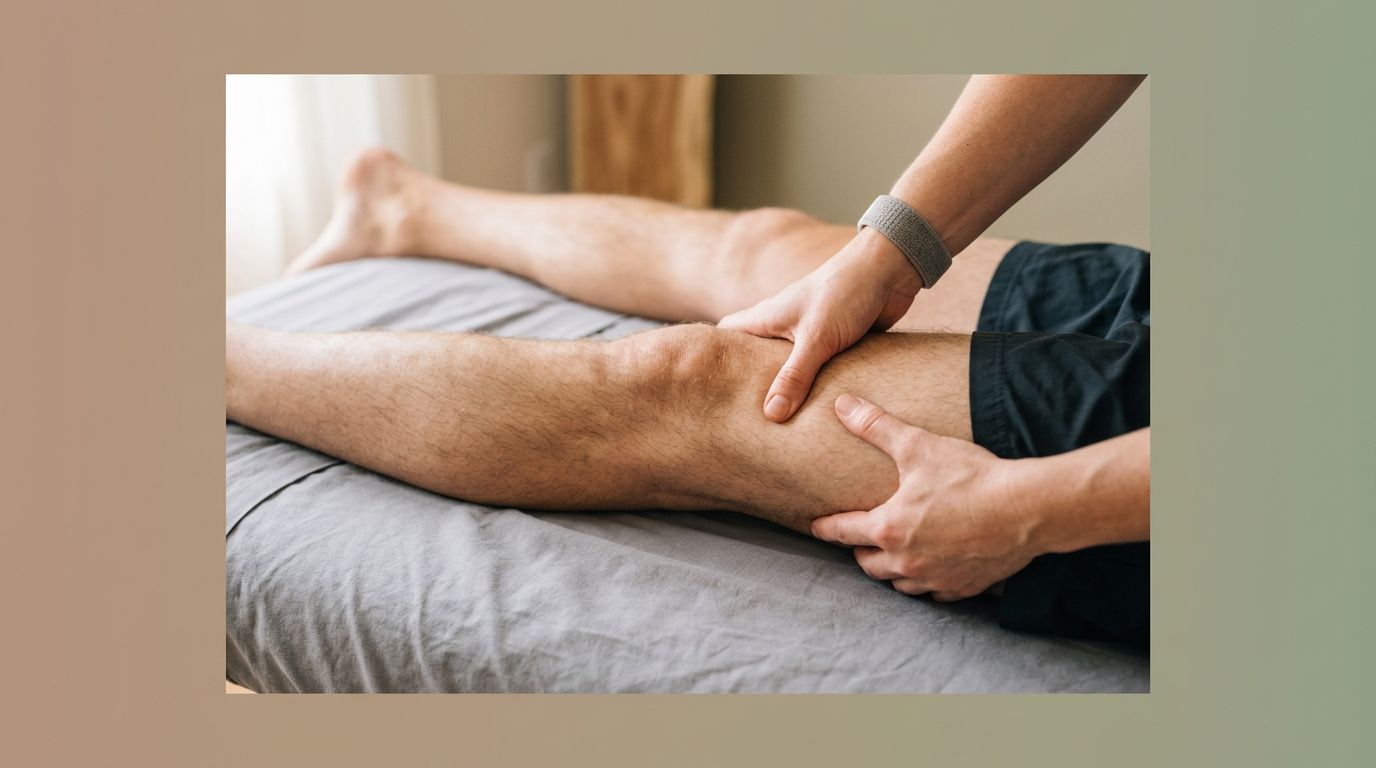
Use your fingers, thumb, or a soft ball to massage the inner calf slowly. Follow the muscle from the middle of the calf toward the ankle. Stay off any painful spots that feel hot or bruised. - Ease into the inner ankle and arch.
Use light pressure along the inside of the ankle and the arch. Keep it broad, not pokey. The FHL tendon runs in this region, so a calm touch often works better than deep force. - Move the big toe while you massage.
Gently bend and straighten the big toe as you work. Small motions can help the tissue glide. If it feels stuck, reduce pressure and keep the movement tiny. - Finish with a few smooth toe bends.
Stand, walk, or do a few controlled toe lifts after the massage. This gives your foot a chance to use the new motion right away.
Keep each area brief. One to two minutes is enough to start. If the foot feels more irritable afterward, back off and give it rest.
When big toe stiffness needs more than massage
Massage is useful, but it has limits. If the joint itself is inflamed, if the tendon is irritated, or if the foot mechanics are off, the stiffness can return fast. That is when a wider plan matters.
Pay closer attention if you notice any of these:
- Pain that gets worse instead of better
- Swelling around the toe or ankle
- Trouble bearing weight
- A snapping or catching feeling
- Stiffness that lasts for weeks
In those cases, a therapist or clinician should look at the whole foot and lower leg. Footwear, walking pattern, calf tightness, and activity load all matter. Sometimes the toe is only one part of the problem.
This is also where regular bodywork can help. A therapist may work the calf, ankle, arch, and foot as one chain, instead of chasing the pain spot alone. That approach often makes more sense than repeated deep pressure on one tender area.
If you like learning about bodywork and recovery, the spa blog is a helpful place to find related massage topics and practical care ideas.
How to support long-term toe mobility
The best results usually come from consistency, not force. Gentle massage, smart rest, and regular movement do more than one hard session ever will.
Try to notice what makes the stiffness flare. Long standing days, tight shoes, barefoot time on hard floors, and sudden activity spikes can all play a part. Once you spot the pattern, it gets easier to reduce the load.
A few habits help keep the toe moving:
- Choose shoes that let the forefoot bend comfortably
- Avoid pushing through sharp pain during exercise
- Use short, frequent mobility breaks on long workdays
- Keep calf and foot tissue from getting overly tight
Small changes add up. The toe is small, but it works hard every time you step forward. When the FHL stays calm and mobile, the whole foot usually feels more available.
Conclusion
A stiff big toe can start as a small annoyance and turn into a daily nuisance. When the flexor hallucis longus is part of the problem, careful massage can ease tension and improve how the toe moves.
The key is to stay gentle, watch for warning signs, and treat the foot as a connected system. When the stiffness is simple tightness, the right touch can make walking feel smoother again.
Recent Posts