Extensor Hallucis Longus Massage for Top Foot Tightness After Walking
A tight, sore spot on the top of your foot can turn an easy walk into a slow shuffle. Often, the small muscle that helps lift your big toe is doing more work than it should, especially if your stride is long or your shoes are stiff.
That muscle is the extensor hallucis longus , and gentle extensor hallucis longus massage can help when the front of your ankle or the top of your foot feels pulled, tired, or achy after walking. The key is to calm the tissue, not pound on it.
If your foot feels better after a short rest but tightens again once you start moving, the next few sections will help you make sense of it.
Why the top of your foot gets tight after walking
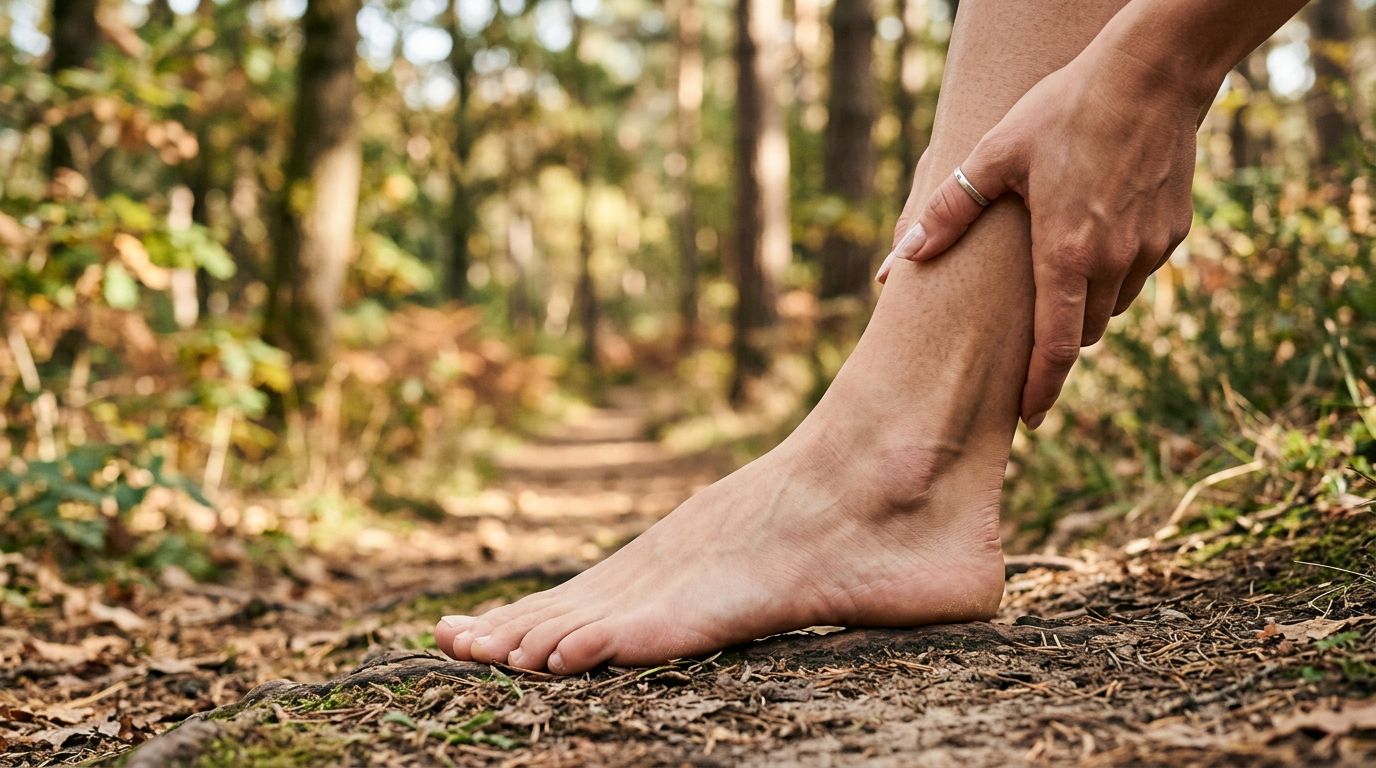
Walking seems simple, but your foot works hard with every step. The big toe lifts, the ankle clears the ground, and the muscles on the front of the lower leg keep the motion smooth.
When those muscles get overworked, the top of the foot can feel stiff or tender. That often happens after a long walk, a steeper route, a faster pace, or a day in shoes that press across the instep.
A few common triggers show up again and again:
- Too much toe lift : If your big toe keeps working to clear the ground, the extensor hallucis longus can get tired fast.
- Tight shoes or laces : Pressure across the top of the foot can irritate the tendons there.
- Hill walking : Uphill and downhill steps both ask more from the front of the ankle.
- Limited ankle motion : When the ankle doesn't move well, the foot often compensates.
- Sudden change in activity : A weekend hike after a quiet week can wake up sore tissue.
The sensation is often a mix of tightness and fatigue. It may ease once you sit down, then return when you stand again. That pattern points toward overuse more than a sudden injury.
Still, top-of-foot pain can come from other structures too. If the area is swollen, hot, bruised, or painful at one exact spot on the bone, stop and get it checked.
Where the extensor hallucis longus works in each step
The extensor hallucis longus runs along the front of the lower leg, passes over the ankle, and reaches the big toe. Its job is simple, but important, it helps lift the big toe and assists with foot clearance during walking.
That means the muscle is active every time you swing your leg forward. If it gets tight, the big toe may not move as freely. You may notice a pulling feeling near the top of the foot or a tug along the front of the ankle.
Tightness in this area can also change how you walk. You might shorten your stride without realizing it. You may avoid pushing off fully. Over time, that small change can make the foot feel even more guarded.
If the pain is sharp or keeps getting worse, don't try to massage through it. Muscle tightness should ease with gentle work, not spike into pain.
The good news is that this muscle responds well to light, careful touch. Because it sits close to the surface, you can often find tender spots without much pressure. That makes it a good candidate for slow, patient work.
A useful way to think about it is this, the muscle is like a cable that got pulled a little too tight. The goal is to let the tension settle, not stretch it hard in one shot. Gentle pressure, slow breathing, and short sessions usually work better than force.
How to do extensor hallucis longus massage without overdoing it
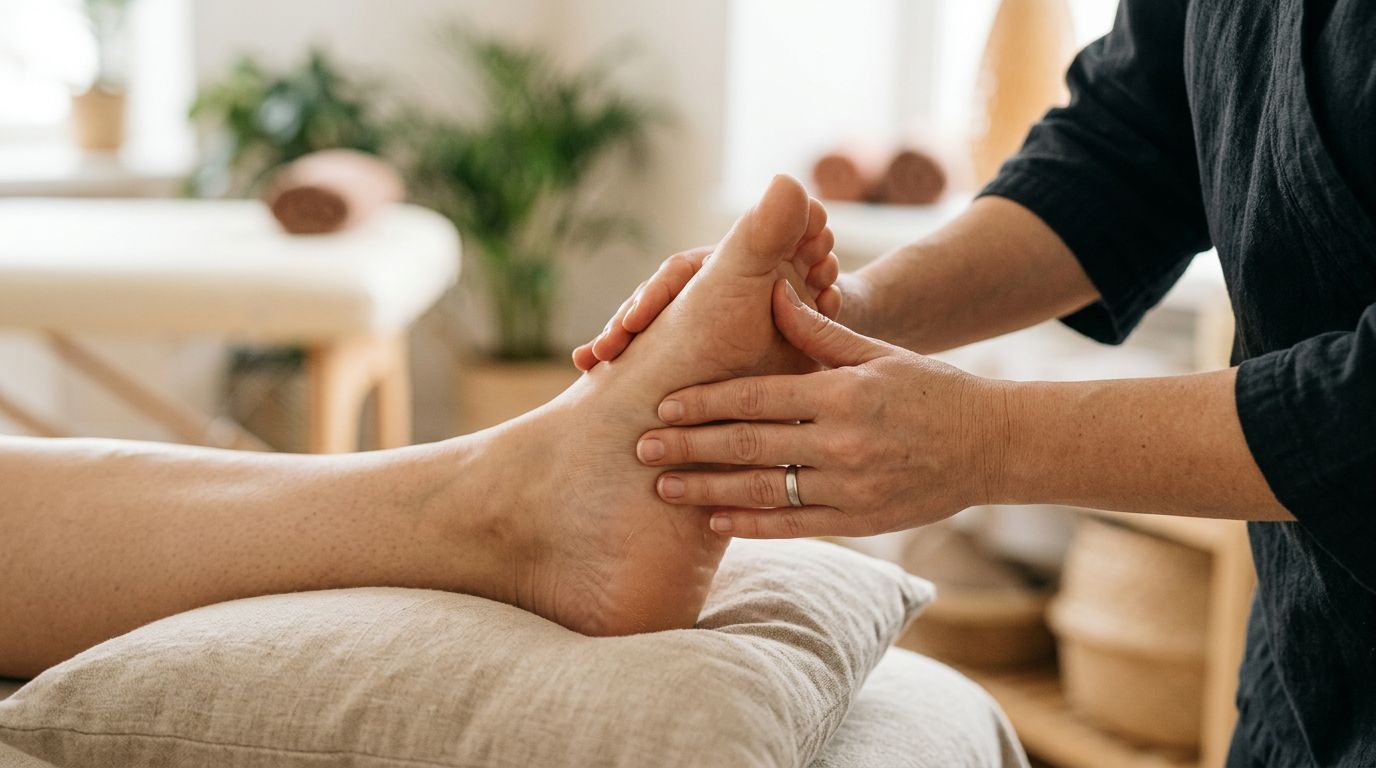
You can start with your hands, a thumb, or a small massage ball. The work should feel mild to moderate, with pressure that feels useful but never sharp. If you brace your whole body while pressing, the pressure is probably too much.
Try this simple sequence:
- Sit with the foot supported. Rest the heel on the floor or on a towel so the foot can relax.
- Trace the tender line. Glide your fingers along the top of the foot and the front of the ankle until you find a sore spot.
- Hold light pressure. Stay on the tender area for 20 to 30 seconds, then ease off.
- Move the big toe. Slowly bend and straighten the big toe a few times while keeping the pressure gentle.
- Finish with slow strokes. Use long, light passes over the top of the foot to help the area settle.
If you want a ball, use something small and soft at first. A tennis ball can feel too firm for some people. A hand or thumb gives you more control, which matters when the tissue is irritated.
The best results usually come from short sessions. One to three minutes on each tight area is enough to start. After that, stand up and walk a few steps to see how the foot feels.
A few mistakes are common:
- Pressing hard into pain because it feels productive
- Working only on the sore spot and ignoring the ankle
- Rubbing fast instead of using slow, steady pressure
- Massaging for too long and irritating the tissue
If the area feels calmer after the first round, you can repeat the work later in the day. If it feels more sore, back off and give it time.
Stretching and shoe changes that help the muscle settle down
Massage works best when you also reduce the load on the muscle. If the same trigger keeps showing up, the tightness will keep coming back.
Start with your shoes. Lacing too tightly across the top of the foot can press right where the tendon runs. Loosen the laces a little, or skip an eyelet if the pressure sits high on the instep. Softer uppers and more toe room can also make a difference.
Then look at your walking pattern. If your steps are long and your pace is brisk, your front-of-leg muscles may be working harder than needed. Shorter, easier steps can reduce strain for a few days.
A simple reset routine can help:
- Gently move the ankle up and down 10 times
- Lift and lower the big toe slowly
- Stretch the calf with the heel on the floor
- Roll the arch lightly with your thumb or a small ball
- Rest after longer walks instead of pushing through the ache
The calf matters because a tight calf can change how the ankle and foot move. When the ankle feels stuck, the muscles on the top of the foot often take over.
Warmth can help too. A warm shower or warm towel before massage often makes the tissue easier to work with. Cold can help if the area feels hot or mildly irritated after a long walk, but avoid using it as a way to keep walking on an angry foot.
If you prefer professional care, targeted massage therapy techniques can address the foot, ankle, and calf together. That matters because the pain site is not always the problem site.
When foot tightness needs more than self-massage
Self-massage is a good first step, but it's not the right answer for every foot pain issue. Some problems need assessment, especially when the symptoms don't match simple muscle tightness.
Get help sooner if you notice any of these:
- Swelling that doesn't settle
- Bruising on the top of the foot
- Sharp pain when you walk or push off
- Pain at one exact point on the bone
- Numbness, tingling, or burning
- Trouble lifting the big toe
- Tightness that keeps returning after rest
Pain that lingers for more than a week or two also deserves attention. The same goes for pain that shows up even when you're not walking. In those cases, massage may still be part of the plan, but it should fit into a bigger recovery approach.
A massage therapist can look at your calf tension, ankle motion, and foot mechanics together. That broader view matters because top-of-foot pain often reflects how the whole lower leg is sharing the load. Sometimes a small change in the soft tissue is enough. Other times, you need a full reset of how the foot and ankle are moving.
Conclusion
When the top of your foot feels tight after walking, the answer is often simple, the extensor hallucis longus is asking for less strain and more care. Gentle pressure, short massage sessions, and better shoe habits can ease the pull before it turns into a bigger problem.
The best extensor hallucis longus massage is calm, controlled, and paired with smart movement changes. If your foot keeps talking back after every walk, listen early. That small response can save you a lot of soreness later.
Recent Posts