
Biceps Tendonitis Massage for Front Shoulder Pain: What to Expect
That ache in the front of your shoulder can make simple tasks feel annoying, from reaching into a cabinet to fastening a seat belt. When the pain comes from the biceps tendon, massage can help, but it shouldn't feel like someone is grinding on a bruise. Biceps tendonitis massage works best when it calms the irritated area, eases muscle pull around the shoulder, and respects what the tendon can handle that day.
If you're booking a session for this kind of pain, it helps to know what a good visit looks like. Here's what may be causing the pain, what happens on the table, and when massage is a smart option, or when it's time to get medical care.
Why biceps tendonitis causes front shoulder pain
The long head of the biceps tendon runs through a small groove at the front of the shoulder. Think of it like a rope sliding through a narrow track. When you repeat overhead motions, lift too much, sleep on that side, or move with poor shoulder mechanics, that rope can get irritated.
Pain usually sits in the front of the shoulder. It may spread a little down the upper arm. Reaching overhead, carrying groceries, throwing, or even pulling up pants can light it up. Some people also notice a tender spot in the groove or a mild click.
Still, not every front shoulder ache is biceps tendonitis. Rotator cuff irritation, a labral injury, frozen shoulder, and even neck referral can feel similar. That's why a massage therapist should ask questions first, not jump straight into deep pressure.
Massage helps best by changing the load around the tendon. Tight chest muscles, a guarded front deltoid, overworked upper traps, and stiff shoulder blade muscles can all pull the shoulder out of a smooth pattern. When those tissues relax, the tendon often gets a little breathing room.
That said, massage doesn't magically erase tendon irritation. A good session lowers muscle tension, improves motion, and helps you move with less guarding. In other words, it supports recovery. It doesn't replace a medical check when symptoms are severe, sudden, or unusual.
Because the shoulder works as a team, the sore spot isn't always the whole story. For that reason, broad, thoughtful work often beats hard pressure in one tiny area.
What to expect during a biceps tendonitis massage session
A good session starts with a short review of your pain. Your therapist may ask when it began, what movements bother it, whether you feel weakness, and if you had a fall or sudden pop. Then they'll look at how your shoulder rests and moves. Sessions often last 60 to 90 minutes, but the sore shoulder won't need constant attention the entire time.
Next, they'll choose techniques based on how irritated the area feels. If the shoulder is very reactive, they'll usually start gently. If the pain has lingered for weeks and stiffness is a bigger issue, they may add slower, deeper work around nearby muscles.
Here's how a session often flows:
| Stage | What the therapist may do | What you may feel |
|---|---|---|
| Intake | Ask about pain, history, and daily triggers | More clarity about what worsens symptoms |
| Warm-up | Use light strokes to calm the shoulder and upper arm | A sense of ease, less guarding |
| Focused work | Treat pecs, deltoid, biceps, rotator cuff, and shoulder blade muscles | Pressure that feels useful, not sharp |
| Recheck | Test movement or ask you to lift the arm again | Better range, less pinching, or clearer feedback |
Most of the work may happen around the tendon, not directly on top of it. That surprises some people. Yet it makes sense. The goal is to reduce strain from the whole system, not bully one sore spot.
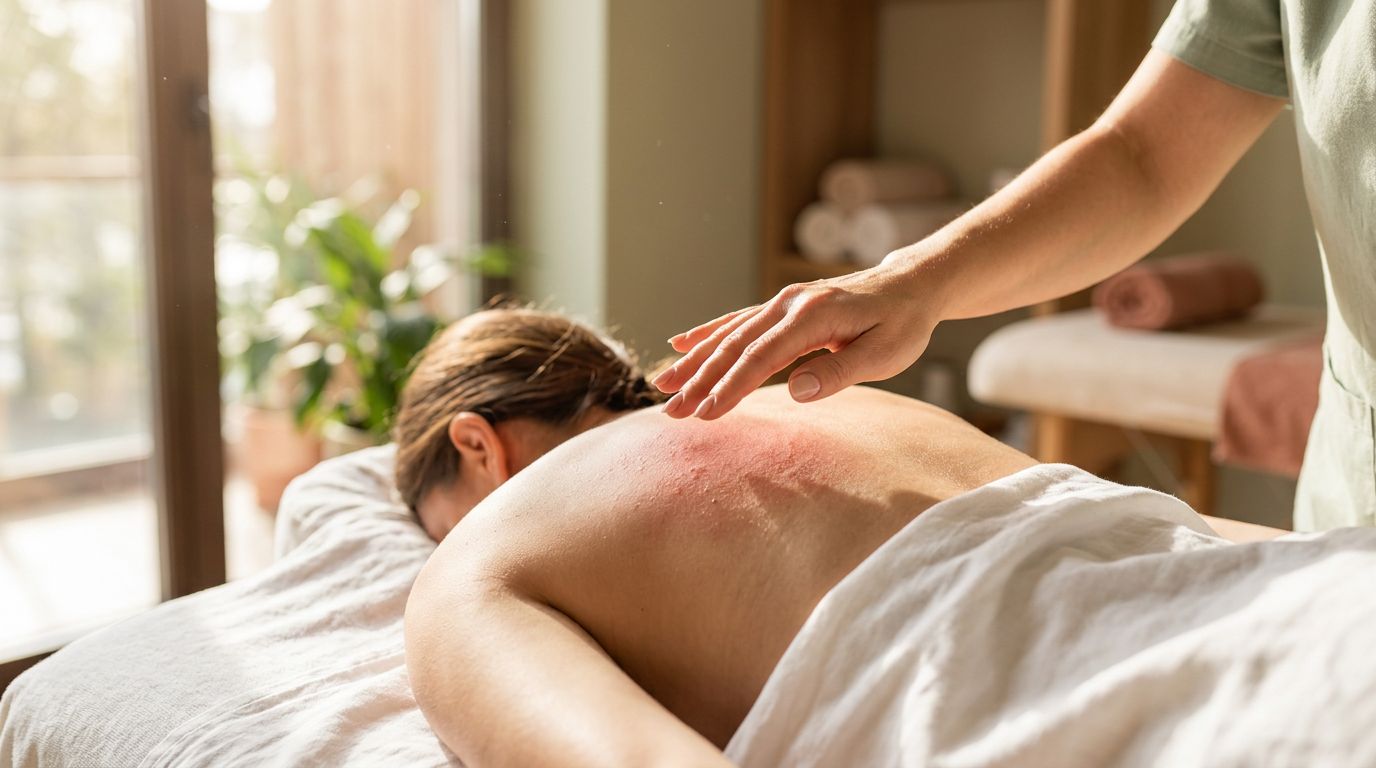
Your therapist may work the chest, upper arm, neck, upper back, and shoulder blade area. They might also use gentle stretching or guided movement while you relax. Some tenderness is normal. Sharp, zinging, or burning pain is not.
If pressure creates a hot, pinchy pain in the front of the shoulder, speak up. Good massage should settle the area, not stir it up.
By the end, your shoulder may feel looser right away. On the other hand, relief can show up later that day once the area settles. Mild soreness for 24 hours can happen, especially after deep tissue work. Strong soreness that hangs on longer often means the session was too aggressive.
After your session, progress, and when massage isn't enough
After massage, go easy on heavy lifting for the rest of the day. A short walk, gentle arm swings, or easy range-of-motion work usually beats a hard workout. Ice may help if the front of the shoulder feels more irritated later. On the other hand, some people feel better with light heat on the chest or upper back. Follow what calms the area, not what sounds tough.
Real progress usually comes from a series of smart sessions, not one heroic appointment. If you want bodywork that adapts to how your shoulder feels that day, Still Massage + Skin offers therapeutic massage for shoulder pain with a customized approach. Many people also do best when massage pairs with simple home exercises and better activity pacing.
Massage is often a good fit when pain built up over time, the shoulder feels tight, and movement is limited but still possible. It's also helpful when stress makes you brace your shoulders all day. However, massage should not be the only plan if pain keeps climbing or strength drops fast.
Pause and get medical advice if you notice any of these signs:
- A sudden pop or tearing feeling , especially during lifting or sports
- Visible bruising or a bulge in the upper arm
- Marked weakness when bending the elbow or lifting the arm
- Numbness, tingling, fever, or night pain that won't ease up
- Pain after a fall or accident
Those signs can point to more than simple tendon irritation. A massage therapist can help with comfort, but they shouldn't try to work around a red flag. Also, if nothing changes after two or three sessions, re-check the source of the pain. Front shoulder pain sometimes comes from the neck or labrum, so treatment should match the real cause.
The bottom line
That front-of-shoulder ache can feel stubborn, but it usually responds better to patience than force. The best biceps tendonitis massage is calm, targeted, and matched to how irritated the tendon is that day. When the session eases surrounding tension, respects pain limits, and fits into a broader recovery plan, your shoulder has a much better shot at moving freely again.
Recent Posts