Microcurrent Facial Lift What It Feels Like And Who Should Skip
If you've ever looked in the mirror and thought, "My face just looks a little tired today," you're not alone. Sometimes skin doesn't need a big overhaul, it needs a gentle reset. That's where a microcurrent facial lift comes in.
People often hear "current" and picture something intense. In reality, most sessions feel mild, even relaxing. Still, it's not for everyone. The best results come from the right candidate, the right settings, and the right expectations.
Below, you'll learn what the treatment is, what it feels like, and who should pass (or get a quick medical ok first).
What a microcurrent facial lift actually does (and what it doesn't)
A microcurrent facial lift uses very low-level electrical current delivered through handheld probes or gloves. The goal is to stimulate facial muscles and support a more toned look. Many people also like it because it can help the face look less puffy for a while, especially around the jawline and cheek area.
Think of it like a gentle "workout" for the face. It's not the same as a deep tissue massage, and it's not the same as a chemical peel. You're not removing layers of skin. You're also not freezing muscles the way injectables do. Instead, microcurrent focuses on how the muscles and skin surface present right now.
Here's what it's reasonable to expect:
- A temporary lifted look right after, especially in brows, cheeks, and jawline
- A fresher look that can be easier to maintain with a series
- Little to no downtime for most people
And here's what it usually won't do on its own:
- Replace surgical lifting
- "Erase" deep folds permanently
- Fix skin texture issues like rough patches or sun spots (that's a different tool)
If you're exploring professional options, you can see where microcurrent fits alongside other services under Microcurrent Facial Lift , listed with age-defense and corrective facial treatments.
What it feels like during a microcurrent facial lift (moment by moment)
Most people describe a microcurrent session as subtle. Some barely feel anything at all. Others feel mild sensations that come and go depending on the area, the hydration of the skin, and the intensity setting.
A few common feelings:
- Light tingling or fizzing under the skin
- A soft "pinch" in spots where the skin is dry or thin
- Tiny muscle fluttering, almost like a quick twitch
- Warmth from the conductive gel, especially if it's massaged in
Conductive gel is important because it helps the current travel smoothly. Without enough gel, microcurrent can feel sharp or prickly. If something stings, it's usually fixable fast. Your provider can add more gel, change placement, or lower intensity.
This quick table gives a realistic sense of what clients report in different areas:
| Area treated | What it can feel like | Why it can feel stronger there |
|---|---|---|
| Forehead/brows | Light twitching, gentle pull | Smaller muscles, thinner skin |
| Cheeks | Mild tingling, "tight" feeling | Larger muscle groups respond well |
| Jawline | Stronger tug, brief zaps if dry | Bony area, less padding |
| Around mouth | Tingle, quick flutter | Many nerve endings, lots of movement |
Another sensation that surprises people is a metallic taste. It doesn't happen to everyone, but it can pop up when treating around the mouth, especially if you have metal dental work. It's odd, but usually harmless and short-lived.
If you're waiting for pain and instead you feel "almost nothing," that can still be normal. Comfort doesn't mean it isn't working.
What it feels like right after
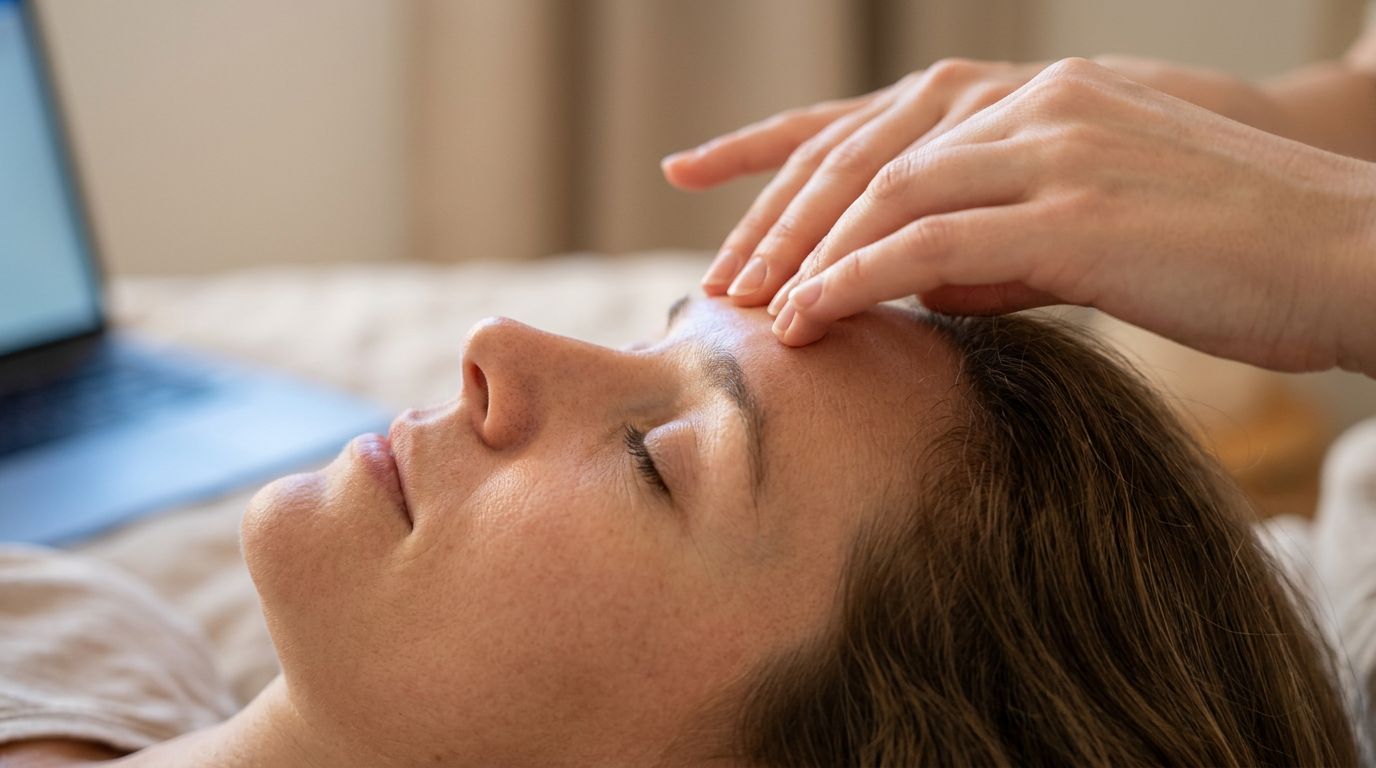
Right after a microcurrent facial lift, many people notice their face feels "awake," like the way your body feels after a brisk walk. Skin can look slightly pink from touch and stimulation. Some clients also notice one side looks more lifted when half the face gets treated first. That split-face moment can be a fun reality check.
A few after-effects that can happen:
- Mild redness that fades within an hour or two
- A tighter feel through the cheek or jaw
- A hydrated look if the facial also includes calming, moisture-focused products
If you feel sore the next day, it's usually mild. It can feel like you chewed gum all afternoon. That tends to happen more when stronger settings are used, or when muscles are very "sleepy" from tension patterns.
Who should skip microcurrent (and who should try something else)
Microcurrent is gentle, but it still uses electrical stimulation. That means certain health conditions and situations call for caution. When in doubt, medical clearance is the smart move.
Here are common reasons to skip or get approval first :
- Pacemaker or implanted defibrillator : This is a hard stop for most providers.
- Epilepsy or seizure disorders : Ask your doctor first, because stimulation may not be appropriate.
- Pregnancy : Many professionals avoid microcurrent due to limited research on this specific use.
- Active cancer treatment (or recent treatment): Policies vary, so get medical guidance.
- Recent facial surgery : Wait until you're fully healed and cleared.
- Open cuts, active cold sores, or irritated rashes : Better to reschedule than flare the skin.
- Unmanaged skin sensitivity : If your barrier is compromised, the session may feel too sharp.
Also, consider timing if you've had injectables. Some providers prefer you wait a bit after Botox or fillers before doing microcurrent in the same area. The concern is less about danger and more about not interfering with your aesthetic plan. Your best move is to share what you've had done and when.
Who usually loves the results
Microcurrent tends to be a great match if you:
- Want a lifted look without downtime
- Notice puffiness or "softness" in the jawline some days
- Feel like your face looks tired even when you slept well
- Prefer gradual improvement through regular skin care visits
On the other hand, if your main goal is texture (roughness, enlarged pores, sun damage), you may be happier pairing microcurrent with a different facial approach. Similarly, if acne is your top concern, a targeted corrective plan often makes more sense first.
How to make results last longer
A microcurrent facial lift often looks best as a series, then maintenance. In daily life, your results usually hold better when you support them with basics: hydration, consistent skin care, and stress management.
A few practical tips that help:
- Show up with clean skin when possible, and avoid heavy oils right before.
- Drink water the day before and the day of, because dehydrated skin can feel pricklier.
- Skip harsh exfoliants for a day or two after if you're prone to irritation.
- Plan a series if you want lasting change, not just a one-time glow.
Microcurrent is like posture. One good day helps, but consistent habits make the difference.
Conclusion
A microcurrent facial lift usually feels like mild tingles, gentle muscle fluttering, and a temporary "tight" finish. It's a great option when you want a lifted look without downtime. Still, certain conditions, especially implanted devices and seizure disorders, mean you should skip it or get medical approval first. If you want a calm, results-focused boost, microcurrent can be a smart add to your facial routine, as long as it fits your body and your goals.
Recent Posts