IT Band Massage For Outer Thigh Pain What To Expect
Outer thigh pain has a way of sneaking into everything. Walking the dog hurts, stairs feel sharp, and even lying on your side can get annoying fast. A lot of people blame a "tight IT band," then try to mash it with a roller and hope for the best.
A well-done IT band massage can feel very different from that DIY struggle. It's more targeted, more controlled, and usually a lot more effective because it addresses what's tugging on the outer thigh in the first place.
If you're thinking about booking a session, here's what to expect, what you might feel during and after, and how to get better results between appointments.
Outer thigh pain and the IT band: what's really going on
The iliotibial band (IT band) is a thick strip of connective tissue that runs along the outside of your thigh. It helps stabilize the hip and knee, especially when you walk, run, squat, or climb stairs.
Here's the part that surprises people: the IT band itself is dense tissue. It doesn't "stretch out" easily like a muscle. That's one reason aggressive rolling can feel brutal and still not fix the issue. In many cases, the bigger problem is the tension and overwork in nearby muscles that feed into that outer thigh line, such as:
- The tensor fasciae latae (TFL) near the front outer hip
- The glutes (especially glute medius)
- The outer quad (vastus lateralis)
- Hip rotators and surrounding fascia
When those areas get tight or irritated, the outer thigh can feel like a guitar string pulled too tight. You might notice a dull ache on the outside of the hip, a burning feeling along the thigh, or pain near the outside of the knee.
Outer thigh pain also shows up when your body is compensating. For example, a stiff ankle, weak glutes, or a desk-heavy week can shift load into the outside leg. Over time, that overload can turn into cranky tissue that stays "on" even when you rest.
If your pain is new, intense, or linked to swelling, numbness, or a sudden injury, get checked by a medical professional first. Massage is supportive care, not a diagnosis.
What to expect during a professional IT band massage session
A good session starts before any pressure. Your therapist should ask where you feel pain, what activities set it off, and what positions make it worse. Mention knee pain, hip pinching, low back tension, and any recent changes in training or work setup.
From there, the work usually follows a pattern: warm the area, assess tissue response, then go deeper where it makes sense. Many therapists focus more on the outer hip and upper thigh than the middle of the band itself. That's often where the "pull" starts.
The pressure: strong is fine, sharp isn't
You should expect firm, steady pressure , but it should stay in a tolerable range. Some tenderness is normal, especially around the outer hip and the upper outer quad. Still, you should be able to breathe and unclench your jaw.
A helpful rule: pressure can feel intense, but it shouldn't feel sharp, electric, or like you have to brace your whole body.
Your therapist may use slow stripping strokes, compression, and cross-fiber work on the muscles near the IT band. Trigger points around the glutes or TFL can refer pain down the outer thigh, so the "hot spot" might not be exactly where you feel symptoms.
Positioning and draping
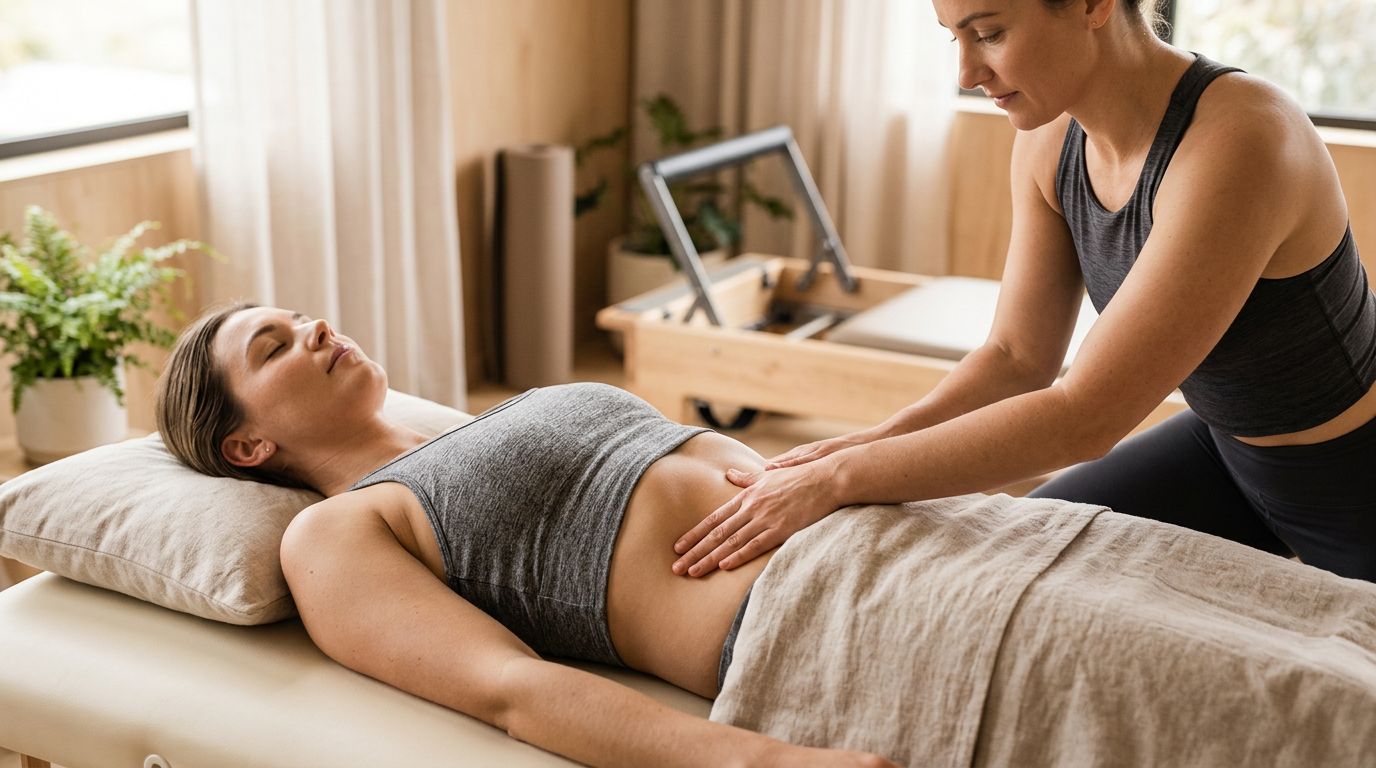
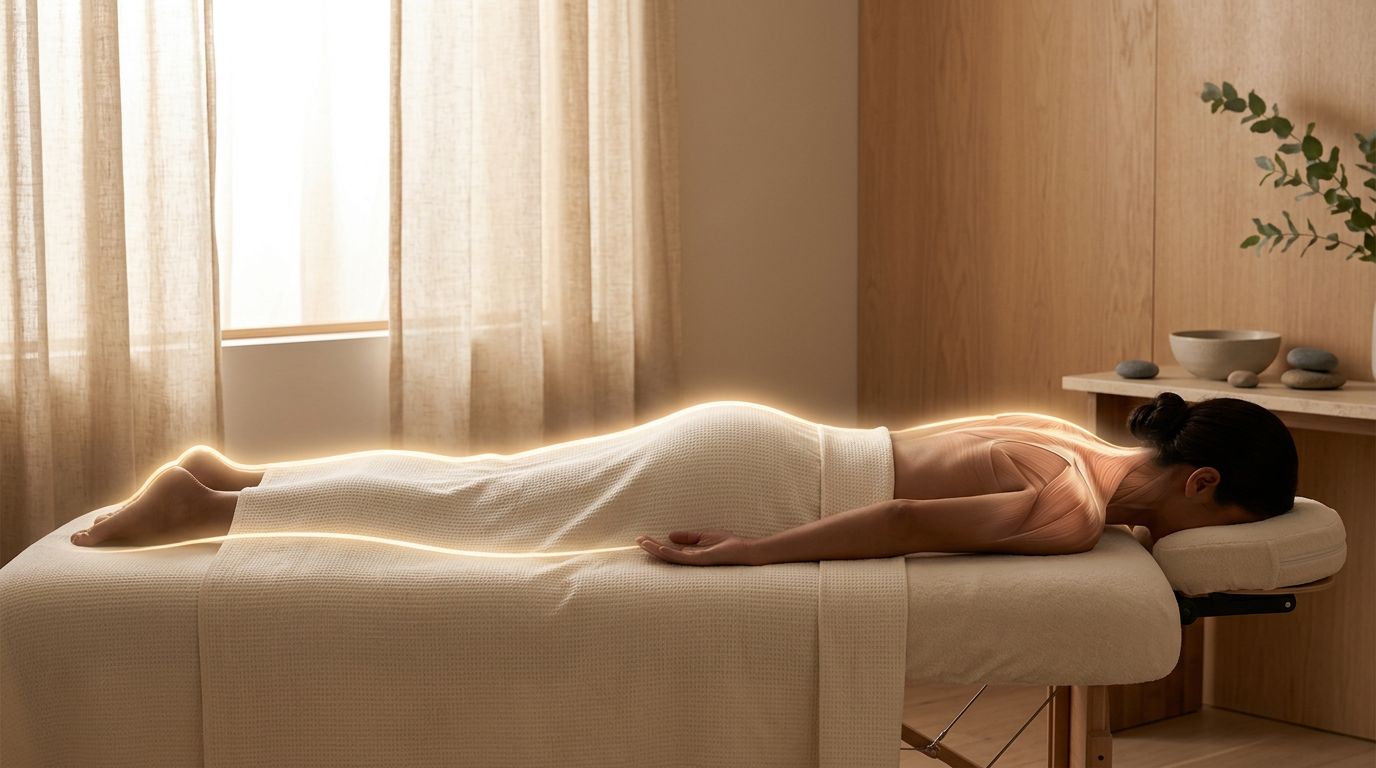
For outer thigh work, you might lie on your side, on your back with the leg angled out, or on your stomach. If side-lying hurts, speak up. Small changes like a pillow between the knees can make a big difference.
Sensations you might notice
People describe IT band area work as:
- "Good pain" tenderness that fades as tissue warms
- A spreading ache that travels down the thigh
- A pin-and-needles warning sign if pressure hits a nerve (tell your therapist right away)
- A feeling of relief when the hip finally lets go
If you want a session geared toward pain relief and mobility, book a therapist who can tailor pressure and technique, not someone who follows a one-style routine. If you're local, consider a customized session like therapeutic massage to ease IT band tension , where the goal is to match the work to your body that day.
After your IT band massage: soreness, relief timeline, and simple support
Most people feel one of two things right after: looser movement, or mild soreness that shows up later. Both can be normal.
How you might feel in the next 24 to 48 hours
A little tenderness can feel like post-workout soreness, especially if you had a lot of outer hip trigger points. Drink water, keep moving gently, and avoid testing your limits right away.
Call your therapist or a healthcare professional if pain ramps up hard, bruising is severe, or symptoms feel nerve-related (numbness, burning, weakness).
When you'll notice improvement
Some people feel better immediately, then tighten back up the next day. That doesn't mean it "didn't work." It often means your body is still doing the pattern that created the tension. Consistent care helps most when it's paired with small habit changes.
A simple way to think about it: massage softens the knot, but movement retrains the rope.
Before you choose your at-home plan, it helps to compare the common options:
| Option | Best for | What it feels like | Common mistake |
|---|---|---|---|
| Massage therapy | Targeted tension patterns | Deep, controlled pressure | Going too deep too soon |
| Foam rolling | Light tissue prep | Uncomfortable, broad pressure | Grinding the painful knee area |
| Stretching | Restoring hip motion | Gentle pull | Forcing range into sharp pain |
| Strength work | Long-term change | Challenging but stable | Skipping glutes and core control |
The takeaway: massage is often the comfort piece, but strength and smart mobility are the staying-power pieces.
A few easy "same day" tips
Keep this short and realistic. Pick one or two.
- Take a 10-minute walk later that day to keep blood flow going.
- Use heat on the outer hip if you feel stiff, 10 to 15 minutes.
- Skip hard hill repeats or deep squats for 24 hours if you're sore.
Don't chase pain with tools. If you're wincing and holding your breath, back off and reset.
When IT band massage isn't the whole answer
Massage helps, but some outer thigh pain needs a wider plan.
If pain shows up mainly during running, cycling, or long walks, look at training volume and recovery. A sudden jump in mileage, speed, or hills is a common trigger. Shoe changes can matter too.
Also pay attention to where your body is stiff. Limited hip rotation, tight hip flexors, and weak glutes can all funnel stress into the outer thigh. In that case, a therapist may recommend spacing sessions closer together at first, then tapering as symptoms improve.
Get medical guidance sooner if you have night pain that wakes you up, a history of blood clots, unexplained swelling, fever, or pain after a fall. Those aren't "tightness" problems.
Conclusion
Outer thigh pain can feel stubborn, but it's often changeable with the right approach. A focused IT band massage should feel specific, not punishing, and you should leave with a clearer sense of what's tight and why. Pair the session with gentle movement and a few smart habits, and relief tends to last longer each time. If your outer thigh keeps flaring up, treat it like a pattern worth solving, not a spot you have to keep crushing.
Recent Posts