Morton's Neuroma Massage for Burning Pain Between the Toes
Burning pain between the toes can turn a short walk into a stubborn problem. If your foot feels like it has a pebble in the front, or a hot wire runs through the ball of the foot, Morton's neuroma may be part of the picture.
A careful Morton's neuroma massage can ease tension around the nerve and reduce the strain that keeps the pain going. The key is gentle work, smart pressure, and knowing what to avoid.
Why Morton's neuroma burns in the forefoot
Morton's neuroma is not a tumor in the usual sense. It's an irritated nerve in the forefoot, most often between the third and fourth toes. That nerve gets squeezed by nearby tissue, and the pressure can make every step feel sharp, hot, or electric.
The pain often shows up with narrow shoes, high heels, long walks, or time spent on the balls of the feet. Some people also feel tingling, numbness, or a strange sense that a sock is bunched up under the toes.
The problem usually starts small. Then it flares when the forefoot takes more load than it can handle. Tight calf muscles, stiff ankles, and a tense arch can shift even more stress into the front of the foot.
That's why massage can matter. It doesn't erase the nerve issue on its own, but it can lower the pull and pressure around the area. When the surrounding tissues calm down, the nerve has more room to settle.
Direct pressure on the sore nerve often makes the burn worse. Gentle work around it usually helps more.
How massage fits into relief
A good Morton's neuroma massage focuses on the areas that feed the problem. The foot is part of a chain. When the calf is tight or the arch is overworked, the forefoot tends to absorb the extra stress.
Massage helps in a few useful ways. It can soften the muscles in the lower leg, ease tension in the arch, and improve how the foot moves when you walk. It may also reduce guarding, which is the body's habit of tightening up around pain.
That said, massage works best as part of a wider plan. Shoes matter. Rest matters. Foot shape matters. If the pain keeps showing up, massage should support other changes, not replace them.
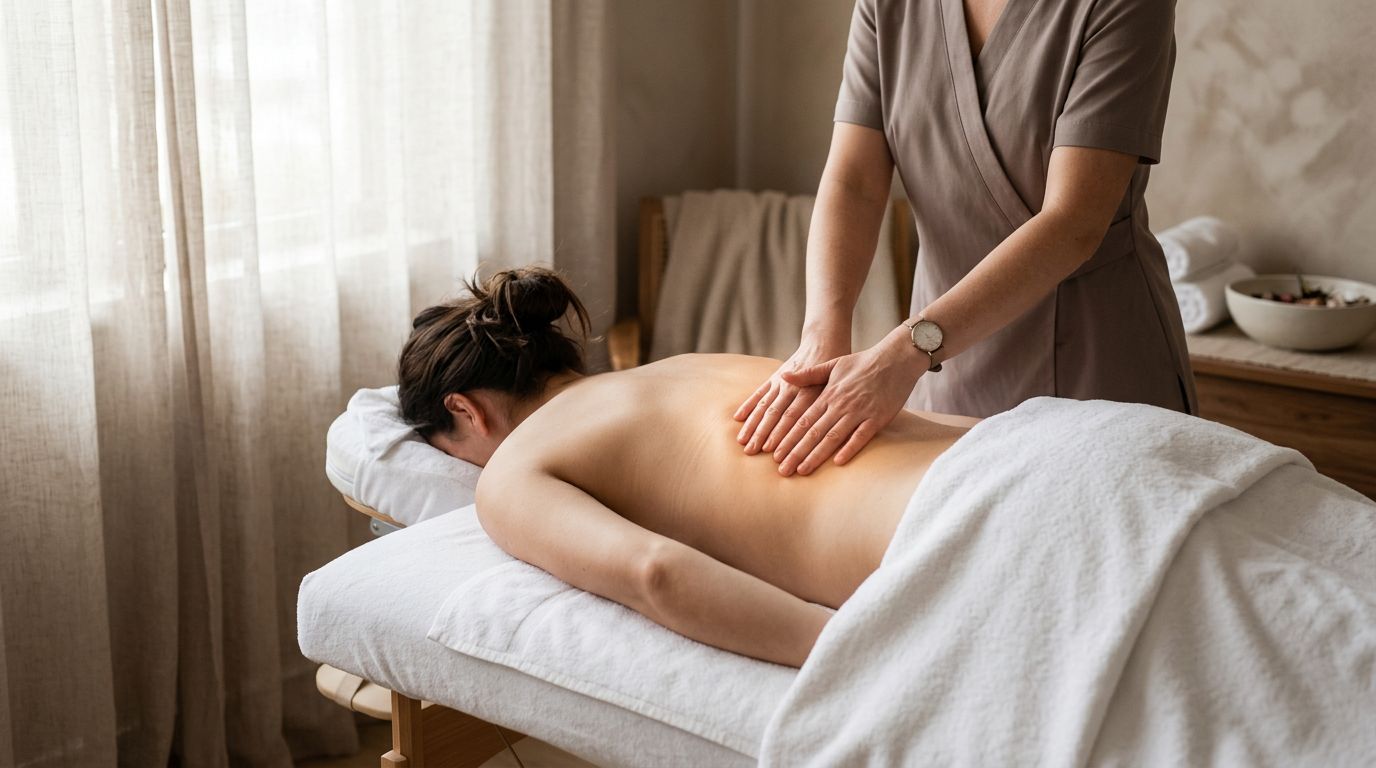
A session with targeted massage therapy for improved mobility can be a smart fit when the pain links back to tight calves, ankle stiffness, or chronic foot tension. The goal is not to force the nerve to calm down. The goal is to remove the pressure that keeps irritating it.
Some people notice relief after one session. Others need several visits and a few changes at home. The response depends on how long the nerve has been irritated and how much time you spend on your feet.
Morton's neuroma massage techniques that stay gentle
The best approach is slow and mild. Heavy pressure on the sore spot can backfire. Instead, work the tissues around the area and leave the nerve itself alone.
Start with the calf and ankle
Tight calves can make the foot work harder all day. Massage the calf with light to moderate pressure, especially the outer and inner sides. Then move to the Achilles and the ankle muscles.
This can help the ankle bend more easily when you walk. Better ankle motion means less strain gets pushed into the forefoot. Even a few minutes can change how the foot feels.
Ease the arch without pinching the forefoot
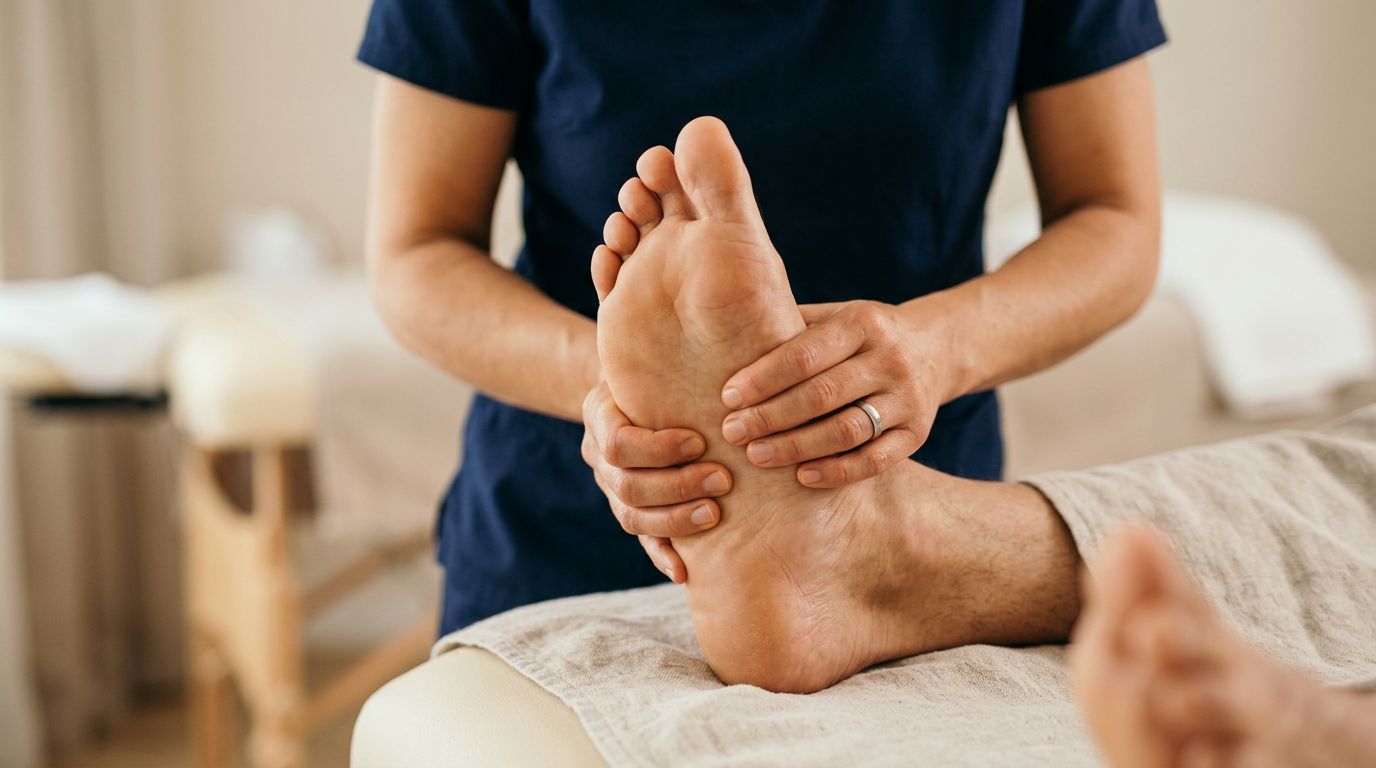
The arch often gets tense when the foot tries to protect itself. Use slow strokes along the bottom of the foot, from heel toward midfoot. Keep the pressure smooth, not poking.
A thumb glide across the arch can help, as long as it stays comfortable. If the front of the foot lights up, back off. The foot should feel looser after the work, not angrier.
Move the toes and metatarsals gently
Toe mobility matters more than many people think. Gently separate the toes, flex and extend them, and add light circles at the base of each toe. This can reduce stiffness in the forefoot.
If you reach the ball of the foot, use very soft contact. Think of easing the tissue, not digging into it. The space between the metatarsal heads is already crowded, so hard pressure tends to irritate it.
Try a simple self-massage pattern
A short home routine may help between appointments:
- Warm the foot with a towel or brief soak.
- Massage the calf for two to three minutes.
- Glide along the arch with light pressure.
- Move each toe gently.
- Stop if the burn gets sharper.
This kind of work is short on purpose. Long, aggressive sessions can leave the nerve more reactive. Short and steady usually works better.
Use tools with care
A massage ball, frozen bottle, or textured roller can feel good for some foot pain. With Morton's neuroma, though, those tools can press too hard on the sore spot.
If you use one, keep it under the arch or heel, not directly under the painful nerve area. Small changes in placement matter. A few centimeters can be the difference between relief and flare-up.
What to avoid when the pain is active
Some habits make Morton's neuroma pain louder. Massage can help, but it won't overcome constant irritation.
Avoid deep kneading right on the ball of the foot. Skip any technique that causes a sharp zap, numbness, or a rising burn. Also avoid long sessions with body weight pressed into the forefoot.
Tight shoes can undo good work fast. Narrow toe boxes squeeze the nerve again, even after a relaxing massage. High heels often make the problem worse because they shift more weight forward.
Be careful with intense stretching too. A stretch should feel like a release, not a stab. If a movement sends pain into the toes, stop and choose something milder.
Daily habits that help the nerve settle
Massage works best when daily habits stop the nerve from getting re-pinched. Small changes add up fast.
- Wear shoes with a wide toe box and low, steady support.
- Limit long periods on hard floors when the pain is flaring.
- Take breaks if you stand or walk for work.
- Choose lower-impact exercise when running or jumping makes symptoms worse.
- Use a metatarsal pad if a clinician recommends one.
- Keep calf muscles loose with light stretching after activity.
Footwear can make or break the day. Many people feel a clear shift within hours of changing shoes. That change is often more useful than trying to push through pain.
Also pay attention to your walking pattern. If you limp or roll weight to one side, other tissues tighten up to protect the sore spot. Over time, that can create new pain in the ankle, calf, hip, or back.
If the foot feels better after massage but worse after certain shoes, the shoes are a major clue. If the pain eases on rest days but flares after long shifts, load is part of the problem. Those patterns point to practical changes that matter.
When massage is not enough
Massage is helpful, but it has limits. If the pain keeps returning, gets sharper, or starts happening at rest, get it checked.
Watch for symptoms that need more attention:
- numbness that lasts
- pain that spreads beyond the toes
- swelling, redness, or warmth
- trouble bearing weight
- symptoms that worsen despite shoe changes and rest
A podiatrist, physical therapist, or other clinician can confirm what's going on and suggest the next step. In some cases, that means orthotics, activity changes, or another form of treatment.
If you already know Morton's neuroma is the issue, massage can still play a useful role. It may help calm the tissues around the nerve and make walking feel more natural. That kind of support can matter on busy days, especially when your feet have been under pressure for too long.
Conclusion
Burning pain between the toes often comes from a nerve that's being squeezed, not from a simple sore muscle. That's why Morton's neuroma massage works best when it stays gentle and focuses on the tissues around the problem area.
Calf release, arch work, toe mobility, and better shoes can all help take pressure off the nerve. When those pieces come together, the foot has a better chance to settle down.
If your pain feels sharp, persistent, or easy to trigger, treat it as a signal. The right care should calm the burn, not chase it through the rest of your day.
Recent Posts