Cupping Massage For Stubborn Shoulder Blade Knots And Tight Upper Back

STILL Massage + Skin • February 23, 2026

Share this article

That knot under your shoulder blade can feel like a pebble trapped under a rug. You stretch, roll on a ball, and book a massage, yet it keeps coming back. If your upper back stays tight after long desk days, stress, or workouts, the problem is often less about one "bad spot" and more about how the tissue layers move (or don't).

Cupping massage shoulders work differently than standard pressure-based massage. Instead of pushing down into tight tissue, the cups create suction that gently lifts and separates layers. For many people, that shift is exactly what stubborn shoulder blade knots need.

Below, you'll learn why these knots get so clingy, what a session should feel like, and how to make your results last.

Why shoulder blade knots hang on, and what cupping changes

The area between your shoulder blade and spine is a busy intersection. The rhomboids, mid-traps, and nearby stabilizers help guide your shoulder blade every time you reach, type, drive, or lift. When those muscles stay "on" all day, they can feel like a constant bruise or a tight band that won't soften.

Two things often keep the problem going:

First, your shoulder blade moves over multiple tissue layers. When the layers don't glide well, everything feels stuck. You might notice pinchy pain at the inner shoulder blade, a tight neck on one side, or a dull ache that spreads into the upper back.

Second, trigger points can form in overworked muscle. They're not always a single knot you can smash out. They can be part of a wider tension pattern, especially if your posture, breathing, and stress load never give the area a break.

Cupping helps because suction changes the direction of force. Instead of compressing tissue down toward bone, the cup gently lifts the skin and superficial fascia. That can improve glide, reduce that "stuck" feeling, and make it easier for hands-on work to sink in after.

For a deeper background on cupping methods and common uses, see Physiopedia's cupping therapy overview.

Cupping marks aren't bruises in the usual sense. They're a normal, temporary change in the skin after suction, and they should fade over several days.

Static cupping vs gliding cupping for the upper back

Therapists typically use two main styles on the shoulder blade and upper back:

Static cupping means the cup stays in one spot for a short time. This can calm a stubborn hotspot and help the nervous system let go.

Gliding cupping means the therapist moves the cup slowly across the tissue using oil or lotion. This can feel like a deep stretch from the inside, and it often helps when the whole upper back feels "stuck together."

Most people do best with a mix, because shoulder blade knots usually have both a painful point and a wider tension map around it.

What a cupping massage session feels like for shoulder blade knots

A good session shouldn't feel like a battle. Strong work can help, but the goal is a clear change in how you move and breathe, not just surviving pressure.

In practice, cupping for shoulder blade knots often follows a simple flow:

  1. Quick check-in and movement test : You'll usually raise your arms, turn your head, or reach behind your back. This helps pinpoint what's driving the tension.
  2. Warm-up with hands-on massage : The therapist softens the surface tissue first, so cupping feels smoother.
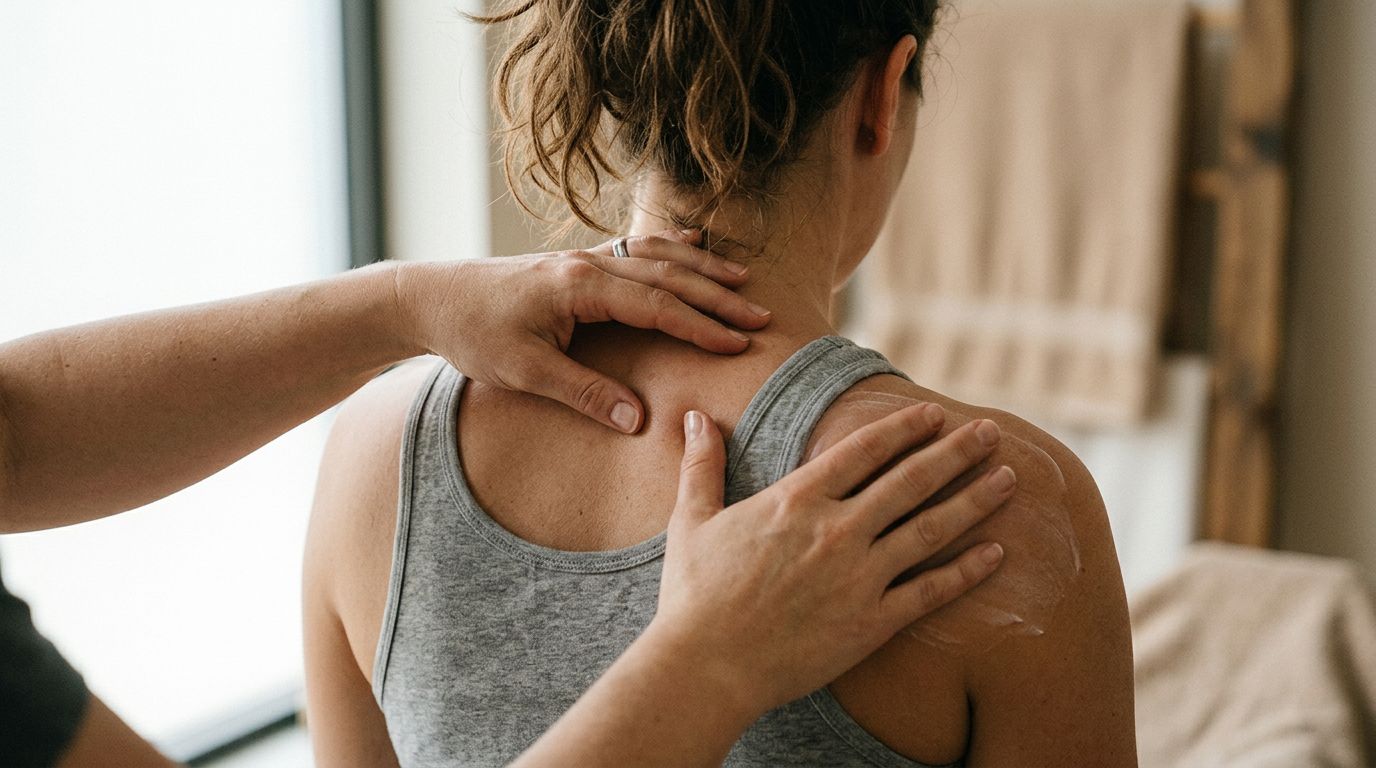
  3. Cup placement along the "knot highway" : Common areas include the upper traps, levator scapula (top inner shoulder blade), and the muscles between the shoulder blade and spine.
  4. Short holds or slow glides : Expect a firm pulling sensation, like the tissue is being gently tugged upward.
  5. Finish with targeted work and down-regulation : Many therapists add focused compression, stretching, or calming strokes to help your body keep the change.

If you're already searching for a session that targets knots and upper back tension, a customized massage approach matters as much as the cups. A focused option like a targeted neck and back massage can also be paired with cupping, depending on your goals and skin sensitivity.

Aim for "productive discomfort," not sharp pain. If your breath gets tight or you brace, the work is too intense.

How to tell it's helping, and how many sessions you may need

Right after a session, the best sign is often movement. Your shoulders may sit lower, your neck may turn easier, or reaching overhead might feel smoother. Some people notice a warm, loose sensation between the shoulder blades, like the area can finally expand.

Soreness can happen, especially if you've had tight upper back tissue for months. Still, you should feel a net improvement within 24 to 72 hours.

As for frequency, it depends on your pattern:

  • If the knot is new and linked to a recent workout or stressful week, one session may be enough.
  • If the tension has been building for years, plan on a short series. Two to four sessions spread over a few weeks is common, with reassessment each visit.

The best plan is the one that changes your baseline, not just your symptoms for a day.

Safety, aftercare, and habits that keep your upper back loose

Cupping is generally safe when a trained professional chooses the right suction and timing. However, it's not for everyone. Skip cupping or get medical clearance first if you have any condition where suction could be risky.

Here are common reasons to avoid cupping:

  • Blood thinners or bleeding disorders
  • Active skin irritation , rashes, or sunburn in the area
  • Recent surgery near the treatment zone
  • Fever or active infection
  • Pregnancy , unless your provider approves and your therapist is trained in prenatal care

After your session, treat the area like you'd treat a hard training day. Give it a little respect so your body holds the change.

Keep aftercare simple:

  • Drink water, then eat a normal, protein-containing meal.
  • Keep the area warm for the rest of the day.
  • Avoid a heavy upper body workout for about 24 hours if you're sore.
  • Take a gentle walk, because easy movement helps circulation.

For a plain-language look at common reasons people try cupping, read this guide to cupping benefits.

To make results last longer, add one small daily habit. Choose the one you'll actually do:

Doorway chest stretch (60 seconds) helps if your shoulders round forward.

Thoracic extension over a towel roll (1 to 2 minutes) helps if your upper back feels locked.

Slow nasal breathing with long exhales (2 minutes) helps if stress is the real driver. When your nervous system stays on high alert, your upper traps often follow.

The main idea is simple: cupping can reset the tissue, but your daily pattern decides whether the knot returns.

Conclusion

Stubborn shoulder blade knots usually aren't "one spot" you can force into relaxing. They're often a mix of overworked muscle, sticky tissue layers, and stress-driven guarding. Cupping massage shoulders techniques can help because suction changes how the tissue moves, and that can bring fast relief for a tight upper back.

If your shoulder blade pain keeps circling back, try a session with skilled assessment, smart suction, and calm communication. Then support it with one small habit you can repeat every day. Your upper back should feel like it has space again, not like it's carrying a hidden stone.

Recent Posts

By STILL Massage + Skin March 3, 2026
After birth, your body can feel like a house that's been gently shifted off its foundation. Nothing is "wrong" with you, but the usual sense of steadiness can take time to return. Your core might feel soft or disconnected, your hips may ache, and your low back can start doing...
By STILL Massage + Skin March 2, 2026
That inside-elbow ache can feel oddly personal, like your arm's quietly protesting every handshake, grocery bag, or golf swing. If you've found yourself searching for golfers elbow massage , you're probably wondering two things: what it should feel like, and whether massage co...
By STILL Massage + Skin March 1, 2026
When your hands go numb, it can feel like they don't quite belong to you. Keys slip, buttons fight back, and your grip turns unreliable at the worst times. If you're considering carpal tunnel massage , you probably want one simple thing answered first: what will it feel like,...
By STILL Massage + Skin February 28, 2026
That sharp "pinch" in the front of your hip, plus an achy spot near your low back, can make simple things feel hard. Getting out of the car, walking the dog, even turning in bed can set it off. If you're looking into SI joint pain massage , you probably want two things, relief...
By STILL Massage + Skin February 27, 2026
When your shoulders feel like they're carrying a backpack of stress, "just relax" doesn't help much. Your body needs a clear signal that it's safe to soften. A salt stone massage uses smooth, warmed Himalayan salt stones to bring that signal through steady heat and gliding pre...
By STILL Massage + Skin February 26, 2026
Curious about raindrop therapy massage but not sure what you're signing up for? You're not alone. People hear "raindrops of essential oils" and imagine instant calm, like a spa day in a bottle. The reality can be wonderfully relaxing for some, and uncomfortably intense for oth...
By STILL Massage + Skin February 25, 2026
Shoulder pain has a way of sneaking into everything. Reaching into the back seat, putting on a bra, grabbing a towel off a hook, even sleeping can start to feel like a small battle. If you're considering rotator cuff tendonitis massage , the big question is simple: will it fee...
By STILL Massage + Skin February 24, 2026
That sharp heel pain on your first steps can feel like you're walking on a tack. Then, after a few minutes, it eases up, only to creep back later. If that sounds familiar, you're not alone. A well-done plantar fasciitis massage can reduce tension in the foot and calf, calm irr...
By STILL Massage + Skin February 22, 2026
A frozen shoulder can make your arm feel like it's stuck in wet cement. You try to reach for a seatbelt or pull on a shirt, and the shoulder answers with a sharp "nope." If you're considering frozen shoulder massage , the big questions are simple: what will it feel like, and c...
By STILL Massage + Skin February 13, 2026
Deep glute pain has a sneaky way of stealing your comfort. It can feel like a bruise under the muscle, a knot you can’t reach, or a sharp ache that shows up after sitting. When that tightness is tied to the piriformis (a small muscle that sits deep in the buttock near the scia...
Show More