Golfers Elbow Massage: What It Feels Like And When To Skip

STILL Massage + Skin • March 2, 2026

Share this article

That inside-elbow ache can feel oddly personal, like your arm's quietly protesting every handshake, grocery bag, or golf swing. If you've found yourself searching for golfers elbow massage , you're probably wondering two things: what it should feel like, and whether massage could make it worse.

Massage can be a smart part of recovery when it's done at the right time and in the right spots. Still, there are moments when the safest choice is to skip bodywork and get checked out first.

Why golfer's elbow hurts (and why it's not always the elbow)

Golfer's elbow (often called medial epicondylitis) is pain near the bony bump on the inside of your elbow. That area is where several forearm muscles attach, the ones that help you grip and flex your wrist. Over time, repeated gripping, twisting, lifting, or swinging can irritate that tendon attachment.

Even if the pain sits at the elbow, the problem often involves the whole chain:

  • Tight forearm flexor muscles can tug on the tendon.
  • Stiff wrists can force the forearm to work harder.
  • Shoulder and upper-back tension can change how your arm moves.

That's why the "best" massage spot is not always the tender dot on the elbow. In many cases, working the forearm muscle belly (mid-forearm) feels productive, while pressing directly on the bony attachment feels sharp and cranky.

Pain can show up in a few common ways. You might notice a dull ache after activity, a sharper sting when you grip, or morning stiffness that fades as you move around. Some people also feel a pulling sensation down the inner forearm, especially when they straighten the arm and bend the wrist back.

A helpful rule: if pressure on the inside elbow feels like "electric" pain or triggers tingling into the hand, stop and reassess. That's a different signal than simple soreness.

What golfers elbow massage feels like when it's helping

A well-done golfers elbow massage usually feels like tender pressure with a clear "release" afterward , not a white-knuckle endurance test. The best sensation is often a mix of "that's sore" and "that's easing."

Here's what many people notice during a helpful session:

1) A focused ache in the forearm, not just the elbow
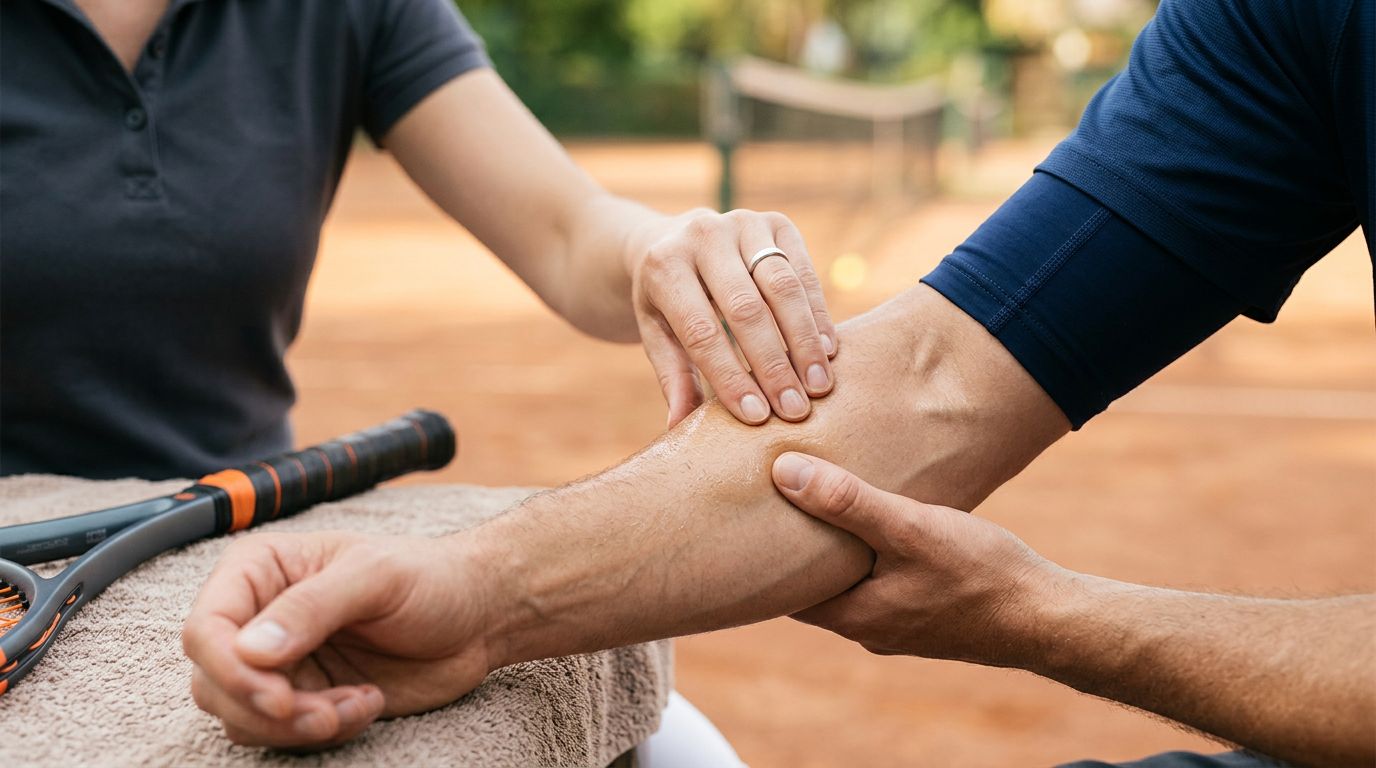
Therapists often start a few inches below the elbow, where the muscles are thicker. Pressure there can feel like a deep, steady soreness. As the tissue relaxes, the discomfort typically drops from sharp to dull.

2) Referred tenderness that fades with slow work
Trigger points in the forearm can send discomfort toward the elbow or wrist. At first it can feel like a line of ache. With slow, sustained pressure, it often softens and spreads out, like tension melting.

3) Warmth and "lighter" movement afterward
After massage, gripping may still feel sensitive, but the forearm often feels warmer and looser. Many people notice it's easier to open the hand, rotate the forearm, or straighten the elbow without guarding.

4) Mild soreness later (the normal kind)
It's common to feel slightly bruised or tender for up to a day. That's especially true after deeper work. The key is the trend: you should feel better overall within 24 to 48 hours, not progressively worse.

If you want professional help, look for a therapist who can customize pressure and spend time on the forearm, wrist, and shoulder. A targeted session that fits your pain level is often more useful than a "go hard" approach. If you're local, consider booking custom massage therapy for golfer's elbow so the focus can match what your arm tolerates that day.

A safe approach: where to massage, how much pressure, and how often

For golfer's elbow, the fastest way to irritate the area is usually heavy pressure right on the tender bony spot. A safer plan is to treat it like a sensitive rope tied to an overworked muscle. You calm the rope by relaxing what's pulling on it.

Better targets than the sore elbow point

Start with areas that often respond well:

  • The inner forearm muscles (about 2 to 6 inches below the elbow)
  • The palm-side wrist and the base of the thumb (gentle work only)
  • The upper arm, shoulder, and upper back (to reduce load on the forearm)

Simple self-massage that won't flare it up

Keep it short and controlled:

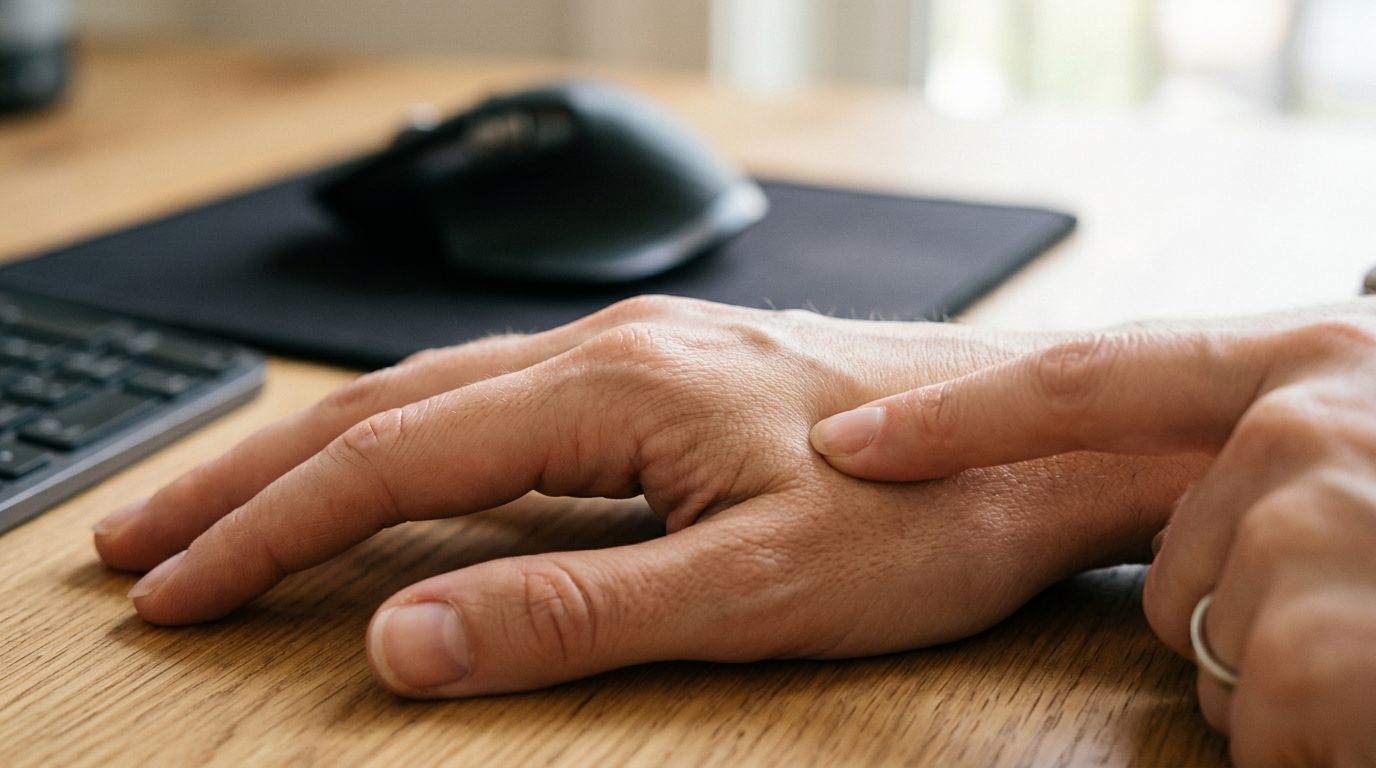
  1. Rest your forearm on a table, palm up.
  2. Use the thumb of your other hand to apply slow pressure along the inner forearm muscle.
  3. Stay off the sharpest elbow point. Work "down the forearm" instead.
  4. Use a 0 to 10 discomfort scale, and aim for a 3 to 5.
  5. Spend 60 to 120 seconds, then stop and re-check how gripping feels.

On days you feel more reactive, switch to gentler options like light compression, a warm towel, or a short forearm glide with lotion. Consistency matters more than intensity.

Massage also works best when you pair it with load management. That might mean reducing heavy gripping for a bit, changing your racket or club grip, taking micro-breaks from mouse work, or alternating tasks during house projects.

When to skip golfers elbow massage (and what to do instead)

Sometimes massage is the wrong tool for the moment. Use this quick guide to decide.

Here's a simple way to compare common situations:

Situation Massage is usually OK Skip massage and get help first
Pain timing Achy after activity, better with rest Sudden severe pain, especially after a pop
Swelling/heat No swelling, skin feels normal Visible swelling, warmth, redness, fever
Nerve signs No tingling or numbness Tingling, numbness, or shooting "electric" pain
Strength Mild weakness from pain Major grip weakness or dropping objects
Recent changes Gradual onset over weeks New injury from a fall or hard impact
Meds/medical factors No bleeding risk Blood thinners, easy bruising, or clot history (ask first)

The big red flags are nerve symptoms , obvious inflammation, or signs of a tear. Massage can also be a bad idea if touching the area causes sharp, escalating pain that lingers for days.

Recent procedures matter too. If you've had a recent injection or surgery near the elbow, get clearance before bodywork. Skin issues are another clear "no." Skip massage over rashes, infections, or open areas.

If you're unsure, choose caution. A medical professional or physical therapist can confirm what you're dealing with and rule out look-alikes, like nerve irritation, joint problems, or referred pain from the neck.

If a massage session makes your pain noticeably worse for more than 48 hours, treat that as useful feedback. Next time, go lighter, work farther from the tendon, or pause until symptoms settle.

Conclusion

Golfers elbow massage should feel like steady, tolerable tenderness that eases as the tissue relaxes, followed by looser movement and only mild next-day soreness. The goal is relief, not a battle with pain. When swelling, nerve symptoms, sudden injury, or major weakness show up, skip massage and get assessed first.

If your elbow has been grumbling for weeks, a careful, targeted approach can help you feel more comfortable while you work on the bigger picture, how your arm is being used every day.

Recent Posts

By STILL Massage + Skin March 3, 2026
After birth, your body can feel like a house that's been gently shifted off its foundation. Nothing is "wrong" with you, but the usual sense of steadiness can take time to return. Your core might feel soft or disconnected, your hips may ache, and your low back can start doing...
By STILL Massage + Skin March 1, 2026
When your hands go numb, it can feel like they don't quite belong to you. Keys slip, buttons fight back, and your grip turns unreliable at the worst times. If you're considering carpal tunnel massage , you probably want one simple thing answered first: what will it feel like,...
By STILL Massage + Skin February 28, 2026
That sharp "pinch" in the front of your hip, plus an achy spot near your low back, can make simple things feel hard. Getting out of the car, walking the dog, even turning in bed can set it off. If you're looking into SI joint pain massage , you probably want two things, relief...
By STILL Massage + Skin February 27, 2026
When your shoulders feel like they're carrying a backpack of stress, "just relax" doesn't help much. Your body needs a clear signal that it's safe to soften. A salt stone massage uses smooth, warmed Himalayan salt stones to bring that signal through steady heat and gliding pre...
By STILL Massage + Skin February 26, 2026
Curious about raindrop therapy massage but not sure what you're signing up for? You're not alone. People hear "raindrops of essential oils" and imagine instant calm, like a spa day in a bottle. The reality can be wonderfully relaxing for some, and uncomfortably intense for oth...
By STILL Massage + Skin February 25, 2026
Shoulder pain has a way of sneaking into everything. Reaching into the back seat, putting on a bra, grabbing a towel off a hook, even sleeping can start to feel like a small battle. If you're considering rotator cuff tendonitis massage , the big question is simple: will it fee...
By STILL Massage + Skin February 24, 2026
That sharp heel pain on your first steps can feel like you're walking on a tack. Then, after a few minutes, it eases up, only to creep back later. If that sounds familiar, you're not alone. A well-done plantar fasciitis massage can reduce tension in the foot and calf, calm irr...
By STILL Massage + Skin February 23, 2026
That knot under your shoulder blade can feel like a pebble trapped under a rug. You stretch, roll on a ball, and book a massage, yet it keeps coming back. If your upper back stays tight after long desk days, stress, or workouts, the problem is often less about one "bad spot" a...
By STILL Massage + Skin February 22, 2026
A frozen shoulder can make your arm feel like it's stuck in wet cement. You try to reach for a seatbelt or pull on a shirt, and the shoulder answers with a sharp "nope." If you're considering frozen shoulder massage , the big questions are simple: what will it feel like, and c...
By STILL Massage + Skin February 13, 2026
Deep glute pain has a sneaky way of stealing your comfort. It can feel like a bruise under the muscle, a knot you can’t reach, or a sharp ache that shows up after sitting. When that tightness is tied to the piriformis (a small muscle that sits deep in the buttock near the scia...
Show More