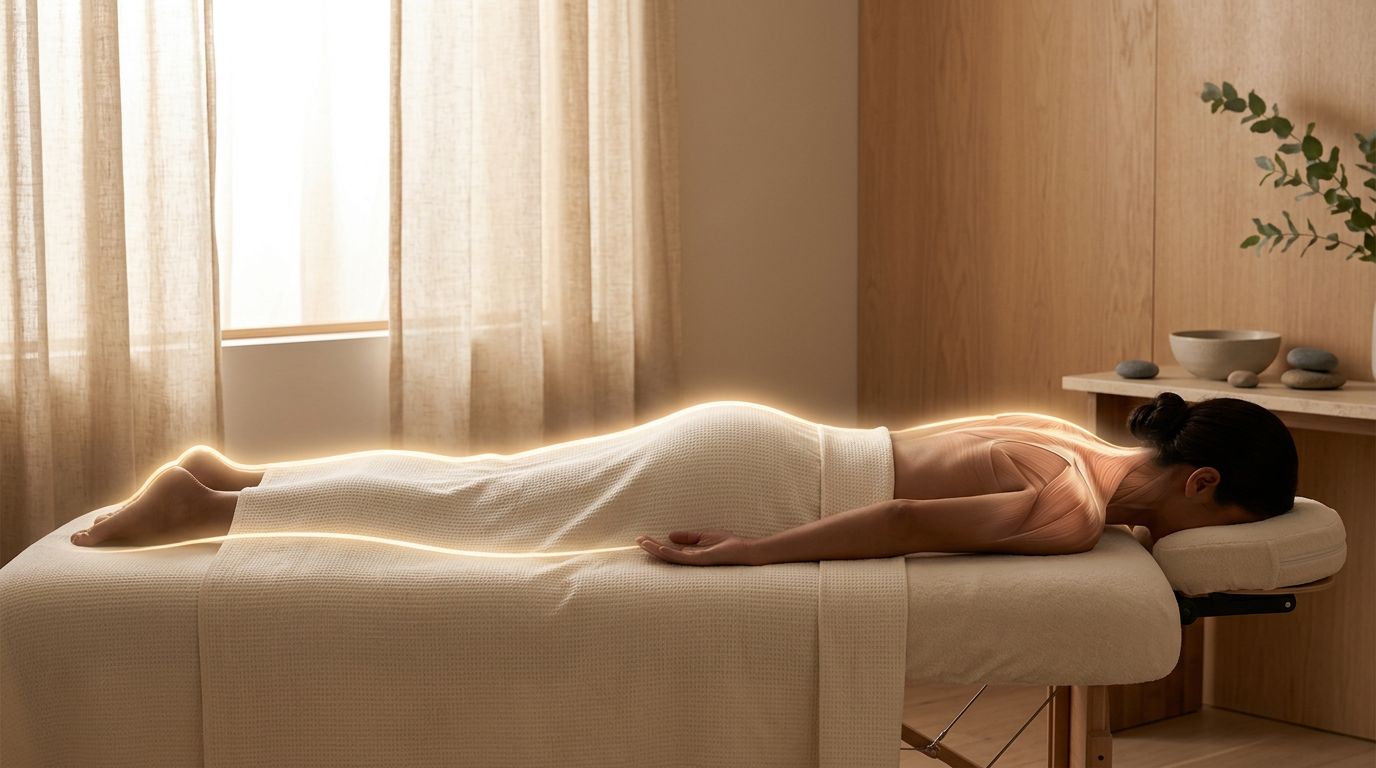

Shoulder Pain Massage After Side Sleeping: What Helps Most
Waking up with one sore shoulder can ruin the first hour of your day. If you sleep on your side, that pain often starts with pressure, poor arm support, or tight muscles that never fully let go overnight.
A good shoulder pain massage can calm those muscles and make movement feel easier. It helps most when the soreness is from strain, stiffness, or a cranky sleeping position, not from a fresh injury.
The fix is usually a mix of the right touch, smarter sleep habits, and a little attention to what your shoulder is telling you. That starts with understanding why side sleeping sets it off.
Why side sleeping can leave one shoulder sore
Side sleeping puts your full body weight on one shoulder for hours. Even if the pressure feels mild at first, it can compress the joint and irritate the soft tissue around it.
The top shoulder can also roll forward when your arm drifts across your body. That position shortens the chest muscles and makes the back of the shoulder work harder. Over time, the area can feel tight, pinched, or dull.
Your pillow and mattress matter too. A pillow that is too high can tilt your neck. A mattress that is too firm can push the shoulder upward, while one that is too soft can let the body sink and twist.
Pain that shows up right after sleep often has a mechanical cause. The position is usually part of the problem.
This kind of soreness can stay local, or it can travel into the neck and upper back. That happens because the shoulder and neck muscles work as a team. When one gets overloaded, the others compensate.
Which massage techniques help most
The best massage for shoulder pain after side sleeping depends on what you feel. A sore, broad ache needs a different touch than a stubborn knot near the neck.
Here is a simple way to compare common options:
| Technique | How it can help | Best for |
|---|---|---|
| Swedish massage | Uses lighter, flowing pressure to relax tight tissue | General soreness and stress-related tension |
| Deep tissue work | Focuses on deeper layers of muscle | Dense knots and long-term tightness |
| Trigger point work | Targets small, tender spots that refer pain | Sharp points in the upper shoulder or neck |
| Hot stone massage | Adds steady warmth to help muscles soften | Stiff shoulders that hold tension easily |
Lighter pressure is often best if the shoulder feels bruised or tender. Deeper work can help when the muscle feels thick and guarded. Warmth can also make a big difference, because heat helps the area relax before pressure goes in.
If your shoulder keeps flaring up, a session built around your pain pattern helps more than a generic massage. Professional massage therapy in Englewood can focus on the tight spots that show up after side sleeping.
What a shoulder pain massage should focus on
A helpful session does more than press on the sore spot. In many cases, the painful area is only the place where tension shows up, not the place where it started.
The upper trapezius, levator scapulae, chest muscles, and rear shoulder often need attention together. If the chest stays tight, the shoulder blade can pull forward. If the neck stays stiff, the shoulder has to compensate all night.
A skilled therapist usually works in layers. First comes warming the tissue, then easing the outer tension, then moving into the deeper knots if your body tolerates it. Good pressure should feel productive, not sharp.
A session may also include the arm, upper back, and the area under the shoulder blade. That matters because pain around the shoulder often spreads beyond one exact point.
A few things should stay true during treatment:
- The pressure should stay within your comfort range.
- Breathing should stay easy.
- Pain should ease as the muscles relax, not spike.
- Your shoulder should feel looser after the session, not more inflamed.
If any stroke causes a grabbing pain, say so right away. Your body gives better results when the work stays calm and controlled.
Simple self-massage and stretches after a rough night
You do not need a full appointment every time your shoulder wakes up sore. A few small steps can reduce stiffness and keep it from getting worse.
- Warm the area first. A warm shower or heating pad for 10 to 15 minutes helps the muscle soften.
- Use a tennis or massage ball. Stand against a wall and roll gently on the upper back or rear shoulder. Stop before the pain turns sharp.
- Move the shoulder through a small range. Slow shoulder circles and easy arm lifts can reduce the "stuck" feeling.
- Stretch the chest and neck lightly. Hold each stretch for a few breaths, then release.
Try to keep the work gentle. If you press too hard, the muscle may tense up to protect itself. That makes the pain louder, not quieter.
Another useful step is slow breathing. Tight shoulders often stay tight when the nervous system feels on guard. A few long exhales can lower that response and make the massage feel more effective.
When massage is not the right next step
Some shoulder pain needs more than massage. That matters, especially when the pain is new, intense, or linked to an injury.
Get checked if you notice any of these signs:
- numbness or tingling down the arm
- weakness when lifting the arm
- swelling, redness, or heat
- pain after a fall or sudden twist
- chest pain, trouble breathing, or pain that feels unusual
- pain that keeps getting worse instead of easing
Lingering pain that wakes you night after night also deserves attention. In that case, massage may still help, but it should be part of a broader plan. A clinician can rule out issues like tendon injury, nerve irritation, or joint problems.
If the pain is tied to sleeping posture alone, the fix may be simple. If the pattern has changed, the cause may be bigger than muscle tension.
How to reduce shoulder pain before bed
The best time to deal with this problem is before you fall asleep. Small changes at night can keep the shoulder from getting compressed in the first place.
A good setup usually starts with pillow support. Keep the head level so your neck does not bend toward the mattress. If you sleep on your side, place a pillow in front of your chest or hug one to support the top arm. That keeps the shoulder from rolling forward.
You can also reduce stress on the joint by avoiding a curled-up position. Let the upper arm rest slightly in front of you, not pinned across your body. If your mattress leaves the shoulder jammed into the bed, a softer topper may help. If it lets you sink too far, firmer support may work better.
A short evening routine can help too. Gentle neck rolls, a few shoulder blade squeezes, and a warm shower often make the muscles less reactive. When the body starts the night calmer, it usually handles side sleeping better.
Conclusion
Side sleeping can turn a calm night into a sore morning when the shoulder takes too much pressure. The right shoulder pain massage can ease tight tissue, improve movement, and help the area stop guarding so hard.
Still, massage works best when it fits the cause. If the pain is sharp, keeps returning, or comes with numbness or weakness, that needs a closer look.
When the problem is mostly tension and position, small changes at bedtime and targeted massage can make a real difference. The shoulder often just wants space, support, and steady pressure that helps it relax.
Recent Posts