Scalp Massage for Crown Tension and Daily Stress Relief
That tight, buzzing spot at the top of your head can turn a normal day into a hard one.
Stress often shows up in the crown before you notice it anywhere else. Your shoulders rise, your jaw grips, and the scalp starts to feel pulled, tender, or heavy.
A steady scalp massage can ease that pressure without much time or equipment. The key is to use slow, calm movements that help the whole upper body soften.
Why the crown gets tight so easily
The crown holds more tension than many people expect. It sits where stress from the face, jaw, neck, and shoulders tends to collect.
Long hours at a screen can make you hunch forward. That posture shortens the back of the neck and leaves the scalp feeling braced. Clenching your teeth can add even more strain. So can poor sleep, busy weeks, and wearing tight hairstyles for long stretches.
The scalp also has small muscles and layers of tissue that respond to tension. When they stay guarded, the top of the head may feel sore, pulled, or almost numb. Some people notice it as a dull ache. Others feel it as a band of pressure near the temples and crown.
A few signs often show up together:
- A heavy or tender feeling at the top of the head
- Tightness around the temples, jaw, or base of the skull
- A urge to rub the scalp after long work or screen sessions
- Headache-like pressure that feels tied to stress
When the crown feels tight, the problem is often bigger than one spot. The body is talking in layers.
How scalp massage helps the crown relax
A good scalp massage does more than move the skin around. It gives your nervous system a cue to slow down.
Gentle, repeated pressure can reduce that guarded feeling in the scalp. It also helps you notice where you're clenching. That awareness matters, because stress tends to hide in the jaw, forehead, and neck before it becomes obvious.
Many people feel calmer after a few minutes of scalp work because the touch is simple and direct. There's no need for tools or complicated steps. Slow hands, even pressure, and steady breathing are enough.
The amount of pressure matters. Too much force can make the scalp tighten again. The best pressure feels clear, warm, and controlled.
| Pressure level | Best for | What it should feel like |
|---|---|---|
| Light | Sensitive scalps, quick resets, headache-prone days | Gentle movement with no pain |
| Medium | Daily crown tightness, screen fatigue, stress | Steady, soothing, easy to breathe through |
| Firm | Dense tissue and strong guarding | Controlled pressure that never turns sharp |
The right level usually feels like relief, not effort. If you find yourself holding your breath, the pressure is too strong.
If the scalp braces against your touch, ease up and slow down. Relief should feel steady, not painful.
A simple scalp massage routine for the crown
You don't need a long session to feel a change. A few focused minutes can help, especially when the crown feels tight after work or before bed.
Start with clean hands and a relaxed seat. If you use oil, keep it light. Too much product can make the scalp slippery and hard to control.
- Warm your hands first. Rub your palms together for a few seconds so the touch feels less sudden.
- Place your fingertips near the crown. Use the pads of your fingers, not your nails. Make small circles with slow pressure.
- Move outward in short sections. Work from the crown toward the temples, then back again. Keep the movement calm and even.
- Pause on the tightest spot. Hold gentle pressure there while you breathe out slowly. That small pause can help the area settle.
- Include the sides and back of the head. The crown often eases faster when the whole scalp gets attention.
- Finish with the neck and jaw. Rub the base of the skull, then soften the jaw muscles with light pressure near the ears.
Keep the pace slow. A rushed scalp massage can feel more like scratching than relief.
Short sessions work well before a shower, after a long meeting, or while winding down at night. You're aiming for ease, not intensity. If the area feels calmer and warmer after a few minutes, you're on the right track.
When crown tension needs more than scalp work
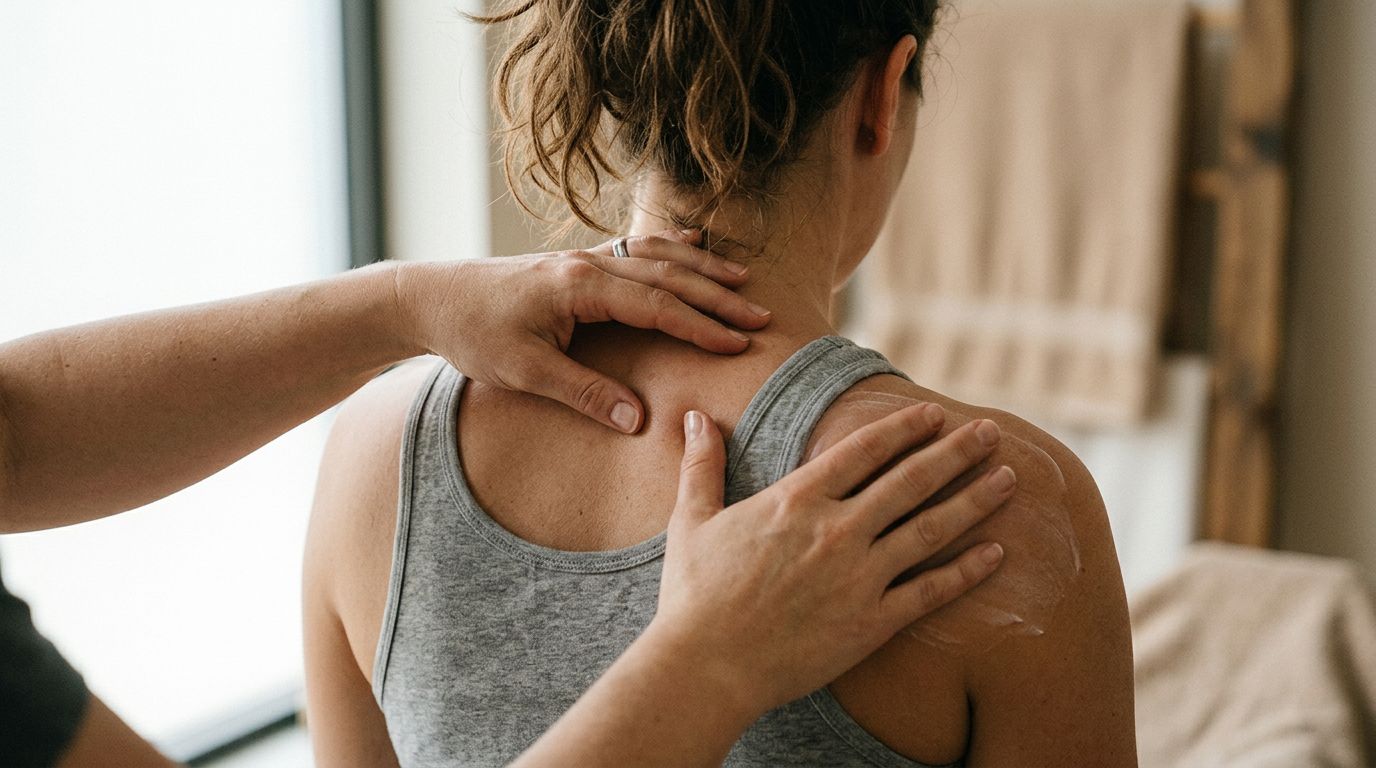
Sometimes the top of the head is only part of the story. If the tightness keeps coming back, the neck and shoulders may be doing most of the work.
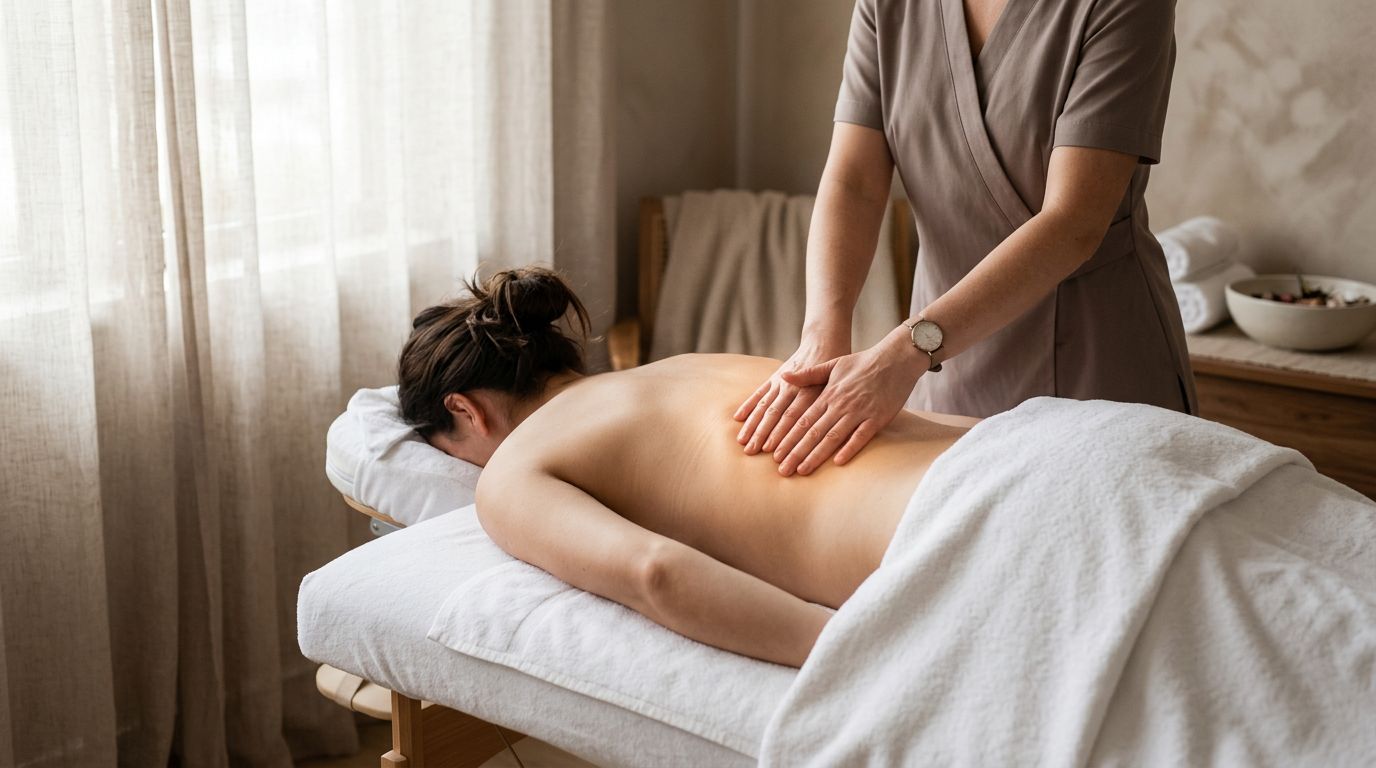
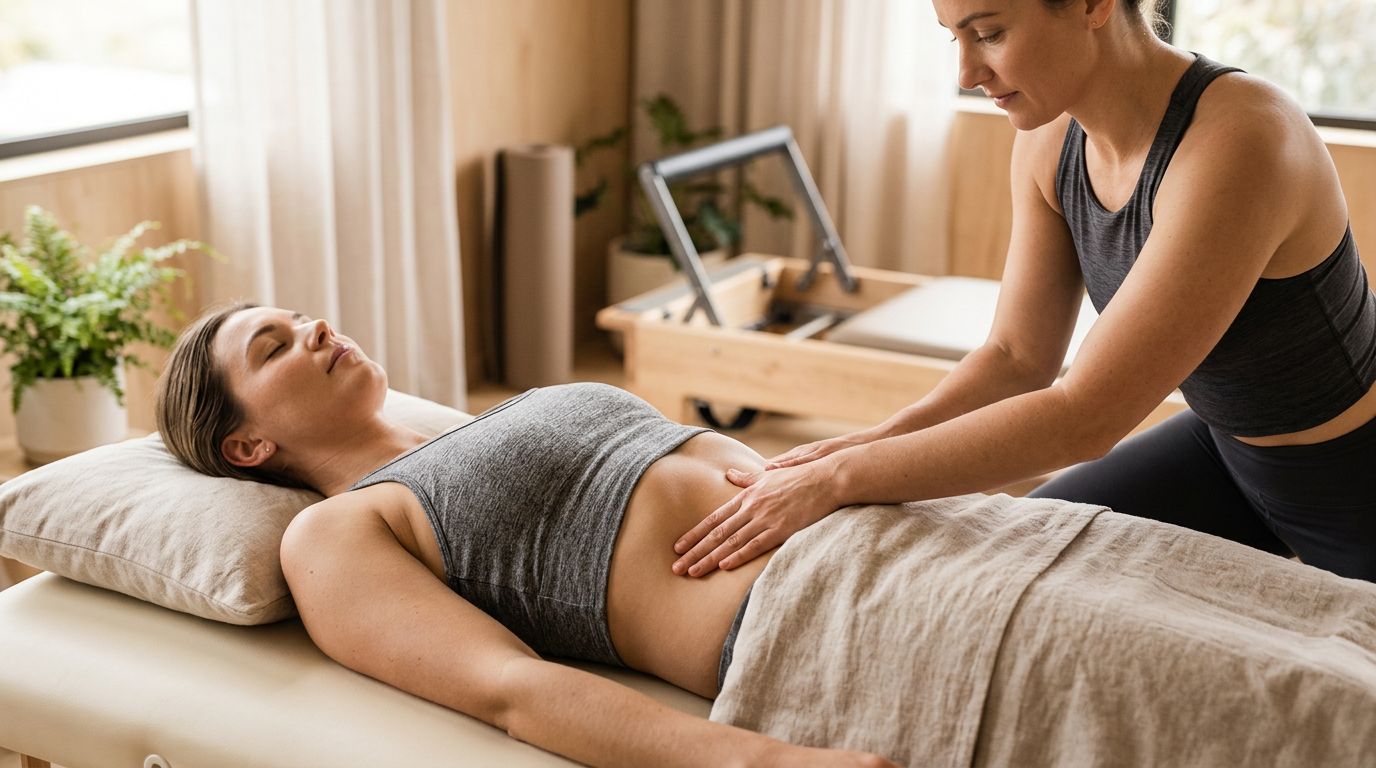
That's where a fuller massage can help. A session that includes the upper back, neck, and scalp often gives better relief than touching the crown alone. A therapist can also notice patterns you may miss, like one shoulder sitting higher or the jaw staying locked on one side.
If you want broader support, custom massage therapy sessions can be a smart next step when stress keeps spreading through the upper body. A professional can work with your comfort level, whether you need light relaxation or firmer focus on tight areas.
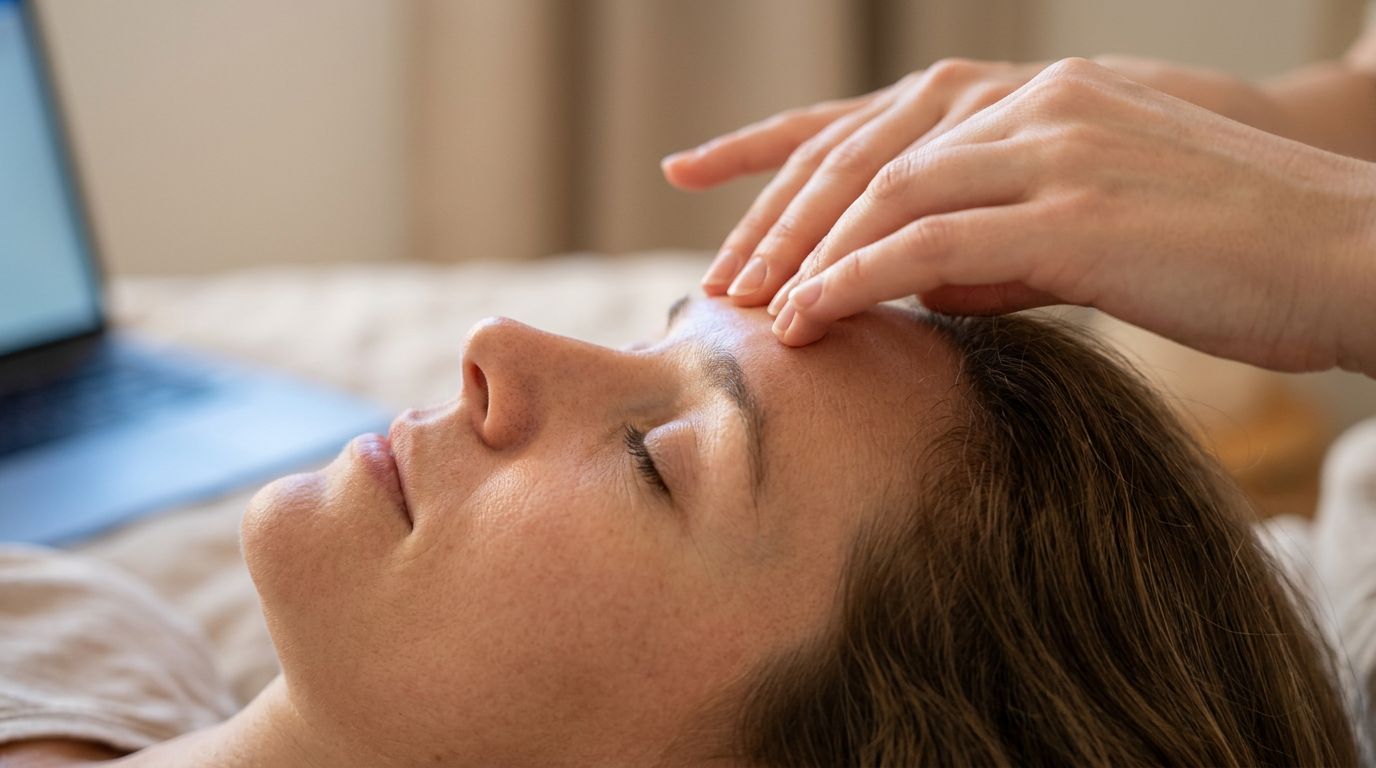
The same idea applies when the face feels tense too. Many people hold stress in the forehead, brows, and jaw at the same time as the crown. When those areas soften, the scalp often follows.
A calm environment helps as much as the touch itself. Quiet time, slow breathing, and a pace that feels unhurried can make the whole experience more effective.
Mistakes that can make the crown feel worse
A few common habits can turn relief into more tension. The good news is that they're easy to fix.
- Using nails instead of fingertips. Nails scratch the scalp and can leave it more irritated than before.
- Pressing too hard. Strong pressure sounds helpful, but it often makes the scalp guard itself.
- Moving too fast. Quick rubbing can feel busy without giving the tissue time to release.
- Ignoring the jaw and neck. The crown often stays tight when the rest of the upper body remains tense.
- Massaging irritated skin. Skip active irritation, sunburn, or sore spots that need rest.
Hair health matters too. Tight ponytails, heavy clips, and rough brushing can add stress to the same area you're trying to calm. Looser styles can help your scalp stay more relaxed through the day.
Breathing is part of the process as well. When people hold their breath, the shoulders and scalp usually stay tense. Slow exhalations give the body a clearer signal to let go.
Conclusion
The crown often tightens long before the rest of the body catches up. A scalp massage can ease that pressure by giving the scalp, jaw, and neck a chance to soften together.
Keep the touch slow, the pressure controlled, and the session short enough to feel easy. When the tension keeps returning, a fuller massage can help you work on the whole pattern instead of one sore spot.
A few calm minutes can change how your head feels for the rest of the day.
Recent Posts