
Lower Trapezius Massage for Shoulder Blade Fatigue After Desk Work
Hours at a desk can leave the area beside and below your shoulder blades aching by the end of the day. When that pain keeps coming back, lower trapezius massage can help ease the tight muscles that support your shoulders and upper back.
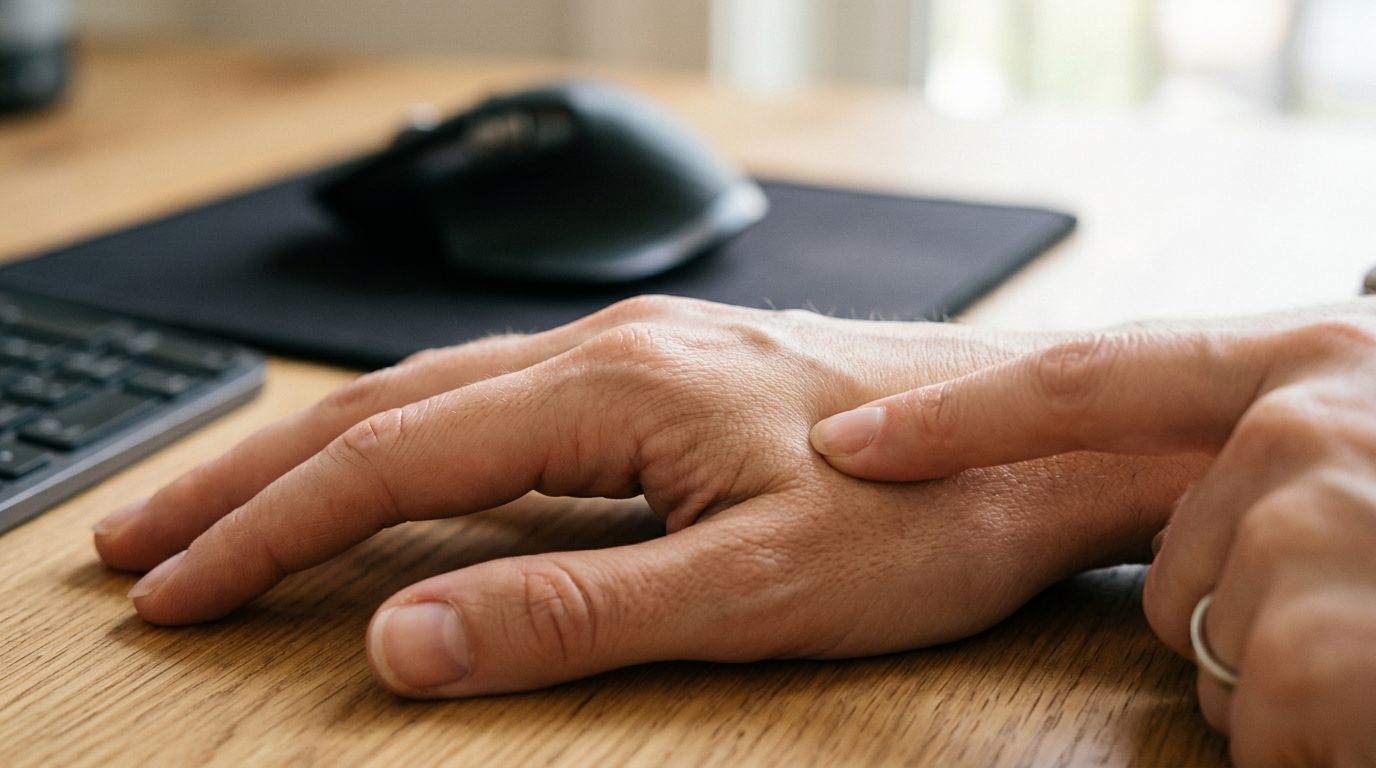
A slumped posture, repeated mouse use, and too little movement all ask the same muscles to hold you up for too long. That leaves you feeling stiff, heavy, and drained before you even leave work. The first step is understanding why the pain shows up there so often.
Why desk work makes the shoulder blade area tired
Your lower trapezius helps guide and steady the shoulder blade. It works with the rhomboids, mid back, and neck muscles every time you reach, type, or lift your arms.
When you sit with rounded shoulders, the shoulder blades drift forward. The muscles at the back of your upper body then stay on guard for hours. That low-level strain may not feel dramatic at first, but it adds up fast. By midafternoon, the area can feel dull, tight, or weak.
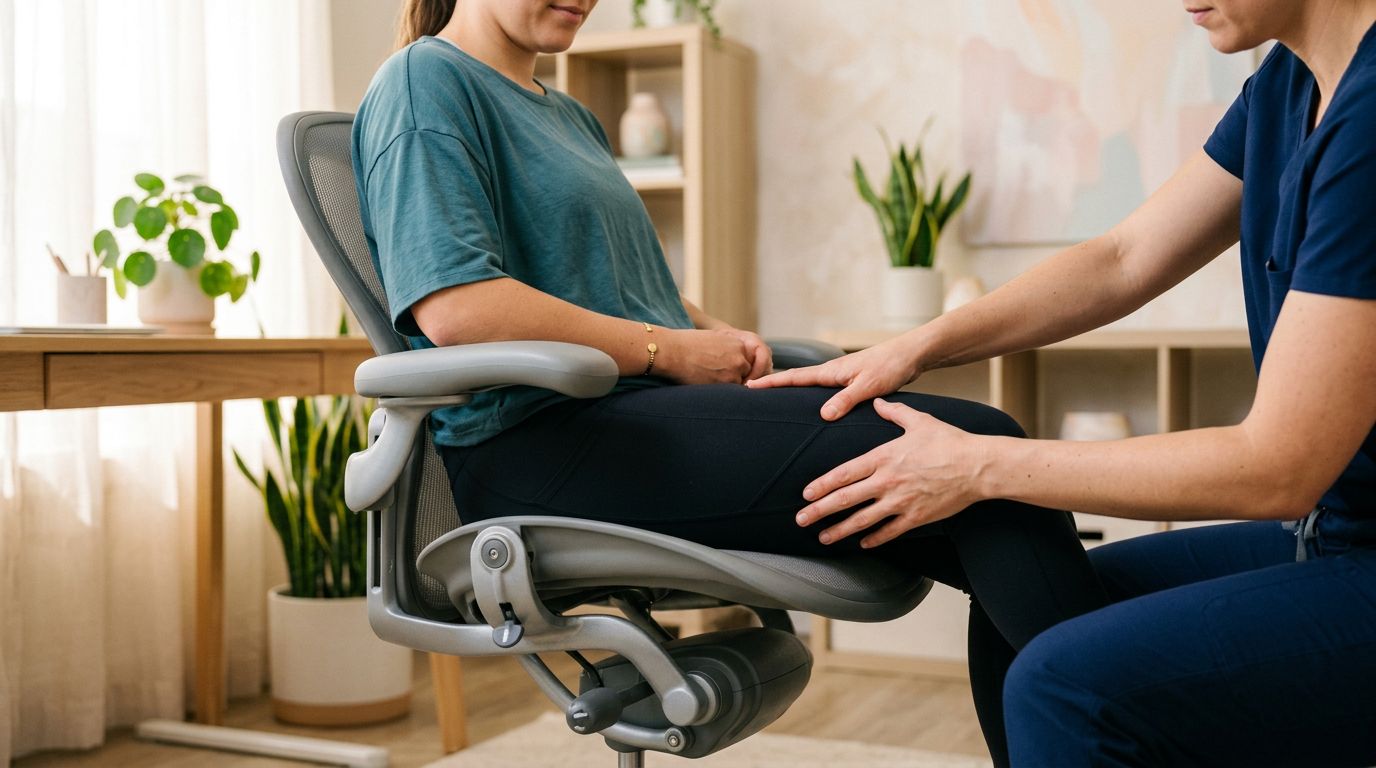
The problem gets worse when your desk setup keeps your body in the same shape all day. A low monitor, a far-away keyboard, or a chair that does not support your back can make the shoulder blade area work harder than it should. Even if you do not notice pain during work, the fatigue often shows up once you stop moving.
People often point to the spot under the shoulder blade and call it one knot. In reality, the tension usually involves more than one muscle. The lower trapezius may be tired, but nearby tissues often join the party.
How lower trapezius massage helps
Massage helps by easing the tension that builds around the shoulder blade and mid back. It can soften guarded tissue, improve local blood flow, and make the area feel less stuck. That matters when your muscles have been bracing since your first email of the day.
A focused session does not need to be aggressive. Slow, steady pressure often works better than force. The goal is to calm the muscles that keep holding tension, not to press through pain.
A good session does not chase pain everywhere. It calms the muscles that have been bracing all day.
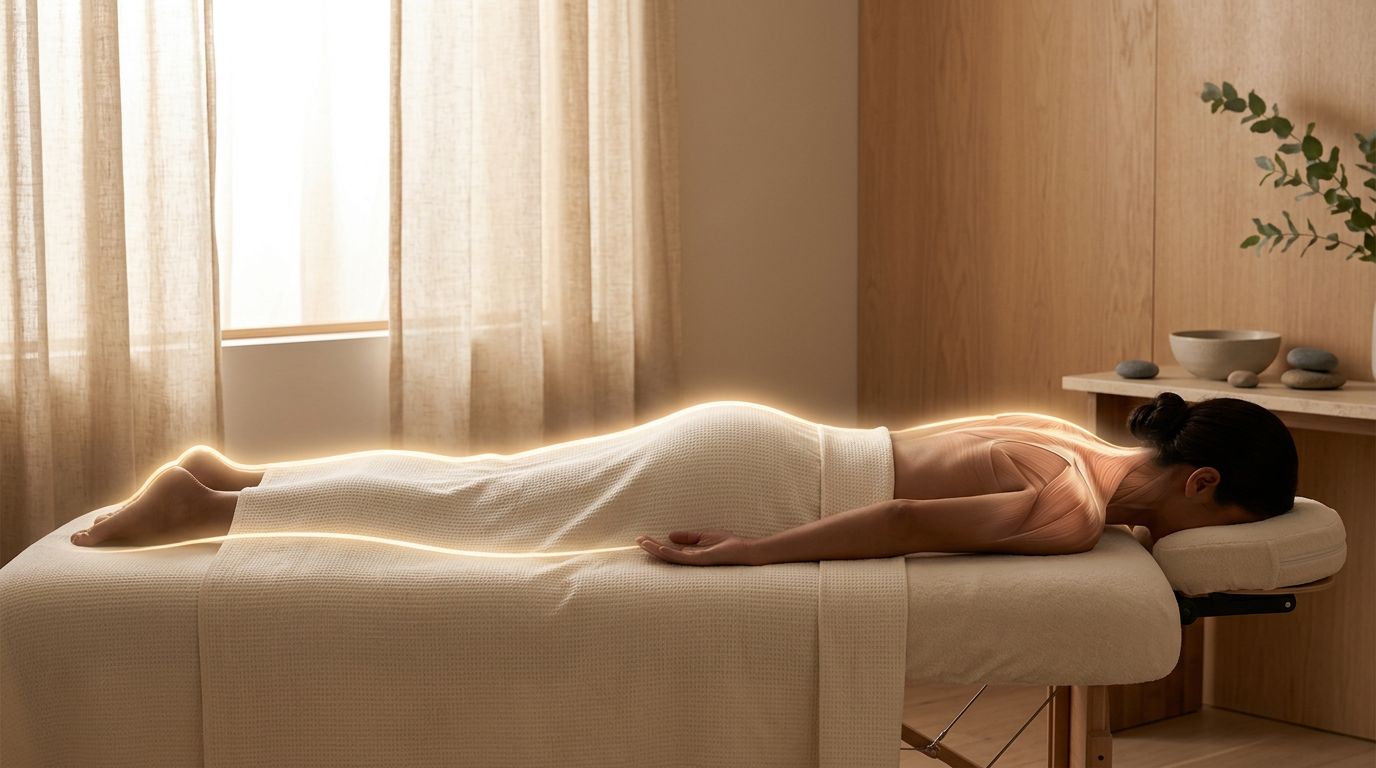
A therapist may work along the inner edge of the shoulder blade, the lower trapezius fibers, and nearby muscles that help support the shoulder girdle. Breathing usually matters too. When you exhale slowly, the body lets go a little more easily.
This kind of massage can also help you notice how you carry stress. Many people lift their shoulders without realizing it. Others hold their breath while concentrating. Once those patterns become clear, it gets easier to change them.
What a focused massage session should feel like
A good lower trapezius massage session should feel specific, not random. Your therapist may ask where the fatigue starts, what your workday looks like, and whether the pain moves into your neck or arm. Those details help shape the pressure and placement of the work.
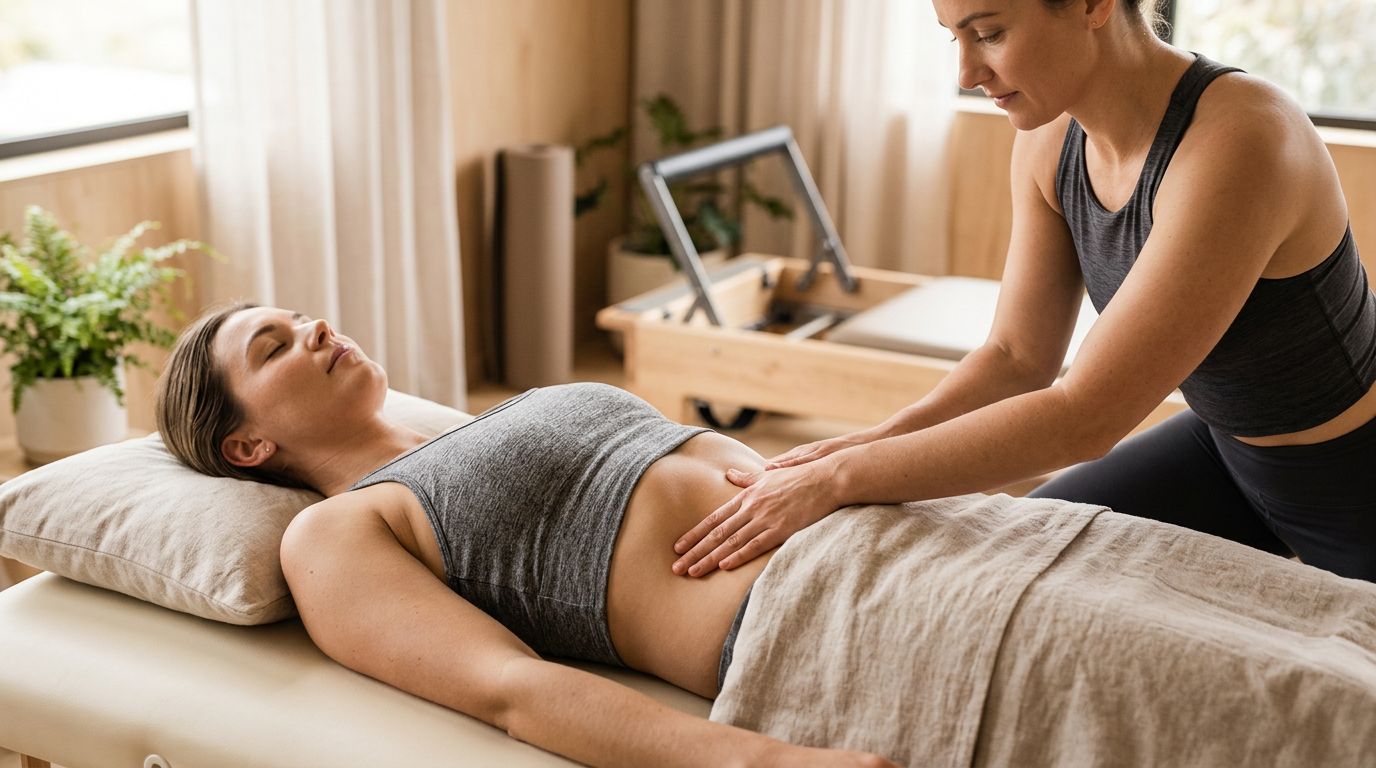
You may start face down, then shift to a side-lying position if that gives better access to the shoulder blade. The therapist will usually use a mix of broad strokes and slower, more focused work. Some parts may feel tender, but the pressure should stay within a tolerable range.
Communication matters here. If the sensation turns sharp, pinchy, or too intense, say so right away. The right pressure often feels like a deep release, not a fight.
Many people also notice that their upper back feels taller after treatment. That is a useful sign. When the shoulder blades can glide with less resistance, simple motions like reaching for a cup or sitting upright may feel easier.
Daily habits that keep the relief going
Massage helps most when your work habits stop pulling the muscles back into the same tight pattern. Small changes matter more than big, perfect routines.
Start with short resets throughout the day:
- Stand up every 30 to 60 minutes and let your arms hang by your sides for a few breaths.
- Keep your screen high enough that you do not crane your neck forward.
- Hold your mouse close so your shoulder does not reach all day.
- Squeeze your shoulder blades down and back lightly, then release them fully.
- Open your chest with a doorway stretch or gentle upper-back extension.
The key is to move often, not force hard stretches. A few seconds of change can break up the same posture that keeps overworking the lower trapezius. Even your breathing helps. Slow breaths into the ribs can reduce the habit of holding tension in the neck and shoulders.
If you sit for long stretches, think in terms of pressure relief. You would not leave a bag hanging from one arm for eight hours. Your shoulders feel the same kind of strain when they hold the same position all day.
A simple desk check can also help. If your elbows float away from your sides, your chair may be too low or your keyboard too far out. If your head juts forward, the monitor may need a lift. These small adjustments can take work off the shoulder blade area before pain builds.
When to book massage and when to get checked
If your shoulder blade fatigue shows up after desk work, then eases with movement, massage is often a smart place to start. It can be especially helpful when the same tight spot returns at the end of every workday.
If you want help from a therapist, custom massage therapy sessions can be a good next step. Focused work on the upper back, neck, and shoulder blade area may give you the relief your desk routine keeps taking away.
Some symptoms need more than massage alone. Get medical advice if you notice numbness, tingling, weakness, pain that travels down the arm, or pain after a fall or injury. Those signs point to something that should be checked first.
You should also pay attention if the ache keeps getting worse, even with rest and movement breaks. Persistent pain deserves a closer look, especially when it starts changing how you work or sleep.
Conclusion
Desk work can make the lower trapezius work too hard for too long. That steady strain often shows up as heavy, tired shoulder blades by the end of the day.
A well-done lower trapezius massage can ease that load, calm nearby support muscles, and make posture feel less effortful. Add simple desk breaks and small movement resets, and the relief tends to last longer.
When your shoulders keep sending the same warning, listen early. The body usually gives clear signals before the fatigue turns into a bigger pattern.
Recent Posts