
Cubital Tunnel Massage for Pinky Finger Numbness: Safe Relief That Helps
When your pinky keeps going numb, it can feel like a switch keeps flipping in your hand. Often, the source is not the finger itself. It's the ulnar nerve, which commonly gets irritated near the inside of the elbow.
That's where cubital tunnel massage can help, but only when it's done the right way. Gentle work on nearby muscles may ease tension and reduce pressure around the nerve. On the other hand, hard pressure right on the elbow can make symptoms worse. The goal is support, not force.
Why cubital tunnel symptoms often show up in the pinky
Cubital tunnel syndrome happens when the ulnar nerve gets squeezed or irritated as it passes behind the inner elbow. That nerve helps supply feeling to the pinky and part of the ring finger. It also helps power some hand muscles.
Because of that, symptoms can show up in a few ways. You might notice tingling, numbness, aching at the elbow, or a weak grip. Some people wake up with their hand "asleep" after bending the elbow all night. Others feel it after long phone calls, desk work, cycling, or leaning on their elbows.
Think of the nerve like a phone charger cable. If it keeps getting bent in the same spot, the signal gets fussy. The body reacts the same way when the elbow stays bent too long or the tissues around the nerve stay tight and irritated.
Massage can help by loosening tense forearm, upper arm, shoulder, and chest muscles that may add strain to the arm. Still, massage doesn't "push the nerve back into place." It works best as a comfort tool and part of a bigger plan.
If your numbness is mild and comes and goes, gentle bodywork may settle things down. If the numbness stays all day, spreads, or comes with weakness, it's time to get checked.
How to do cubital tunnel massage without making symptoms worse
Here's the big rule: don't dig into the "funny bone" area. The ulnar nerve sits close to the surface there, so aggressive pressure can fire it up fast.
The best cubital tunnel massage usually works around the nerve, not directly on it.
A simple self-massage routine
Use light oil or lotion if that helps your hand glide. Keep pressure mild, around a 3 or 4 out of 10.
- Warm the arm first
Rub the forearm and upper arm with broad strokes for 30 to 60 seconds. This helps the muscles relax before deeper work. - Massage the forearm muscles
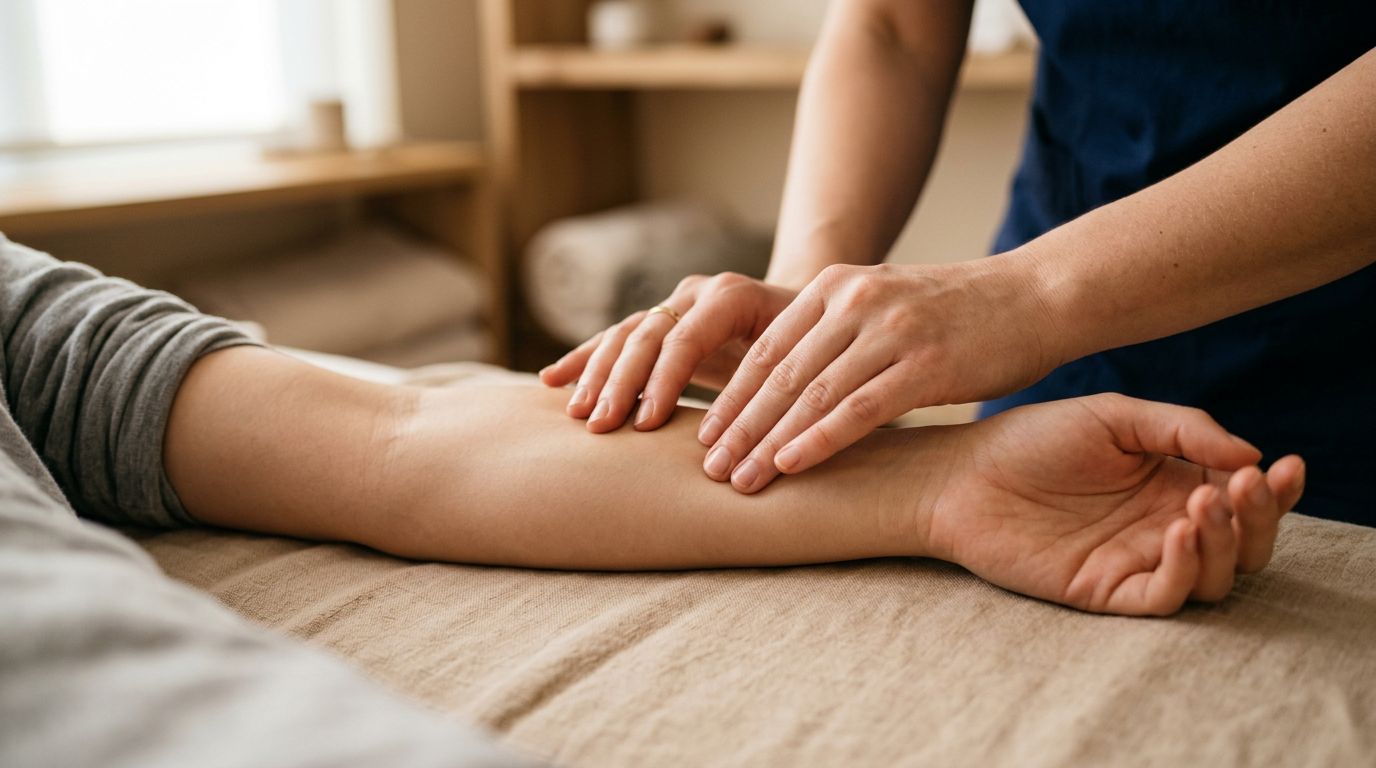
Start near the wrist and move toward the elbow. Use slow strokes with your thumb or fingertips along the fleshy part of the forearm, especially on the pinky side. Spend about 1 to 2 minutes here. - Work the upper arm and shoulder
Tight triceps, shoulder muscles, and even chest tension can affect how the arm feels. Massage the back of the upper arm and the shoulder gently. Stay off the bony groove at the inside of the elbow. - Add easy movement
Open and close your hand, then slowly straighten and bend the elbow a few times. Keep it smooth. If tingling shoots into the hand, back off.
You can try this once or twice a day. Short sessions often work better than one long session. Two to five minutes is enough for most people.
Mistakes that flare the nerve
A few habits can turn a helpful massage into an irritating one. Avoid pressing hard on the inner elbow. Don't chase numbness with more force. And don't stretch the arm until it zings.
If massage causes sharper tingling, burning, or more numbness, stop. That's your sign the nerve is getting annoyed, not soothed.
What helps besides massage
Massage works better when you pair it with simple changes during the day. Since cubital tunnel symptoms often come from repeated elbow bending or pressure, small habit shifts can make a real difference.
This quick guide helps keep the nerve calmer:
| Habit | Why it helps |
|---|---|
| Sleep with the elbow a bit straighter | Less night-time nerve compression |
| Stop leaning on the elbow | Reduces direct pressure on the tunnel |
| Take short breaks from gripping | Gives irritated tissues time to settle |
| Hold your phone lower or use speaker mode | Cuts down on long periods of elbow bending |
A warm compress before massage may help tight muscles loosen up. If the elbow feels irritated after activity, a cool pack for a few minutes can calm it down. Also, pay attention to your neck and shoulder posture. When the whole arm chain stays tense, the nerve often feels it.
For some people, home care isn't enough on its own. If your forearm, shoulder, and upper back stay tight, a skilled therapist can work those areas without aggravating the nerve. When you want a more personalized approach, therapeutic massage for pain relief can support a plan built around your symptoms and tension patterns.
When massage isn't enough for pinky finger numbness
Massage should help you feel looser, calmer, and less irritated. It should not lead to more numbness or hand weakness.
If numbness turns into weakness , don't wait too long. Nerves don't like ongoing pressure.
Get medical care if you're dropping objects, losing hand strength, or noticing muscle loss near the hand. The same goes for constant numbness, symptoms after an injury, or pain that keeps getting worse. A clinician can confirm whether it's cubital tunnel syndrome or another issue, such as a neck problem or wrist compression.
That matters because the right treatment depends on the cause. Sometimes rest, activity changes, and rehab do the trick. In other cases, more care is needed.
Gentle massage can be a useful part of relief for cubital tunnel symptoms, especially when your pinky numbness comes and goes. The safest approach is simple: loosen the muscles around the arm, protect the inner elbow, and change the habits that keep irritating the nerve. If symptoms are mild, consistency usually beats intensity. And if your hand feels weaker, not better, let that be your cue to get expert help.
Recent Posts