Gracilis Massage for Inner Thigh Tightness After Long Walks
Long walks should leave you feeling loose, not pinched on the inside of your thigh. When that inner thigh tightness shows up, it can make every step feel shorter, tighter, and more guarded.
The gracilis is a small muscle, but it works hard during walking, especially when your pace, route, or shoes ask more from your legs than usual. A focused gracilis massage can help ease that pull and make movement feel normal again.
Why the inner thigh starts to complain after long walks
The gracilis runs from the pelvis down the inner leg, and it helps bring the thigh inward and bend the knee. During a long walk, it keeps working without much drama, until fatigue starts to build.
That fatigue shows up in a few common ways. Hills ask for more hip control. Uneven sidewalks make the inner thigh stabilize harder. A longer stride can stretch the muscle over and over. By the end of the walk, the tissue can feel ropey, sore, or tight near the groin or inner knee.
Shoes matter too. If your footwear changes the way you land, your inner thigh may take on extra load. So can a fast pace, a sudden jump in mileage, or a day of walking after sitting for hours.
The gracilis does not work alone. It shares the load with the other adductors, the hips, and the glutes. When one area gets tired, the whole chain feels it.
Signs the gracilis may be the source of the tightness
Inner thigh soreness can come from several muscles, so the location matters. Gracilis discomfort often feels long and narrow, like a pull along the inner leg rather than a broad ache.
Look for these signs after a long walk:
- tenderness along the inner thigh
- a tight feeling near the groin or inner knee
- discomfort when you climb stairs or get out of a low seat
- a tug when you cross your legs or step sideways
- stiffness in the first few steps after resting
A sharp, sudden pain is different. So is swelling, bruising, numbness, or pain that keeps getting worse. Those signs need a medical check, not more pressure.
Pressure should feel useful, not sharp. If your leg braces against the touch, the muscle is asking for less force.
The goal is to calm the tissue, not to win a fight with it. That matters with the gracilis, because it sits in a sensitive area and often tightens in response to strain.
How gracilis massage can help tired legs recover
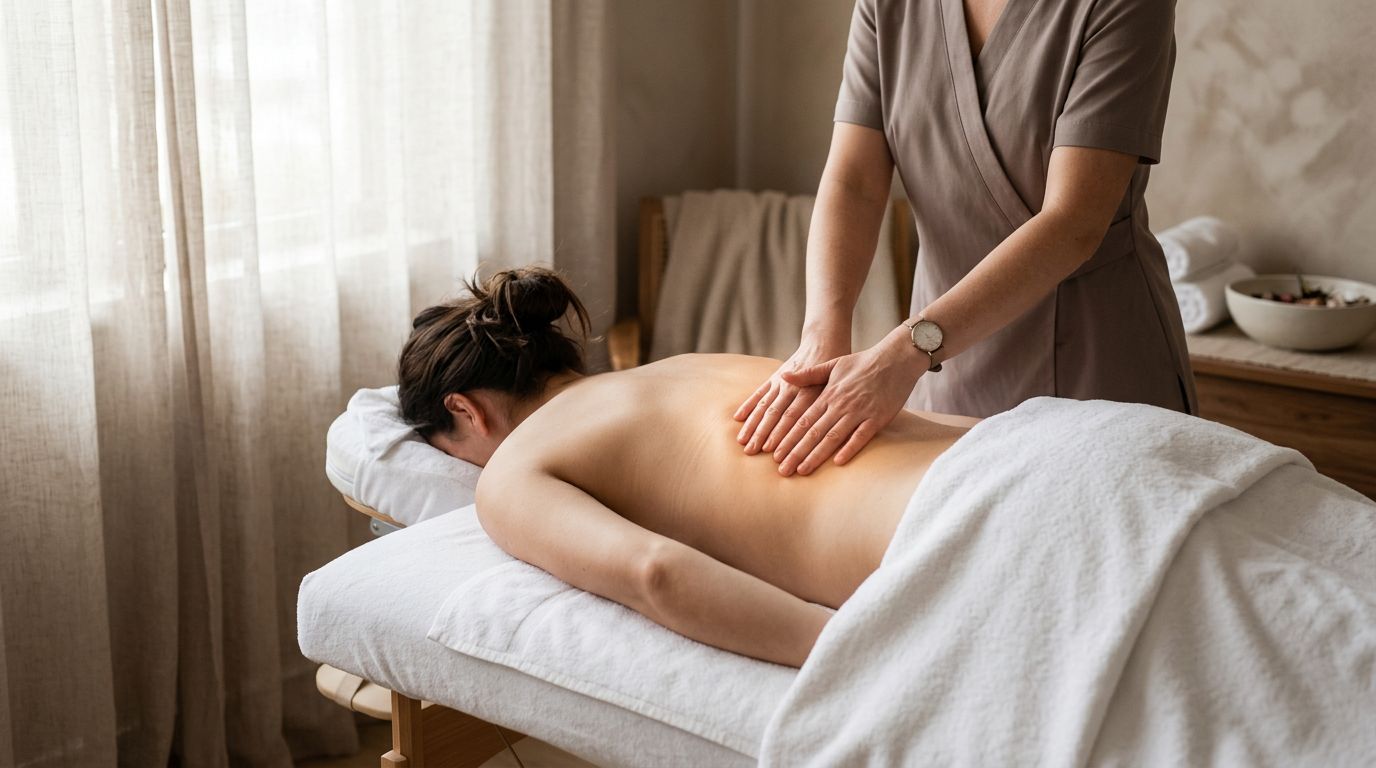
A well-done gracilis massage works on the muscle and the tissues around it. It can help the inner thigh move more easily, while also easing the protective tension that builds after long mileage.
The work is usually slow and specific. Broad strokes warm the area first, then the therapist may use deeper pressure where the muscle feels dense or shortened. When done well, the work can reduce that dragging feeling you notice with each step.
It can also help the muscles nearby. The adductors, hip flexors, quads, and glutes often share the same load pattern. When one area relaxes, the rest of the leg often moves better too.
A session can support recovery in a few clear ways:
- it softens tight tissue that keeps tugging on the leg
- it improves blood flow to a tired area
- it helps the nervous system stop bracing
- it makes walking feel smoother again
If you want hands-on care that matches your pace and your pain, personalized therapeutic massage sessions can be a good next step. The best treatment is the one shaped around how your body feels that day.
What a session usually looks like
A good therapist starts by asking where the discomfort lives and when it shows up. That conversation matters, because inner thigh pain that appears after a long walk is not the same as pain that starts during a sprint or a lift.
After the intake, the therapist may check how your hips, knees, and inner thighs move. Sometimes the tightness is strongest near the groin. Other times it sits lower, closer to the inner knee. That detail changes the approach.
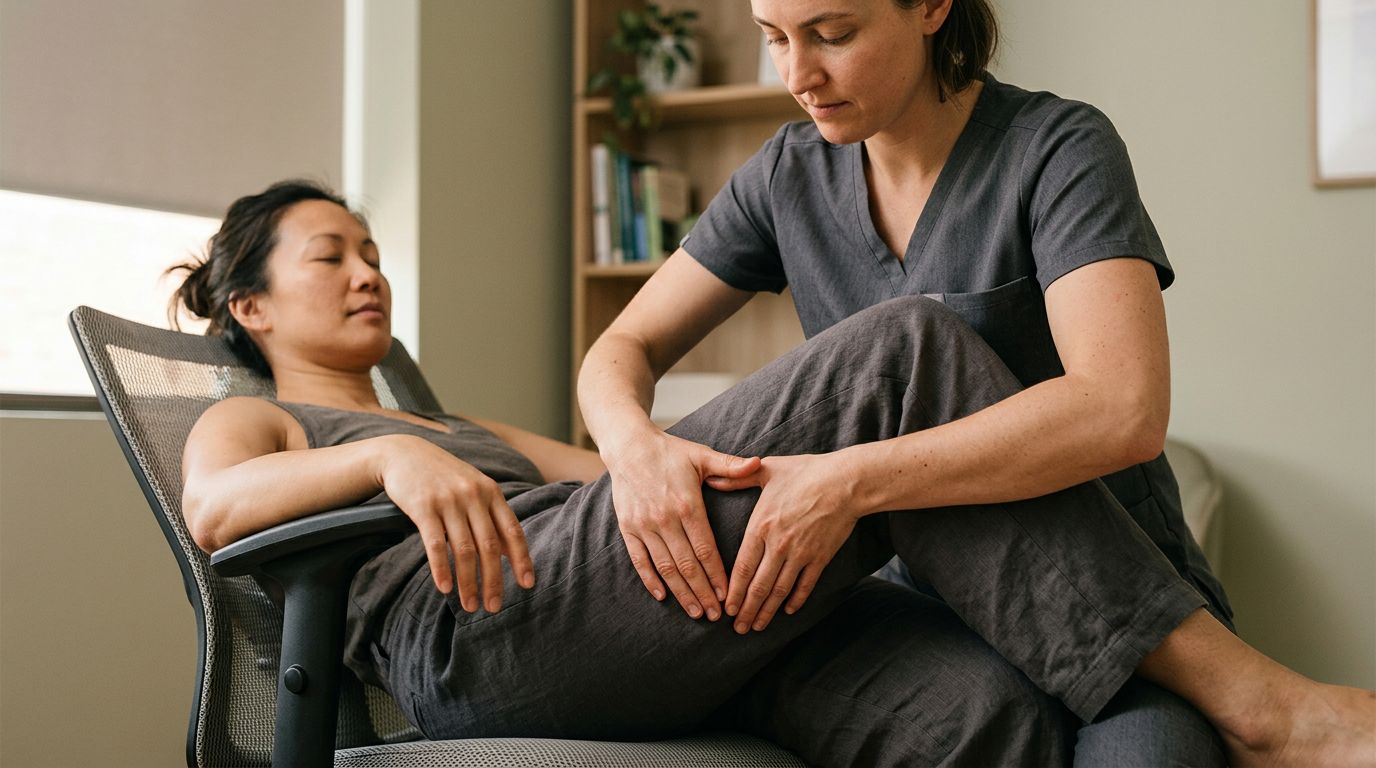
The session usually begins with lighter work. Warm-up strokes help the tissue relax before any deeper pressure begins. Then the therapist may focus on the adductors and the gracilis itself, while also checking surrounding muscles that may be contributing to the pull.
A session may include:
- A short talk about your walking habits, shoes, and pain pattern
- Gentle warm-up work to reduce guarding
- Focused pressure on the inner thigh and nearby muscles
- A movement check so you can feel the difference right away
Good communication matters throughout. If the pressure feels pinchy, say so. If the work helps, that helps too. The point is to find the right level, not the deepest level.
Many people feel easier walking after the session. Some notice the same relief right away. Others feel it more later that day, after the tissue settles.
Simple recovery habits that keep the tightness from returning
Massage helps most when you also change the habits that caused the strain. Otherwise, the same inner thigh keeps getting pulled back into the same job.
Start with your walking pace. If you jump from short strolls to long routes in one week, the gracilis may complain. Build distance in smaller steps instead. Your body usually handles steady progress better than sudden bursts.
Stride length matters too. Long, reaching steps can overwork the inner thigh. Keep your step a little shorter on hills or during fast walks. That small change can spare the muscle a lot of strain.
Hydration and food also play a role. Dry, tired muscles often feel worse after long outings. Water, a meal, or even a snack after the walk can help you recover faster.
Try these habits between appointments:
- warm up with a few minutes of easy walking before picking up speed
- stretch the inner thigh gently, without forcing the range
- use heat if the area feels stiff, not inflamed
- rest if the ache starts changing the way you walk
- choose shoes that feel stable and supportive for longer routes
If the tightness keeps coming back on the same side, pay attention to the pattern. One-sided inner thigh pain often points to a gait issue, an overuse pattern, or a muscle that keeps doing too much. A massage therapist can help spot that pattern early.
When massage is the right next step
Gracilis work makes the most sense when the problem feels like fatigue, tension, or mild overuse. It fits well after long walks, long days on your feet, or a stretch of higher activity than usual.
It is not the right answer for every kind of pain. If the area is swollen, bruised, hot, or sharply painful, get it checked first. The same goes for pain that keeps getting worse or changes the way you move.
When the issue is simple tightness, though, targeted massage can make a real difference. It gives the muscle room to lengthen again, and it gives you a clearer sense of what your body can handle next time.
Conclusion
When the inside of your thigh tightens after a long walk, the problem often comes down to overload, not weakness. The gracilis works hard to steady your steps, and it can get stuck in a shortened, guarded state.
A careful gracilis massage can ease that pull, help the leg move with less strain, and keep a small ache from turning into a lasting pattern. If your walks keep ending with the same inner thigh soreness, the best next move is focused care and a slower build the next time you head out.
Recent Posts