Extensor Carpi Ulnaris Massage for Pinky-Side Wrist Pain

STILL Massage + Skin • June 9, 2026

Share this article

Pain on the pinky side of your wrist can make small tasks feel annoying fast. Opening a jar, lifting a bag, or pushing up from a chair can all bring on that same sharp tug.

One small forearm muscle, the extensor carpi ulnaris, often plays a bigger role than people expect. When it gets tight, overworked, or irritated, the pain can sit right along the outer edge of the wrist.

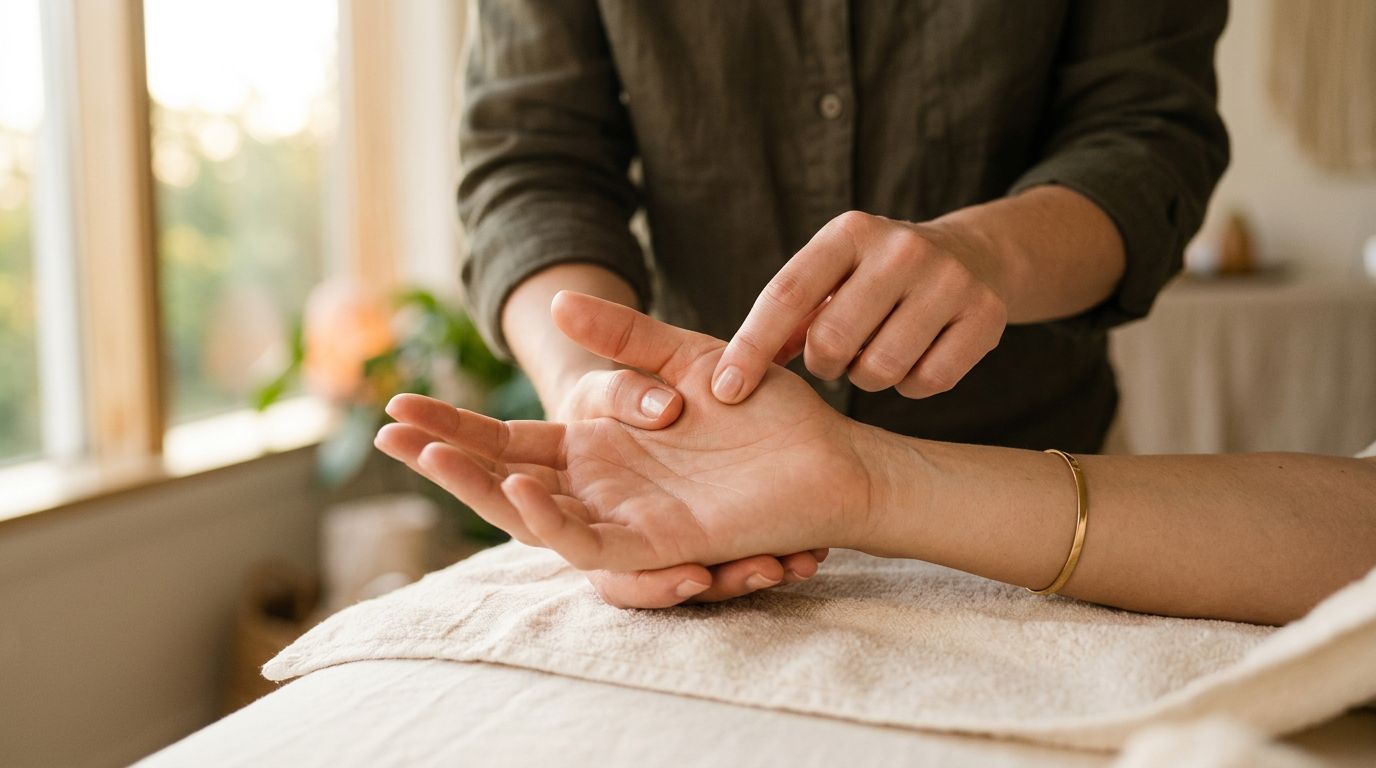
A careful extensor carpi ulnaris massage can help settle that tension, but the pressure has to stay light and thoughtful. Start with the forearm, not just the sore spot.

Why the pinky side of the wrist gets sore

The extensor carpi ulnaris runs along the back of the forearm and helps move the wrist. It supports extension and the side-to-side motion that brings the hand toward the pinky side.

That matters because the muscle gets involved in a lot of daily work. Gripping a steering wheel, carrying groceries, using tools, typing with a tense wrist, or swinging a racket can all load the area.

When the muscle or tendon gets irritated, the pain often shows up near the ulnar side of the wrist. Sometimes it feels like a dull ache. Other times it feels like a tight line that flares when you twist, lift, or lean on the hand.

Pain on the pinky side often starts higher up in the forearm than people expect.

The wrist is also a crowded space. Nearby tendons, joints, and cartilage can all add noise, so the pain pattern matters. If the ache spreads into the forearm, or if it gets worse with repeated use, ECU tension may be part of the picture.

Signs the extensor carpi ulnaris may be involved

A sore ECU doesn't always announce itself in one clear way. Still, a few clues show up often.

  • Pain when turning a key, opening a lid, or turning the palm up and down
  • Tenderness along the outer forearm near the wrist
  • A sore spot just behind the bony bump on the pinky side
  • Weakness when you grip, carry, or push
  • Clicking, snapping, or a sense that something shifts at the wrist

These signs can overlap with other wrist problems, so they don't give you a diagnosis. They do give you a direction.

If pain flares after a fall, if the wrist swells, or if the joint feels unstable, that's a different situation. Massage is not the right first step for a fresh injury.

Even without a big injury, the pain can build slowly. A few days of awkward mouse use, a new workout, or a weekend of yard work can leave the ECU feeling guarded and tight. That guarding is often what makes the wrist feel stuck.

What extensor carpi ulnaris massage can do

A good ECU massage works on the muscle, the tendon, and the surrounding forearm tissue. The goal is not to pound the sore spot. The goal is to calm the whole area so the wrist can move with less resistance.

Therapists often begin higher up in the forearm, where the muscle belly is easier to work. That approach matters because direct pressure right on an angry tendon can make symptoms flare. Lighter contact near the wrist usually feels better than heavy digging.

Massage may help in a few practical ways. It can reduce the protective tension that makes gripping uncomfortable. It can also soften the forearm muscles that keep pulling on the wrist. When the hand and wrist stop bracing, movement often feels smoother.

A session focused on the arm can also include the elbow and the muscles that support wrist motion. That broader work matters because pain rarely stays in one neat line. If you want that kind of focused bodywork, personalized therapeutic massage sessions can be a good fit.

The best result usually comes from matching pressure to the tissue. A sore, irritated wrist wants patience. A calm, steady approach gives the area room to settle.

A simple self-massage routine for irritated wrists

You can try gentle self-massage at home if the pain is mild and there's no recent injury. Keep the pressure soft. You should feel easing, not a fight.

A good touch feels dull and calming. Sharp pain, tingling, or a zinging feeling means stop.

  1. Warm the area first. Use a warm towel, a shower, or a few minutes of easy movement before touching the forearm.
  2. Find the outer forearm. Place your opposite thumb or fingers along the back side of the forearm, a few inches above the wrist.
  3. Glide slowly toward the elbow. Use light pressure in short strokes along the muscle line. Stay off the bony edge of the wrist.
  4. Spend a little time on tender spots. Hold gentle pressure on a sore point for a few seconds, then ease off. Don't chase pain.
  5. Finish with easy motion. Open and close your hand, then circle the wrist slowly in both directions.

A massage ball can help too, but keep it controlled. Rest the forearm on a table and roll just enough to feel the tissue move. If the spot gets angry afterward, the pressure was too much.

Self-massage works best when you pair it with a short break from the motion that started the pain. If twisting, lifting, or gripping keeps provoking it, the tissue may need more than rubbing alone.

When wrist pain needs medical care

Massage can support recovery, but it can't fix everything. If the pain started after a fall, a hard twist, or a sudden pop, get the wrist checked before you work on it.

You should also seek care if you notice swelling, bruising, numbness, or a grip that suddenly feels weak. Night pain, repeated clicking, or a sense that the wrist slips can point to a problem that needs evaluation.

If the pain hangs around for more than a couple of weeks, even with rest and gentle care, that's a sign to look deeper. A physical therapist, sports medicine clinician, or hand specialist can help sort out what's driving it.

That matters because pinky-side wrist pain can come from more than one source. The ECU may be tight, but the joint or nearby tissues may also be involved. When the pain pattern changes fast, or when motion feels blocked, it's better to get the right eyes on it.

A simple rule helps here, if your wrist feels sore but steady, gentle massage may fit. If it feels unstable, swollen, or sharp, skip the pressure and get it assessed.

Conclusion

Pinky-side wrist pain can sneak into ordinary life fast, and it often starts higher in the forearm than people expect. A careful extensor carpi ulnaris massage can calm that overworked tissue and make movement feel less guarded.

The key is restraint. Work the forearm, keep the pressure light, and pay attention to how the wrist responds afterward.

If the pain is tied to injury, swelling, numbness, or a sense of instability, get it checked first. When the source is soft-tissue tension, a steady, gentle approach often goes a long way.

Recent Posts

By STILL Massage + Skin June 8, 2026
Waking up with a stiff thumb can make simple tasks feel clumsy. A zipper, a coffee mug, or a phone screen can feel harder than they should. A thumb arthritis massage routine can help ease that morning tightness. It works best when you use gentle pressure, warm tissue first, an...
By STILL Massage + Skin June 7, 2026
Waking up with a finger that clicks, catches, or feels stuck can make a normal morning feel clumsy fast. A mug, a toothbrush, even a button can become annoying when your hand needs a few minutes to loosen up. This kind of stiffness often shows up after rest, then eases a littl...
By STILL Massage + Skin June 6, 2026
A sore pinky-side palm can make even simple tasks feel awkward. Jar lids, dumbbells, tools, grocery bags, and steering wheels all ask the same small part of your hand to work hard. That spot is the hypothenar area, the padded edge of the palm below the pinky. When it gets tigh...
By STILL Massage + Skin June 5, 2026
That tight, buzzing spot at the top of your head can turn a normal day into a hard one. Stress often shows up in the crown before you notice it anywhere else. Your shoulders rise, your jaw grips, and the scalp starts to feel pulled, tender, or heavy. A steady scalp massage can...
By STILL Massage + Skin June 4, 2026
Burning pain between the toes can turn a short walk into a stubborn problem. If your foot feels like it has a pebble in the front, or a hot wire runs through the ball of the foot, Morton's neuroma may be part of the picture. A careful Morton's neuroma massage can ease tension...
By STILL Massage + Skin June 3, 2026
A little soreness after a deep tissue massage can be normal, but it should not hang around forever. For many people, deep tissue massage soreness feels a lot like a tough workout, with tightness, tenderness, or a dull ache that fades on its own. The tricky part is knowing wher...

By STILL Massage + Skin June 2, 2026
Upper back knots can turn ordinary things into work. A desk chair feels harsher. A deep breath can pull. Even carrying groceries can wake up the same sore spot again. Both trigger-point massage and myofascial release can help, but they do not work the same way. One goes after...
By STILL Massage + Skin June 1, 2026
Hours at a mouse can leave your hand sore in a spot that feels oddly specific, right between the thumb and index finger. That little web of muscle does more work than most people realize. When it gets tight, clicking, dragging, and gripping start to feel heavy. A gentle first...

By STILL Massage + Skin May 31, 2026
A long walk should leave you tired, not aching on the outside of your hip. When side hip pain shows up after a few miles, it often points to a small muscle that has been doing more than its share of the work. The glute minimus sits deep in the outer hip and helps steady your p...
By STILL Massage + Skin May 30, 2026
After a long stretch on your phone or laptop, your forehead can feel tired in a way that's hard to ignore. The skin may look normal, but the muscles above your brows can feel tight, heavy, or slightly sore. That's where frontalis massage can help. It gives the forehead a break...

Show More