Anconeus Massage for Elbow Stiffness After Push-Ups
Push-ups can leave more than your chest and triceps tired. If your elbow feels stiff, pinchy, or hard to straighten afterward, the small muscles around the joint may be doing more work than you realize.
One of those muscles is the anconeus , a small helper on the back and outer side of the elbow. When it gets overworked, a targeted approach can make movement feel smoother again.
How the anconeus works during push-ups
The anconeus is easy to miss because it's small, but it has an important job. It helps the elbow extend and supports the joint when your arm straightens under load. During push-ups, that matters a lot.
Every time you lower and press yourself back up, your elbow has to stay controlled. The triceps do most of the heavy lifting, yet the anconeus helps steady the back of the joint. It acts like a side brace that keeps the elbow from feeling sloppy or strained.
That's why stiffness can show up after a set of push-ups, especially if you lock out hard at the top. Repeated lockout, fast reps, or a sudden jump in volume can make the tissue around the outer elbow feel thick and guarded.
The discomfort often sits just behind the bony point of the elbow, or slightly to the outside. It may feel better after a warm-up, then tighten again after a workout. Some people notice it most when they press open a door, do a dip, or straighten the arm quickly.
Gentle work around the outer elbow usually helps more than pressing hard on the bony tip itself.
Why push-ups can leave the elbow stiff
Push-ups are simple on paper, but the elbow works hard in a closed-chain position. That means your hand stays planted while the joint supports your body weight. If your form slips, the load shifts fast.
A few common habits can make the outer elbow unhappy. Narrow hand placement can put extra stress on the triceps and elbow stabilizers. A very wide hand position can do the same. So can dropping too deep too soon, especially after time off.
Grip and wrist position matter too. If your wrists collapse inward, the forearm muscles may tighten to compensate. That tension can travel toward the elbow and make the whole area feel stuck.
The table below shows a few common patterns and what they may suggest.
| What you notice | What it may point to |
|---|---|
| Stiffness right after push-ups | Local overload in the elbow stabilizers |
| Soreness behind the outer elbow | The anconeus and nearby triceps area |
| Tightness with gripping or planks | Forearm tension adding to elbow load |
| Swelling, heat, or sharp pain | More than simple muscle tightness |
That last row matters. Massage can help with muscle tension, but it should not be used to ignore joint symptoms. If the elbow looks swollen or feels hot, the issue may need a closer look.
For readers comparing elbow and arm pain patterns, the arm soreness articles on our blog can help you see how nearby muscles often share the load.
How anconeus massage can help the elbow move better
Anconeus work is best when it's calm and targeted. The goal is not to mash the elbow into submission. The goal is to reduce guarding, ease local sensitivity, and let the joint straighten without that stuck feeling.
Massage can help in three useful ways. First, it increases awareness in the tissue, so the area feels less tense. Second, it can reduce protective tightening around the elbow. Third, it helps nearby muscles, especially the triceps and forearm, stop tugging on the joint so hard.
That does not mean every stiff elbow needs deep pressure. In fact, too much force can make the area tighten more. The anconeus sits close to bone and tendon, so light to moderate pressure works better than aggressive digging.
A good session often includes the muscles around the anconeus, not just the muscle itself. The triceps, brachioradialis, and forearm extensors can all influence how the elbow feels after push-ups. When those tissues soften, the back of the elbow often moves more freely.
Think of it like freeing a stuck hinge. You do not force the hinge open. You remove the tension around it, then let it move again.
A safe self-massage routine for the anconeus
If the elbow is only stiff, and not swollen or sharply painful, you can try gentle self-massage at home. Keep it slow. The area should feel worked, not irritated.
Start with heat and easy movement
Warm the elbow for a few minutes first. A warm shower or a heating pad on low is enough. Then bend and straighten the arm a few times without resistance. This helps the tissue relax before you touch it.
Avoid forceful stretching right away. The elbow usually responds better when you calm it first.
Find the outer back edge of the elbow
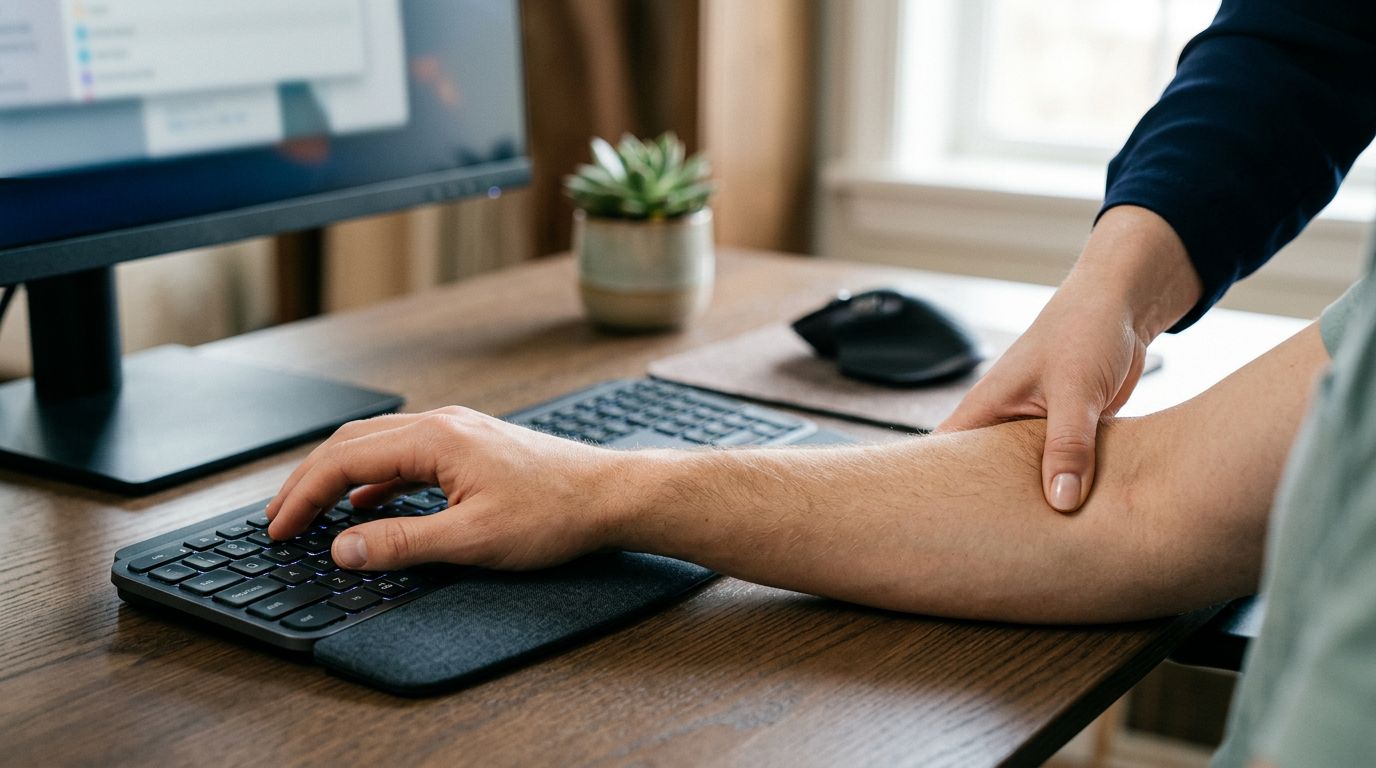
Place your opposite fingers on the back and outside of the elbow, just above the bony point. That zone is where the anconeus sits, along with nearby tendon tissue. You want to work around that area, not press directly into bone.
Use small circles or slow side-to-side strokes. Keep pressure light for the first pass. If it feels tender but manageable, hold still on one spot for 15 to 20 seconds, then ease off.
Add movement while you massage
After the first round, gently bend and straighten the elbow a few times. Then repeat the pressure with the arm in a slightly different angle. This helps the tissue adapt while it's warm.
A tennis ball or massage ball can work too, but use caution. Place it against a wall or table, not on a hard floor. That gives you more control and keeps the pressure from getting too sharp.
Finish with easy extension
End with slow arm straightening and a few light push-up wall reps if they feel fine. Wall push-ups are a good test because they load the elbow without much strain. If the stiffness eases, that's a useful sign. If the pain gets sharper, stop.
Keep these simple rules in mind:
- Stay off the bony tip of the elbow.
- Keep the pressure comfortable, not intense.
- Stop if you feel tingling, numbness, or a sharp catch.
- Use massage after activity or on rest days, not during a flare-up.
A short session is enough for most people. Ten minutes can go a long way when the elbow is just irritated, not injured.
When elbow stiffness is more than post-workout tightness
Some elbow symptoms need more than massage. If pain lasts more than a week or two, the area may be dealing with tendon irritation or a joint issue. Stiffness that keeps getting worse after each workout also deserves attention.
Watch for swelling, redness, warmth, bruising, or a feeling that the elbow locks. Those signs point away from simple muscle tension. So does pain that travels into the hand, numbness, or weakness when you grip.
Sharp pain during the lowering phase of push-ups is another clue. That often means the load is too much for the tissue right now. Rest, form changes, and a proper assessment may be more useful than more pressure.
A massage therapist can help with surrounding tissue work and movement support. Still, if the elbow joint itself seems irritated, a clinician or physical therapist is the better next step. The goal is to calm the area, not push through it.
Conclusion
Elbow stiffness after push-ups often comes from the small stabilizers working overtime, and the anconeus is one of them. When that tissue gets irritated, anconeus massage can help the outer elbow feel less guarded and more mobile.
The best results come from gentle pressure, good timing, and attention to the whole arm. If the pain is mild and mostly feels tight, soft tissue work and easy movement may be enough to settle it.
If the elbow is swollen, hot, or sharply painful, skip the massage and get it checked. A stiff elbow after push-ups should feel like a recovery issue, not a warning you keep ignoring.
Recent Posts