Extensor Digitorum Massage for Sore Fingers After Typing

STILL Massage + Skin • May 15, 2026

Share this article

Stiff fingers after a long day at the keyboard usually start in the forearm, not the fingertips. The extensor digitorum helps lift and straighten your fingers, so when it gets tight, your hands can feel heavy, slow, and sore.

A short, careful extensor digitorum massage can ease that pulling feeling and help your fingers move with less effort. It works best when you pair it with small breaks, better hand position, and a little attention to the muscles that do the real work.

If your hands ache after typing, start with the source of the tension, not just the sore spot.

Why typing makes the extensor digitorum ache

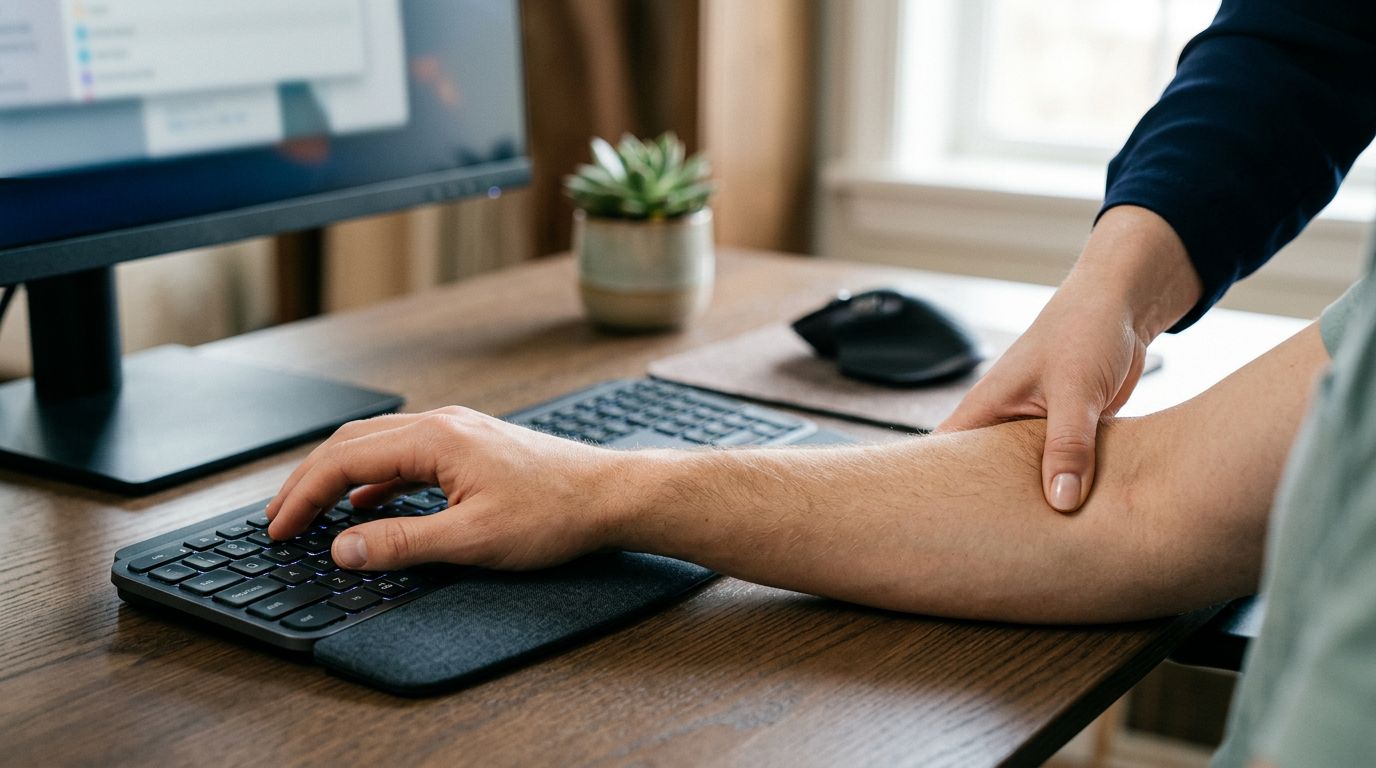
The extensor digitorum runs along the back of your forearm and helps extend your fingers. That means every time you lift your fingers to type, reach for a mouse, or hold your hand in place, this muscle is active.

Keyboard use can wear it out in a few common ways. Your wrist may stay lifted for hours. Your fingers may hover over keys without much rest. Your shoulder and neck may tense up, which adds more strain down the chain.

That strain often shows up as a dull ache on the back of the forearm. Sometimes your fingers feel stiff when you first start typing. Other times, your hand opens and closes with less ease, almost like a hinge that needs oil.

The muscle does not work alone. It shares the load with nearby forearm muscles and the tendons that run into the hand. So the pain can feel like it lives in the fingers, even when the tightest area sits higher up near the elbow.

A massage that focuses on the forearm can calm that overworked tissue. It can also make movement feel smoother, which matters when your hands spend hours doing the same small motions.

What a gentle massage can do for tired fingers

Massage helps when the problem is muscle fatigue and mild overuse. It can soften tight tissue, ease the guarded feeling in the forearm, and make finger motion feel less forced. It may also help you notice how much tension you hold without realizing it.

Light pressure works better than force. The goal is to calm the tissue, not fight it.

That matters because the extensor digitorum sits close enough to the surface that heavy pressure can feel sharp fast. A steady touch is usually enough. You want the muscle to relax, not brace against the work.

If the tightness keeps coming back, custom massage therapy sessions can help address the forearm, wrist, shoulders, and neck in one visit. That broader view often matters, since hand pain from desk work is rarely caused by one spot alone.

Massage is most useful when it fits into a bigger routine. Short breaks, looser grip habits, and better desk height all help too. Otherwise, the same tight pattern returns as soon as you sit back down.

A simple extensor digitorum massage routine you can try

A few minutes is enough. Start slow, use light pressure, and stop if the pain gets sharper.

  1. Warm the area first.
    Rest a warm towel on the top of your forearm for a few minutes, or wash your hands in warm water. Warm tissue usually responds better than cold tissue.
  2. Find the muscle on the back of the forearm.
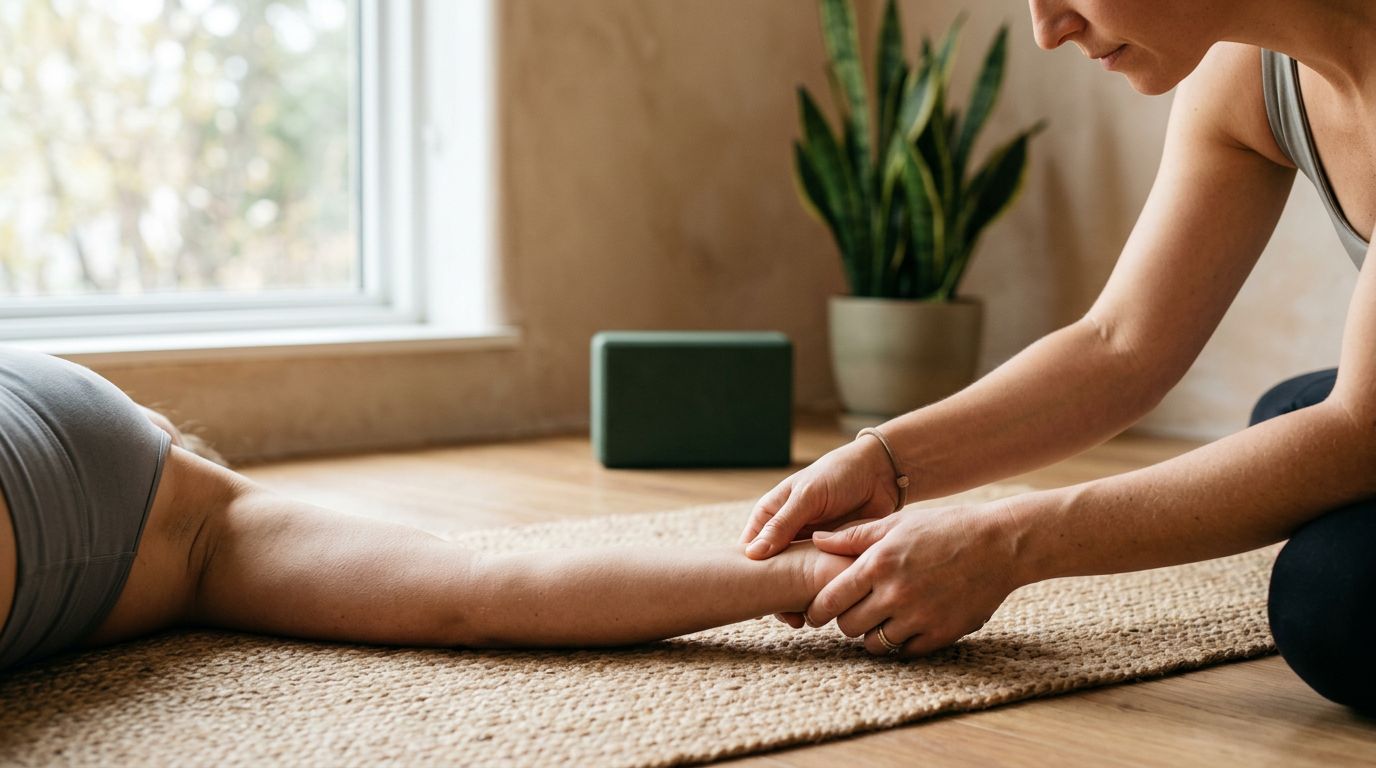
    Use the pads of your fingers or the thumb of your other hand. Glide from just below the elbow toward the wrist, staying on the top side of the forearm. Keep the pressure gentle and even.
  3. Pause on tender spots.
    When you find a tight area, hold light pressure for 10 to 20 seconds. Then ease off and move on. You can repeat the spot once or twice, but do not press hard enough to make you flinch.
  4. Open and close the hand slowly.
    After a few passes, make a soft fist and then spread the fingers wide. Repeat that motion 5 to 10 times. This helps the muscle link massage with movement.
  5. Finish with a light stretch.
    Extend the arm with the palm facing down, then gently bend the wrist so the fingers point toward the floor. You should feel a mild stretch along the back of the forearm, not a sharp pull.

Use the same routine on both sides if both forearms feel tired. Even one side may work harder than the other, especially if you mouse with one hand all day.

When finger pain needs more than self-care

Mild soreness often improves with rest, better posture, and gentle massage. Pain that changes character needs more care.

Sign What it may point to Better next step
Dull ache that eases after rest Muscle fatigue Try gentle massage and shorter keyboard sessions
Tingling, numbness, or weakness Nerve irritation or tendon trouble Stop self-massage and get checked
Swelling, heat, or sharp pain Irritation or injury Skip pressure and seek medical advice

Pain that wakes you up, keeps spreading, or lasts for weeks should not be brushed off. If your fingers feel weak or clumsy in a new way, that is another signal to get help.

Desk work can create a lot of small loads that add up. A therapist, clinician, or hand specialist can help you sort out whether the problem is muscle strain, tendon irritation, or something else. That matters because the right fix depends on the cause.

Conclusion

Sore fingers after keyboard use often start with a tired forearm. When the extensor digitorum gets overworked, a gentle massage , short breaks, and small posture changes can make a real difference.

Keep the pressure light and the movement slow. If the pain turns sharp, brings numbness, or keeps coming back, stop treating it like ordinary stiffness and get it evaluated.

Your hands do a lot every day. They work better when the forearm gets some attention too.

Recent Posts

By STILL Massage + Skin May 14, 2026
A headache at the temples can wear you down fast. So can a jaw that feels tight every time you eat, talk, or wake up. The temporalis massage is a small but useful way to ease that pressure. It focuses on the broad muscle that runs along the sides of your head, and that muscle...
By STILL Massage + Skin May 13, 2026
Pain at the sitting bone can make simple things feel harder than they should. A car ride, a desk chair, or a long walk can all flare it up. When the upper hamstring tendon gets irritated, pressure on that spot can feel sharp, stubborn, or achy. Proximal hamstring tendon massag...
By STILL Massage + Skin May 12, 2026
Front shoulder pain often hides under the collarbone. You may feel it when you reach across your body, carry a bag, press a door open, or take a deep breath. A subclavius massage focuses on a small muscle with a big job. When it tightens, the whole front of the shoulder can fe...
By STILL Massage + Skin May 11, 2026
Thumb pad pain can sneak up on you after a day of scrolling, texting, and holding your phone the same way over and over. The sore spot usually sits at the base of the thumb, where the thenar muscles work hardest. A thenar massage can ease that tight, tired feeling when the pai...
By STILL Massage + Skin May 10, 2026
Push-ups can leave more than your chest and triceps tired. If your elbow feels stiff, pinchy, or hard to straighten afterward, the small muscles around the joint may be doing more work than you realize. One of those muscles is the anconeus , a small helper on the back and oute...
By STILL Massage + Skin May 9, 2026
A tight, sore spot on the top of your foot can turn an easy walk into a slow shuffle. Often, the small muscle that helps lift your big toe is doing more work than it should, especially if your stride is long or your shoes are stiff. That muscle is the extensor hallucis longus...
By STILL Massage + Skin May 8, 2026
A heavy bench session can leave your chest feeling locked up by the next day. Sometimes the soreness is normal. Other times, the front of the shoulder and upper chest feel so stiff that even reaching for a door handle gets annoying. That is where pectoralis major massage can h...
By STILL Massage + Skin May 7, 2026
If your inner arch aches after a long day on your feet, the pain often starts small and turns stubborn fast. You might feel it during your first few steps, after a shift, or while standing in place for too long. That pain can come from the abductor hallucis , a small muscle al...
By STILL Massage + Skin May 6, 2026
Chronic muscle tension rarely gets better on a monthly schedule alone. If your neck, shoulders, or back tighten again a few days after a massage, your body is telling you the gap is too wide. The right massage frequency depends on how long the tension has been there, where it...
By STILL Massage + Skin May 5, 2026
A stiff big toe can throw off your whole stride. It can make push-off feel clunky, stairs feel harder, and barefoot walking feel awkward. One small muscle often plays a bigger role than people expect: the flexor hallucis longus , or FHL. When it gets tight or irritated, the bi...
Show More