Text Neck Massage for Desk Posture Pain: What to Expect
If your neck feels like it's holding up a bowling ball by 3 p.m., you're not imagining it. Long hours at a desk can turn a normal workday into a steady ache that climbs from your shoulders to the base of your skull.
A text neck massage is designed for that exact pattern of tension, the forward-head posture, tight chest, rounded shoulders, and overworked upper back. It won't "fix" your posture in one visit, but it can make your body feel normal again, and help you move better while you work on the habits that caused the pain.
Here's what text neck from desk life looks like, how massage helps, and what you can expect from your session.
What "text neck" from desk posture usually feels like
Text neck isn't only from texting. It's also from laptop hunching, double monitors set too low, and hours of looking slightly down. Over time, your head drifts forward, and your upper back rounds. As a result, the muscles in the back of your neck and shoulders stay "on" all day, like they're bracing for impact.
Common signs show up in clusters:
A dull ache at the base of the skull is common, especially after screen time. Many people also notice tight traps (the muscles that slope from neck to shoulder), shoulder blade tension that won't release, and stiffness when turning the head. Headaches can tag along too, because the muscles around the neck and jaw often join the tension party.
Meanwhile, other areas get "quiet" but still add to the problem. Chest muscles can shorten, which pulls the shoulders forward. Deep neck flexors (small stabilizing muscles in the front of the neck) can weaken, which makes the bigger muscles work overtime.
It helps to picture posture like a tent. When one stake shifts, the whole structure pulls. Massage is one way to reduce that constant pulling so your body can re-balance.
If your pain feels sharp, electric, or shoots down your arm, don't try to power through it. That pattern needs a closer look before you go deep with bodywork.
How a text neck massage helps (and what your therapist targets)
A good text neck massage isn't just "rubbing the neck." It's targeted work on the places that usually tighten from forward-head posture, plus the surrounding areas that affect the neck.
Your therapist often focuses on:
Upper trapezius and levator scapulae (top shoulder and side of neck). These muscles commonly form knots that refer pain upward. Releasing them can reduce that "heavy head" feeling.
Suboccipitals (tiny muscles under the base of the skull). When these stay tight, they can feed headaches and limit comfortable head movement.
Rhomboids and mid-back (between the shoulder blades). Desk posture often locks this area up, especially if you sit with arms reaching forward all day.
Pecs and front shoulders (chest and front deltoids). This matters because tight chest tissue can keep pulling you back into a rounded position, even after a great neck session.
Pressure should match your goal and your nervous system. Sometimes deep tissue helps, especially when there are ropey bands and trigger points. Other times, slower, moderate pressure works better because it lets the body release without guarding. In other words, "harder" isn't always "better," even for posture pain.
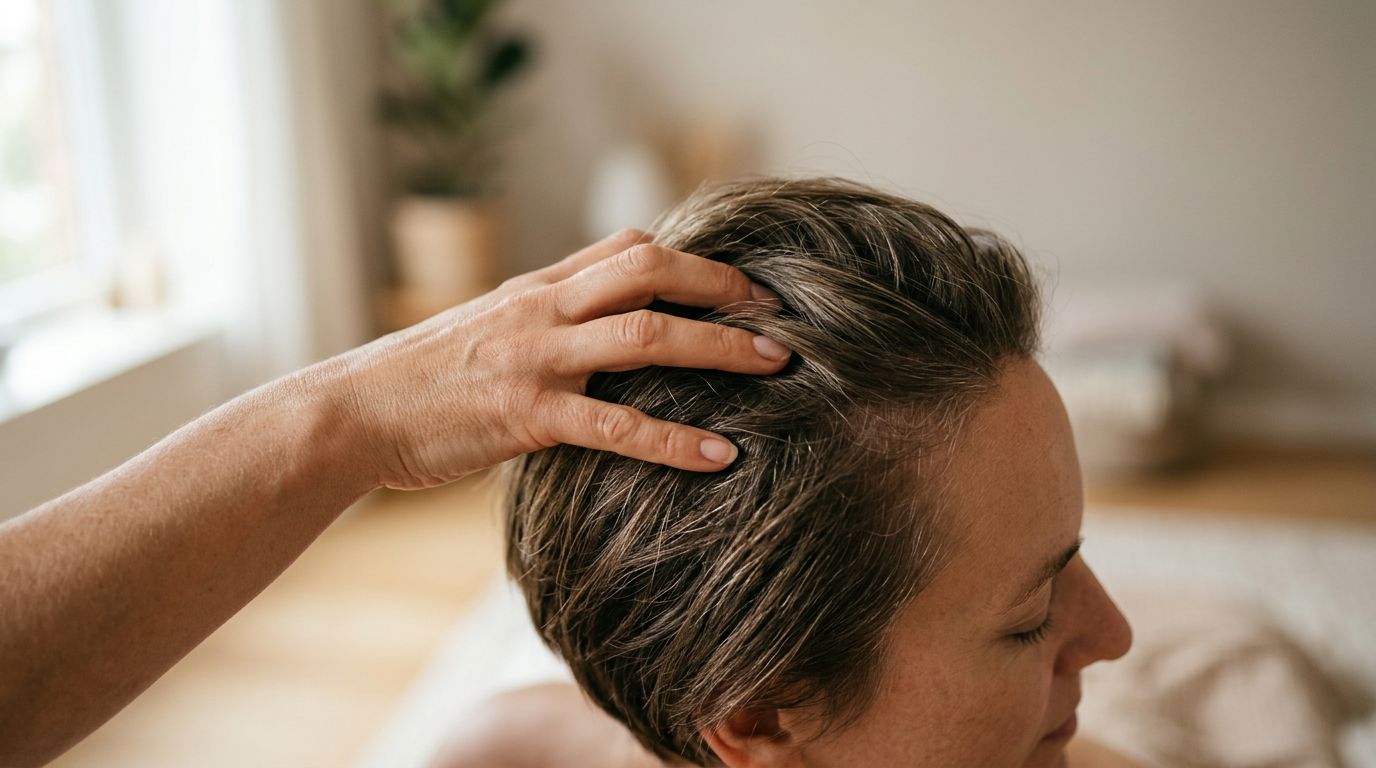
A session may also include gentle stretching, shoulder mobilization, and work along the jaw or scalp if you clench or grind. If you've been stressed at your desk, that's more common than most people realize.
What to expect during your appointment (step by step)
Most people want one thing: relief. Still, the best results come when your therapist learns how your desk pain behaves.
First, you'll talk through what you're feeling. Expect questions like: Where is the pain, when does it flare, and what makes it worse? Mention headaches, tingling, old injuries, and how many hours you sit daily. Also share what "too much pressure" feels like for you.
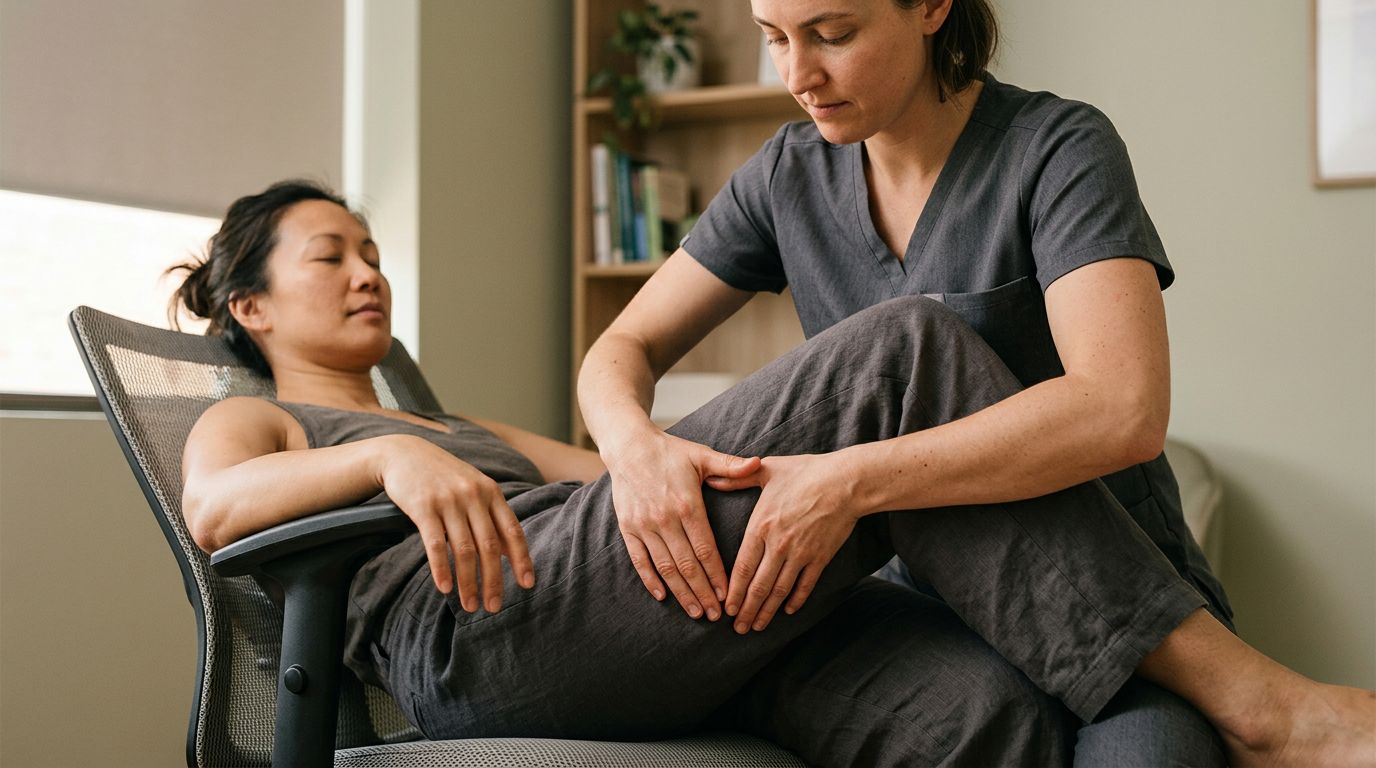
Next comes getting positioned comfortably. For text neck work, you may start face down to address upper back and shoulders, then turn face up to work the neck, jaw, and chest. If face down bothers your neck, side-lying can be a better option. A skilled therapist will adjust bolsters and head support, because comfort affects how well your muscles let go.
During the massage, you'll notice a few common sensations:
- A "good hurt" on knots in the shoulders or between the shoulder blades
- A spreading warmth after slow pressure holds
- Tender spots that feel oddly familiar (trigger points can refer pain)
Speak up early. If you wait until you're tense, your body guards and the work gets less effective.
If you're booking for desk posture pain, look for a session that allows enough time for upper back, shoulders, and neck, not just the neck alone. You can learn more about options for neck and shoulder tension relief massage , including sessions that can be tailored to posture-related tightness.
The goal is release, not survival. You should never feel like you have to brace, hold your breath, or "get through" the session.
After your text neck massage: soreness, results timeline, and smart aftercare
Right after a text neck massage, many people feel lighter through the shoulders and taller through the spine. Others feel sleepy, spacey, or a little tender. That's normal, especially if the work was deeper than what your tissues are used to.
Here's a quick guide to what's typical and what's not.
| After-feel | Usually normal? | What to do |
|---|---|---|
| Mild soreness for 24 to 48 hours | Yes | Drink water, use gentle heat, keep movement easy |
| Easier head turns, less shoulder "pull" | Yes | Take a short walk, avoid long static sitting |
| A temporary headache that fades same day | Sometimes | Rest your eyes, try light neck range of motion |
| Bruising or sharp pain during movement | No | Contact your therapist, consider medical advice |
| Numbness, tingling, or weakness in arm/hand | No | Get evaluated promptly |
| Pain that keeps escalating after 48 hours | No | Follow up and rule out other causes |
Most people feel some relief after one session, but lasting change usually takes repetition plus small daily tweaks. Think of it like cleaning a sticky key on your keyboard. One wipe helps, but the key stays smooth only if you stop spilling coffee on it.
Simple aftercare can extend the benefits:
- Take two "posture breaks" that day, even 60 seconds helps.
- Raise your screen closer to eye level if possible.
- Do a gentle chest stretch in a doorway for 20 to 30 seconds.
- Try slow chin nods (not big neck bends) to wake up the deep neck stabilizers.
If your desk setup keeps forcing your head forward, massage becomes a reset button you keep pressing. It still helps, but pairing bodywork with better positioning makes the results last longer.
Conclusion
Desk posture pain can sneak up, then stick around for months. A text neck massage targets the tight neck, shoulders, and upper back patterns that screen time creates, and it often brings fast, noticeable relief. Expect a short intake, focused work on common tension zones, and a plan that matches your comfort level. Afterward, a few small desk changes can help your body hold onto the progress. If your neck could talk after work, what would it ask for first, less pressure, more support, or a real break?
Recent Posts