Achilles Tendonitis Massage for Stiff Ankles and That Heel Pull Feeling
That tight, tugging feeling behind your heel can make every step feel cautious. One minute you're fine, then you stand up and your ankle moves like a rusty hinge. If that sounds familiar, achilles tendonitis massage can help, but only when you do it at the right time and in the right way.
Massage isn't about "crushing" the tendon into submission. Think of the Achilles like a thick rope that depends on healthy, flexible calf muscles. When the calf gets short and tense, the rope feels like it's being yanked. The goal is to calm the area, improve glide in the surrounding tissue, and help your ankle move with less strain.
Why Achilles tendonitis can feel like a stiff ankle and heel pull
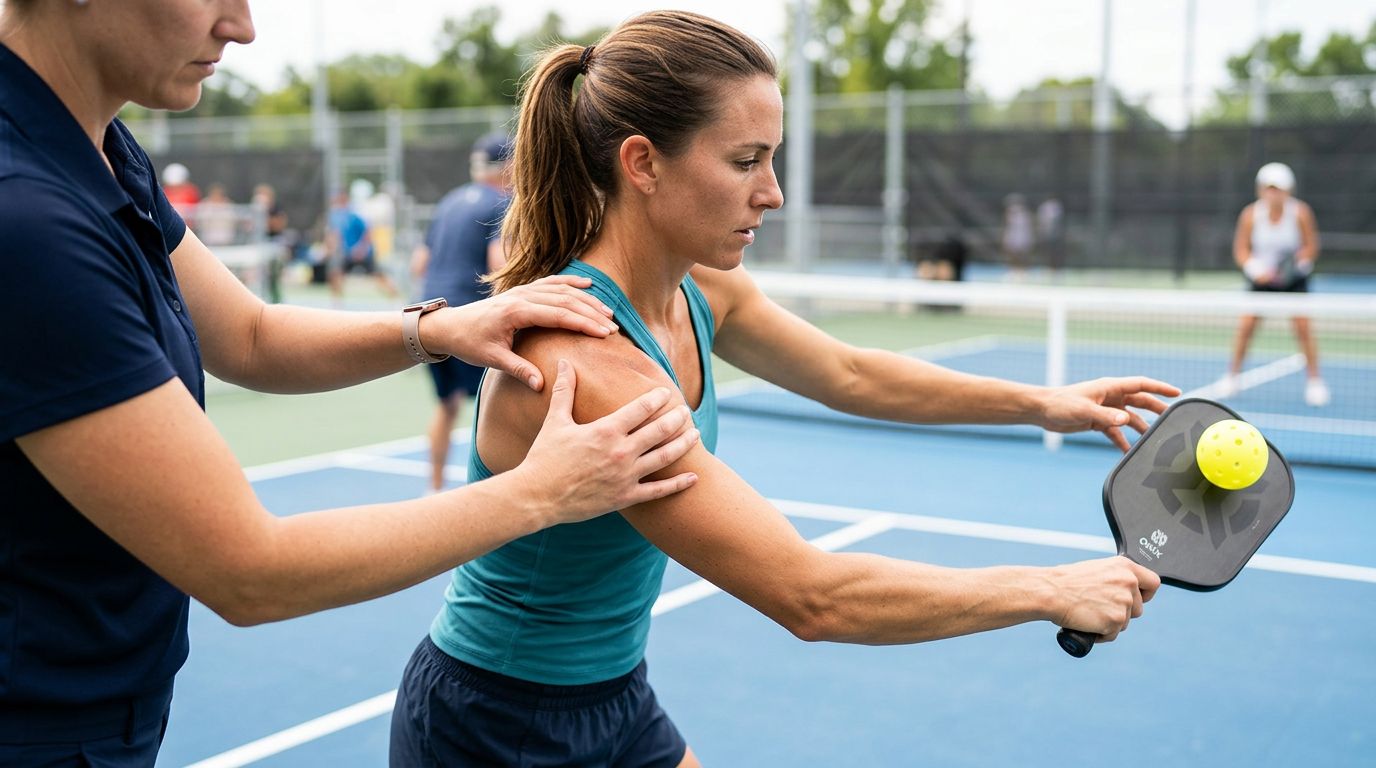
Achilles tendonitis usually shows up after a jump in activity. That could be longer walks, more pickleball, new shoes, or extra yard work. The tendon gets irritated, but the story often starts above it.
Tight calf muscles (both the bigger gastrocnemius and the deeper soleus) can limit ankle bend. As a result, your body steals motion from somewhere else. You might turn your foot out, shorten your stride, or slam your heel a bit harder. Over time, the tendon takes the hit.
The "heel pull" sensation often comes from one of these patterns:
- The calf is tight, so the tendon stays on stretch even at rest.
- The tissue around the tendon gets sticky, so it doesn't glide well.
- The tendon itself is reactive, especially first thing in the morning.
- Your ankle joint feels stiff, which changes how you load the heel.
Massage helps most when the area feels stiff, thick, or achy , not sharp or hot. If your pain is sudden, intense, or tied to a pop, skip self-massage and get checked right away.
A useful rule: work the muscle above the pain first. The calf often drives the tension you feel at the heel.
When massage is a good idea (and when it's not)
If the tendon is in an angry flare, deep pressure can backfire. Timing matters. Use this quick guide to decide what fits today.
| What you feel right now | What it can mean | Best move today |
|---|---|---|
| Mild ache, morning stiffness that eases | Typical tendon reactivity | Gentle calf work, light tendon contact |
| Warmth, swelling, throbbing | Higher irritation | Rest, gentle range-of-motion, avoid deep pressure |
| Sharp pain with each step | Tendon doesn't like the load | Reduce walking load, consider a clinician |
| Sudden "snap" or big weakness | Possible tear | Urgent medical evaluation |
During a flare, keep pressure light and stay off the most tender spot. As symptoms settle, you can slowly add more focused work. Pain should drop during or after massage, not climb over the next 24 hours.
Also, avoid aggressive "scraping" or hard friction directly on the tendon if you're unsure. Tendons prefer calm, progressive loading, not irritation piled on irritation.
A practical Achilles tendonitis massage routine for stiff ankles
This routine takes about 6 to 10 minutes. It's designed for that "tight ankle, tight heel" feeling. Use lotion or oil so your hands glide.
Step 1: Warm the calf first (60 to 90 seconds)
Start mid-calf and use slow, broad strokes toward the knee. Keep pressure at a "hurts so good" level, never sharp. This improves circulation and tells the nervous system to stop guarding.
Change your angle slightly as you work. Move from the center of the calf to the inner and outer edges. Breathe normally, since breath-holding ramps up tension.
Step 2: Release the deep calf (90 seconds)
Bend your knee slightly to target the soleus (the deep calf muscle that often drives ankle stiffness). Use your thumb pads or knuckles and make slow, small circles along the lower half of the calf, a few inches above the Achilles.
Pause on tight spots for 10 to 15 seconds. Let the tissue soften under steady pressure. Don't chase pain. You're inviting release, not starting a fight.
Step 3: Side-to-side tendon "wiggle" (60 seconds)
Now move closer to the Achilles, but avoid pressing straight down into it. With two fingers, gently nudge the tendon side-to-side, like you're testing how freely it moves. This can help the tissues around it glide.
If you find a tender area, reduce pressure and keep the motion small. The tendon should feel calmer after, not more touchy.
Step 4: Heel and arch soft-tissue work (60 to 90 seconds)
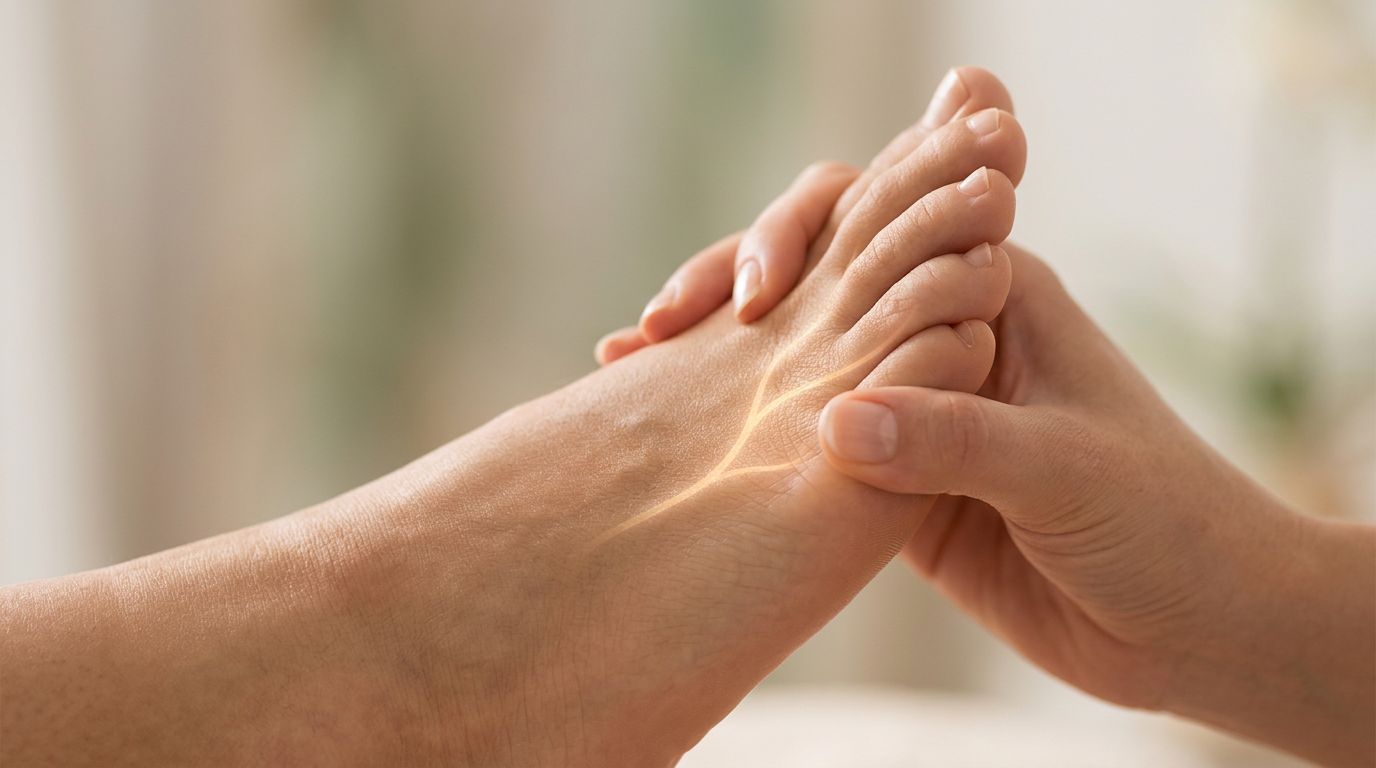
That heel pull can also relate to the bottom of the foot. Massage the arch with your thumb in slow strokes from heel toward the ball of the foot. Then use gentle circles around the inner heel edge.
Stay away from poking directly into the painful "bullseye." Aim for the edges, where the tissue often holds tension.
Step 5: Re-check ankle motion (30 seconds)
Stand near a wall. Keeping your heel down, gently bend your knee forward. Compare the stiff side to the other side. The goal isn't perfect symmetry in one session. You're looking for a small change: smoother movement or less pulling.
If you feel more pinch or more pain, back off next time and keep the pressure lighter.
Pair massage with simple movement so the results last
Massage can help your ankle feel freer, but movement keeps it. Right after your routine, add a small dose of mobility, then strength later in the day.
Start with 30 to 60 seconds of ankle pumps (point and flex) and slow ankle circles. After that, try a gentle calf stretch with the knee straight, then with the knee bent. Hold each for 20 to 30 seconds. Keep it mild.
For longer-term progress, progressive calf strength is key. A tendon likes steady work, like a rope that thickens with regular use. Begin with slow calf raises on both feet. If that feels okay for a week, progress toward single-leg work. If calf raises spike pain the next day, reduce the number or range.
Shoes also matter more than most people expect. Worn-down soles or very flat shoes can increase the pull. A supportive sneaker for walks often helps during a flare.
What to expect from a professional massage for Achilles pain
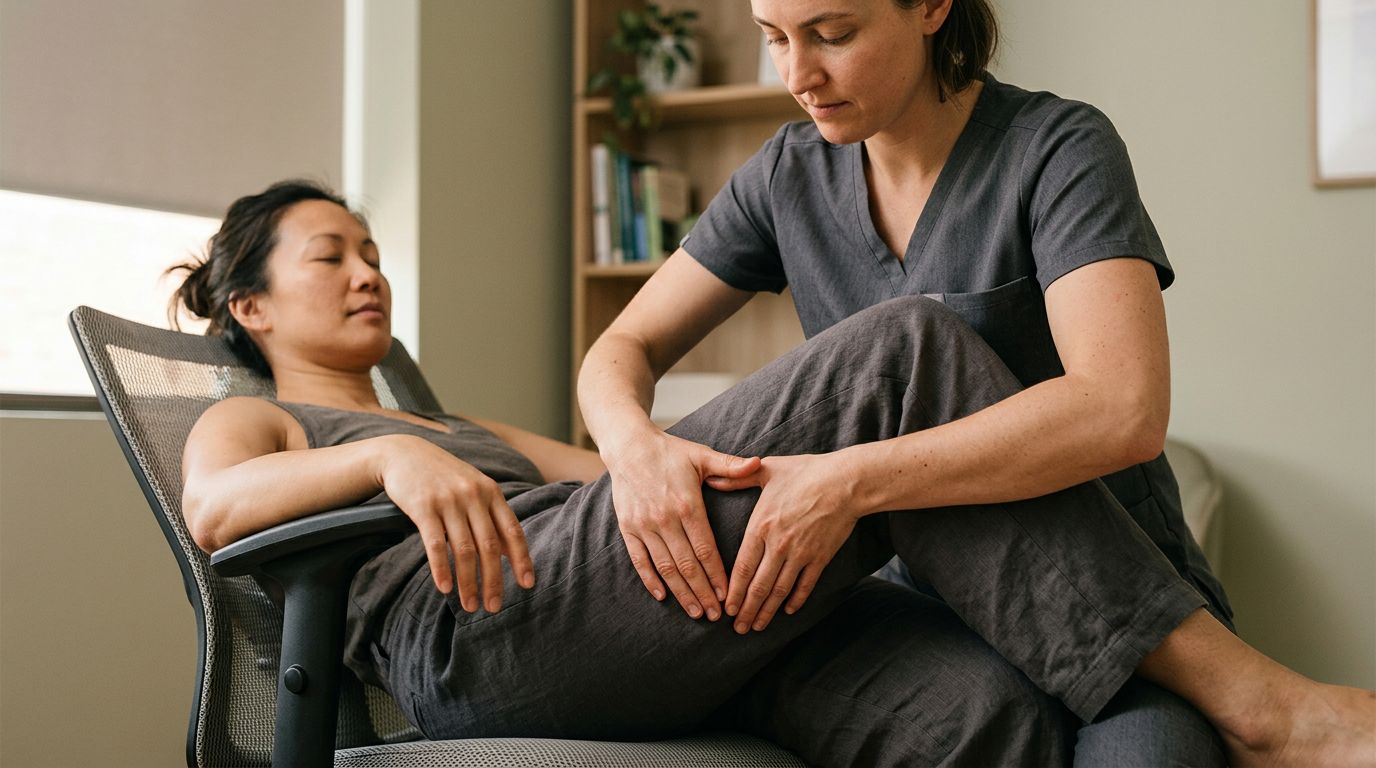
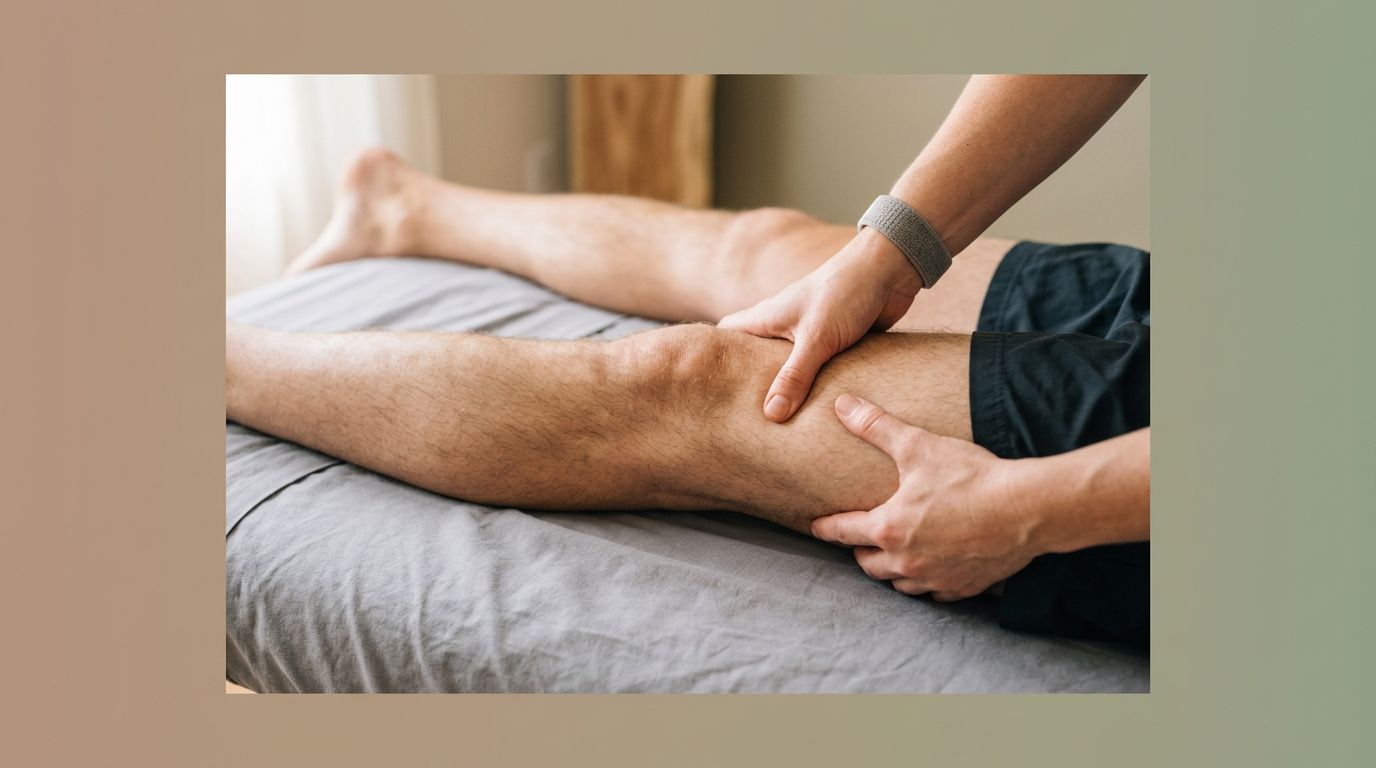
Self-massage is helpful, but hands-on care can go further, especially when the whole lower leg is involved. A therapist can assess patterns you can't easily feel, like calf trigger points, peroneal tension on the outer shin, or restrictions near the ankle joint.
A good session for Achilles irritation usually focuses on:
- Calf and lower-leg muscle release (not aggressive tendon grinding)
- Gentle work around the Achilles to improve comfort and glide
- Foot and ankle work to ease stiffness and improve push-off
- Simple home tips so you don't lose progress after the session
If you want focused help, book a session built around recovery goals, not a one-size plan. You can also ask for a therapist who blends relaxation with targeted work, since a calmer nervous system often means less guarding in the ankle. For options that can be tailored to tendon and ankle discomfort, see targeted massage therapy for Achilles tendonitis.
The best sign you had the right pressure: you walk out feeling looser, and you feel the same or better tomorrow.
Conclusion
Stiff ankles and a heel pull feeling usually point to a stressed Achilles plus tight, overworked calf tissue. Achilles tendonitis massage works best when it's calm, gradual, and aimed at the muscles around the tendon, not just the sore spot. Keep pressure comfortable, pair it with simple mobility and calf strength, and watch how your body responds over the next day. If symptoms escalate, don't push through it, get professional guidance and protect that tendon so it can settle and rebuild.
Recent Posts