Psoas Release Massage For Hip Flexor Tightness What To Expect
Hip flexor tightness can feel like a stubborn knot deep in the front of the hip, the kind that won't quit no matter how much you stretch. Sometimes it even shows up as low back tension, a "pinchy" feeling in the hip crease, or a pelvis that won't sit comfortably.
A psoas release massage targets a muscle that sits far deeper than most people realize. Because of that, it can feel different than a typical relaxation massage, and it helps to know what's normal, what's not, and how to get the best results after you leave.
Why the psoas gets tight (and why it's hard to stretch)
The psoas (pronounced "SO-az") is a deep hip flexor that connects the lower spine to the upper thigh. It helps lift your knee, stabilize your pelvis, and support posture. Think of it like a guide rope between your spine and leg. If it stays shortened for long periods, your body starts to treat that length as "normal."
Sitting is the big driver. Long hours at a desk, in a car, or on the couch keeps the hip flexors in a flexed position. Over time, the front of the hips can feel locked up, especially when you stand tall, walk fast, or try to extend the hip.
Still, "tight" doesn't always mean "needs more stretching." Sometimes the psoas holds tension because it's guarding. That guarding can happen when:
- your core and glutes aren't doing their share, so the psoas works overtime
- your breathing is shallow, and your ribs don't move well (the psoas responds to stress)
- you've had a strain, low back flare, or hip irritation, and your body wants protection
- your pelvis tips forward, making the hip flexors feel shortened even at rest
Because the psoas sits under layers of abdominal tissue, it's also harder to reach. Foam rolling the front of the hip can help some people, but it often misses the deeper tension. That's why hands-on work can feel like it gets to the "real" problem, even when you've tried everything else.
If hip flexor tightness keeps coming back, the goal isn't to force it open. The goal is to help your nervous system stop bracing, then retrain better movement.
What happens during a psoas release massage session
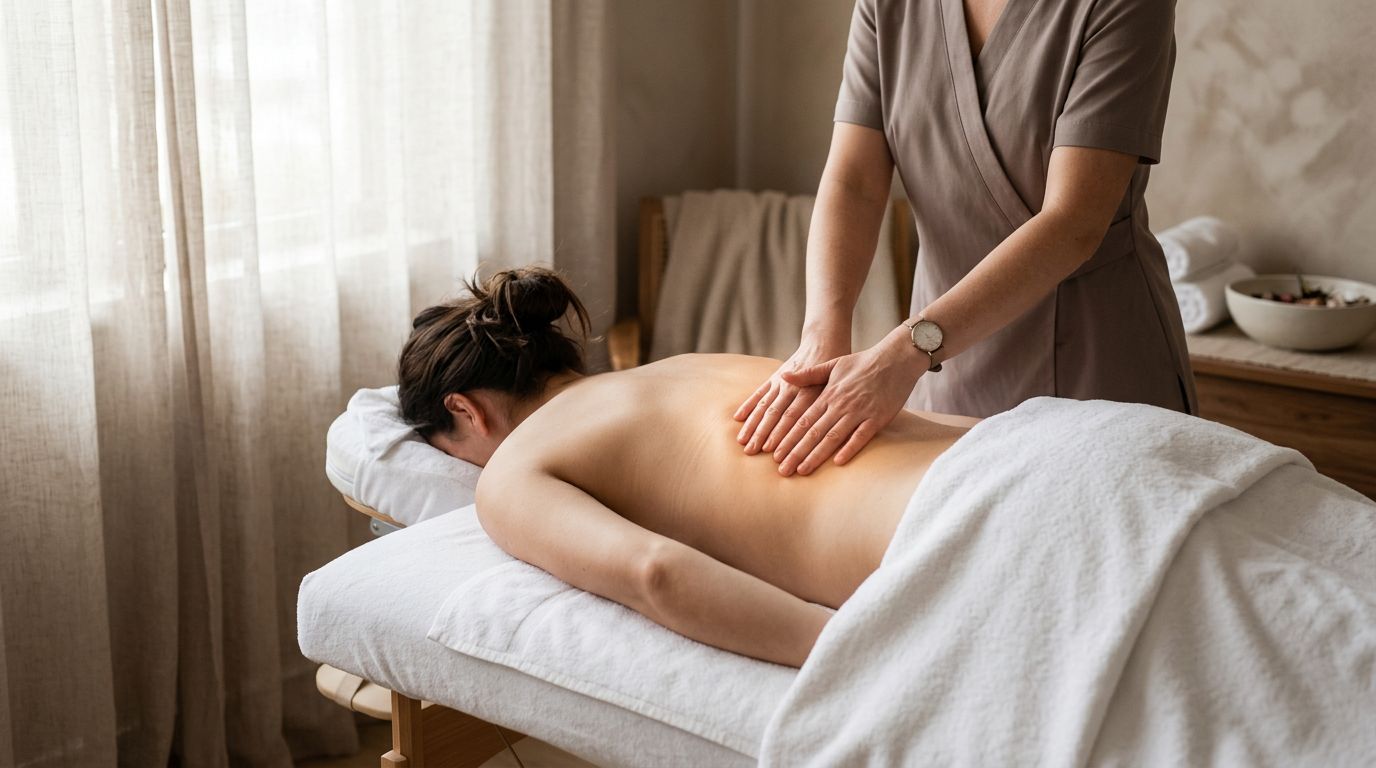
A psoas release massage is usually part of a therapeutic session, not a stand-alone "one technique fixes all" appointment. Your therapist may work on nearby areas first, because the psoas rarely tightens in isolation. Hips, quads, adductors (inner thigh), glutes, diaphragm, and low back tissues often play a role.
If you're booking for hip flexor tightness, choose a service that allows focused work and client feedback, such as targeted therapeutic bodywork. That extra time and customization matters for deep hip work.
How you'll be positioned (and why that matters)
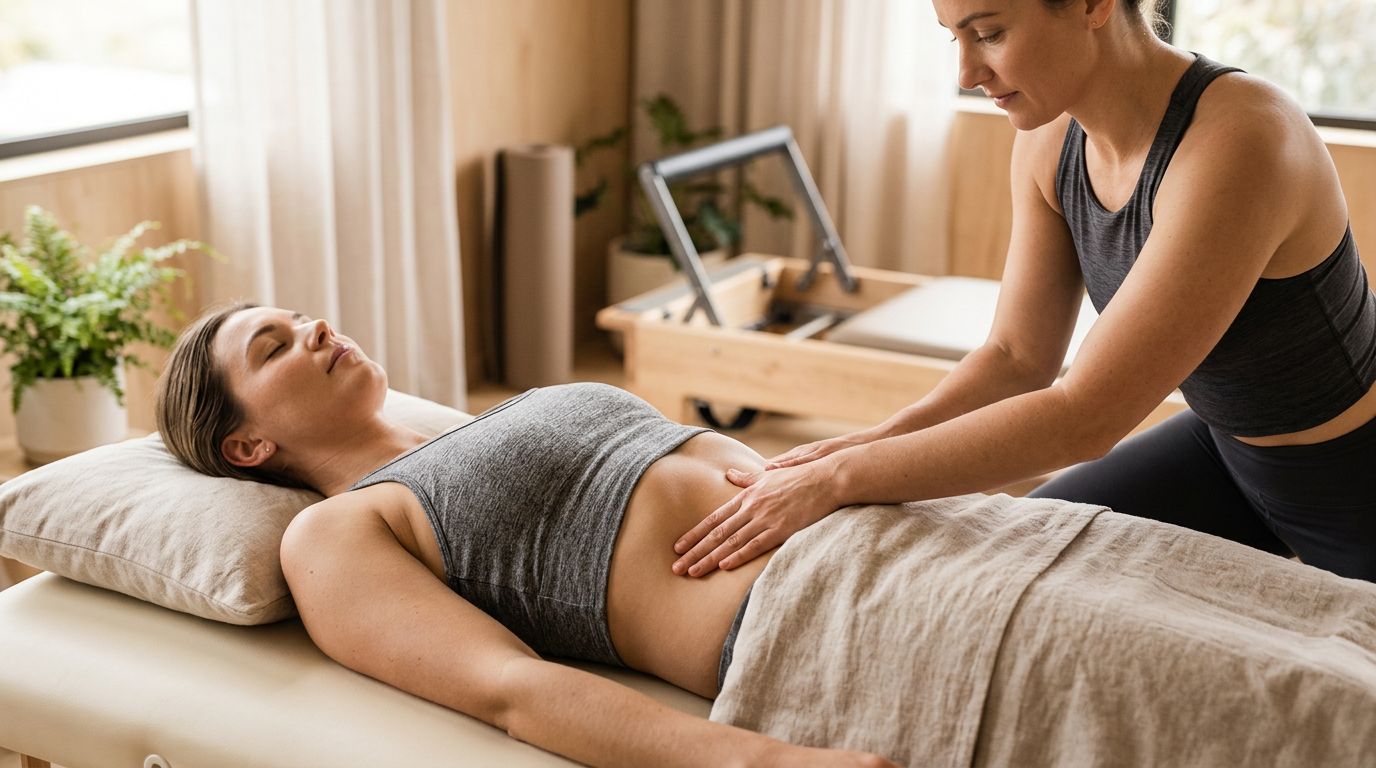
Most psoas work happens with you lying on your back. Your knees may be bent with a bolster or pillow under them. This position softens the abdominal wall and reduces tension through the front of the hips.
In some sessions, you might also be side-lying, especially if your therapist wants to address the tissues around the hip joint and pelvis without direct abdominal contact. You stay draped the entire time, and your comfort sets the pace.
What the therapist actually does
Direct psoas contact is slow and specific. Your therapist may sink gently through the abdominal wall, then hold steady pressure rather than rubbing quickly. It can feel like a firm "melting" sensation, or like a tender spot that eases as you breathe.
You'll likely be coached to take slower breaths, because the psoas responds to the diaphragm and the nervous system. Small changes in breathing can change the feel of the pressure in seconds.
What it feels like (realistically)
Expect intensity, but not sharp pain. Many people describe psoas work as "deep, weird, and relieving." That's a fair summary.
You might feel:
- tenderness in the front of the hip or low belly
- a referral sensation into the groin, thigh, or low back
- a strong urge to guard at first, then a gradual softening
- emotional release, like a sudden wave of relief or feeling "lighter" afterward
Communication is key. A good rule is to stay around a 5 to 7 out of 10 in intensity. If you can't breathe smoothly, the pressure is probably too much, and your body will brace instead of release.
After psoas release: what's normal, what's not
When the psoas finally lets go, your body has to recalibrate. For that reason, the "after" can be just as important as the session itself.
Right away, you may notice you stand taller, your stride feels longer, or your low back doesn't feel as compressed. Some people also feel a bit unsteady for a few minutes, like their hips are learning a new resting position.
Later that day or the next day, mild soreness is common, similar to how deep tissue work feels in the shoulders. You may also feel tired, especially if the session helped downshift stress tension.
Here's a quick guide to help you interpret what you feel:
| What you notice | Usually means | What to do next |
|---|---|---|
| Mild soreness in front hip/low belly | Normal tissue response | Hydrate, gentle walking |
| Feeling "looser" but awkward | New range, nervous system adjusting | Move slowly, avoid heavy lifting that day |
| Low back feels freer | Less hip flexor pull | Add light glute activation later |
| Sharp, hot, or stabbing pain | Not a normal response | Stop, tell your therapist, consider medical advice |
| Numbness, tingling, or leg weakness | Possible nerve irritation | Seek medical evaluation promptly |
One more note: if your hip flexor tightness is tied to an injury, hernia, abdominal surgery, pregnancy, or a medical condition, your therapist should modify the plan. When in doubt, ask first. It's always okay to keep work indirect.
How to make the results last between appointments
Massage can open the door, but your daily habits decide how long the change sticks. The good news is you don't need a long routine. You need the right few minutes, done consistently.
Start with these simple supports:
First, take short walking breaks. Even 3 to 5 minutes helps, because hips like rhythmic extension.
Next, try a gentle hip flexor stretch, but keep it low effort. If you crank hard, you may trigger guarding again. Think "lengthen and breathe," not "push and win."
Then add light glute work. A few slow bridges or a wall sit can remind your body that the back of the hip can help. When glutes show up, hip flexors often calm down.
Finally, pay attention to how you sit. If your chair is low and your knees ride high, your hips stay flexed all day. A small cushion or a slightly higher seat can change the angle and reduce that constant shortening.
The best sign you're on track is simple: your hip feels easier during normal life, not just right after a session.
Conclusion
A psoas release massage can feel intense, but it shouldn't feel scary. When it's done with good pacing and clear feedback, it often brings real relief for hip flexor tightness and the low back tension that comes with it. Pair the session with gentle movement and better sitting breaks, and the results tend to last longer. If your hips have felt "stuck" for months, this kind of focused work can be the reset your body has been asking for.
Recent Posts